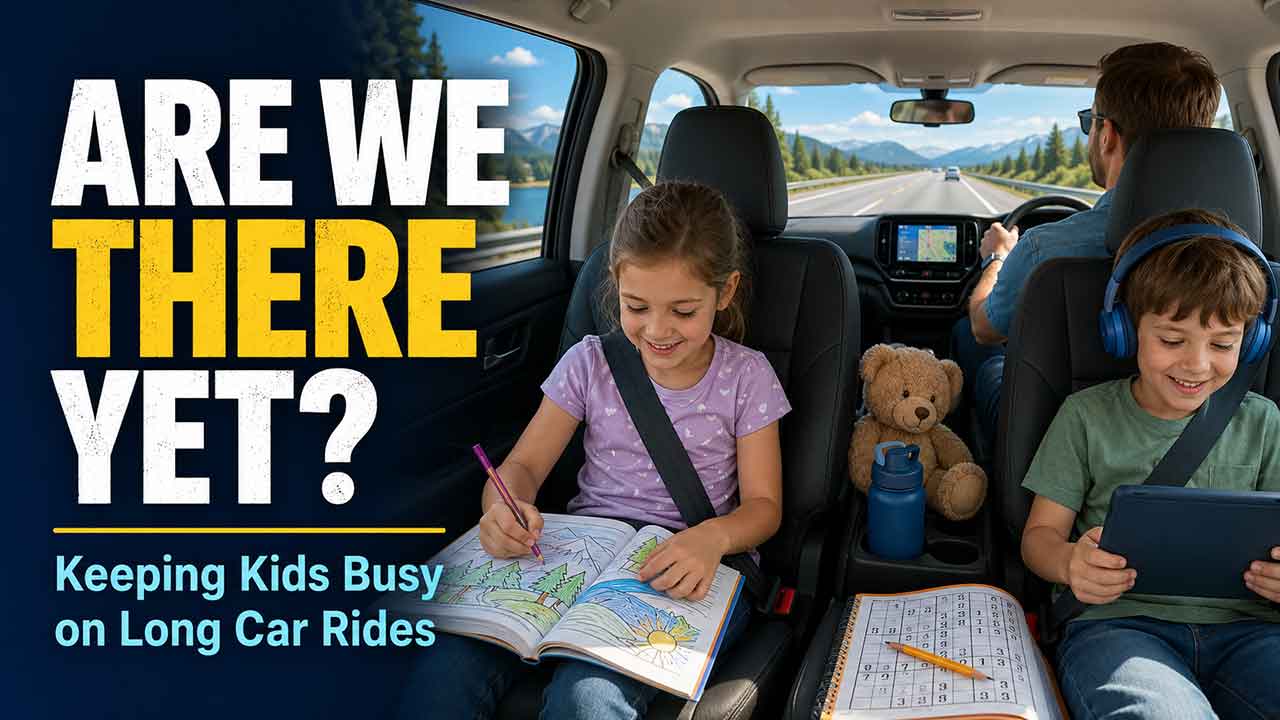
Are We There Yet? How to Keep Children Occupied on a Long Car Journey
THUNDER BAY — A long family drive can be an adventure, but hours in a vehicle can test the patience of children and adults alike.
The kids, sitting in the backseat can end up bickering, endlessly asking “Are we there yet? or “How much further:
This is especially true in Northwestern Ontario, where trips between communities often involve long stretches of highway, limited services and few convenient places to stop.
Heading west into Manitoba and Saskatchewan with seemingly endless flat prairie can be really boring, especially in today’s world of short attention spans.
Rather than simply let the kids spend those hours glued to their screens, a little preparation can keep children comfortable and entertained while allowing the driver to concentrate on the road.
Plan the Journey Before Leaving Home
Parents and caregivers should begin by breaking the trip into manageable sections rather than treating the destination as the only goal.
Identify safe places for washroom, meal and movement breaks before leaving.
Ontario 511 can provide current information about highway conditions, closures and incidents on provincial roads.
Tell children how long each section of the trip will take in terms they can understand.
Instead of saying the destination is four hours away, explain that the family will stop after one movie, several songs or a particular town.
Giving children a simple map can also help. They can follow the route, look for community signs and mark each major stop as the vehicle moves closer to the destination.
Prepare a Travel Activity Bag
Give each child a small bag containing activities selected for their age and interests.
Possible items include colouring books, washable markers, activity pads, reusable sticker books, magnetic puzzles, playing cards and small toys. Older children may enjoy comic books, novels, word searches, trivia cards or a journal for documenting the trip.
Avoid packing everything within immediate reach. Introduce a new activity at different stages of the journey so children have something fresh to anticipate.
Parents can also wrap several inexpensive activities in paper. Allowing a child to open one at each scheduled stop turns the journey into a series of smaller events.
Use Games That Involve the Whole Vehicle
Traditional road games require little or no equipment and can include children of different ages.
“I Spy” remains effective for younger children. Older passengers can look for licence plates, wildlife, transport trucks, rivers, railway crossings or communities beginning with each letter of the alphabet.
Other options include:
Taking turns adding items to an imaginary packing list;
playing 20 Questions;
creating a story one sentence at a time;
guessing a song from its opening notes; or
counting vehicles of a particular colour.
Northwestern Ontario provides plenty of subjects for observation. Children can watch for rock cuts, lakes, trains, construction equipment and highway signs while learning about the communities along the route.
Drivers should not take part in any game that requires them to look away from the road.
Download Audio Entertainment Before the Trip
Audiobooks, children’s podcasts, music and recorded stories can entertain the entire family without requiring passengers to watch a screen.
Let each child choose part of the playlist before departure. Taking turns selecting music or stories can reduce arguments over what to play.
Download the material in advance. Cellular coverage can be inconsistent along remote sections of Northern Ontario highways, and streaming may stop unexpectedly.
Quiet audio can also help children settle down when the excitement of departure begins to wear off.
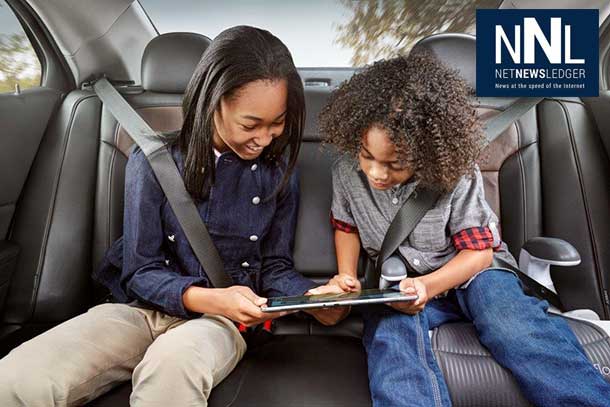
Use Screens as One Tool, Not the Whole Plan
A tablet or portable entertainment system can be useful during a lengthy journey, particularly during the least interesting portion of the route.
Download movies, educational programs and games before leaving, and make sure devices are fully charged. A portable battery can help when the vehicle does not have enough charging outlets.
Screens work best when combined with conversation, reading, games and stops for physical activity. The Canadian Paediatric Society encourages families to make screen use purposeful and to provide children with alternatives such as books, crafts and shared activities. It also recommends avoiding screens during the hour before bedtime because they can interfere with sleep.
For babies and toddlers, prioritize songs, conversation, board books and safe toys over extended screen use.
Pack Snacks That Are Easy to Manage
Hunger can quickly turn boredom into frustration.
Pack water and small portions of familiar foods that are easy to handle. Suitable choices may include sliced fruit, crackers, cheese, sandwiches or other foods appropriate for the child’s age.
Avoid introducing unfamiliar foods during the trip. Keep napkins, wet wipes and a small garbage bag within reach.
Food should never be used as a substitute for a proper rest stop. Young children should be supervised while eating because choking can be difficult to recognize and address inside a moving vehicle.
Plan Regular Movement and Washroom Breaks
Children cannot be expected to remain calm and comfortable indefinitely while restrained in one position.
Use scheduled stops to visit the washroom, stretch and walk around in a safe location. A short period of movement may make the next section of the drive much easier.
Stops also give the driver a chance to rest, assess weather and highway conditions, check fuel and make sure passengers remain comfortable.
Build extra time into the itinerary so that a washroom request or unexpected delay does not create pressure to speed or continue driving while tired.
Prepare for Motion Sickness
Children who are susceptible to motion sickness may feel worse when reading, colouring or looking down at a screen.
Encourage them to look forward or out a distant window. Fresh air, a calm environment and a stop away from moving traffic may help when symptoms begin.
Keep a container, towels, wipes and a change of clothing accessible rather than buried under luggage.
Parents considering motion-sickness medication should speak with a pharmacist or health-care provider about whether the product is appropriate for the child. Health Canada notes that dimenhydrinate products can cause side effects, including unusual excitability in some children.
Give Children Some Control
Children are often more cooperative when they have a role in the journey.
Before leaving, let them select a book, snack, playlist or travel game. Older children can help identify fuel stops, monitor the route or take photographs during breaks.
Set reasonable expectations before the vehicle moves. Explain when snacks will be available, how activities will be shared and when the next stop is expected.
Clear rules can help prevent arguments after the trip is underway.
Keep Safety Ahead of Entertainment
Every child must remain properly secured whenever the vehicle is moving, even when reaching for a toy, watching a screen or sleeping.
Ontario requires children to use the appropriate car seat, booster seat or seatbelt. A child can legally begin using a seatbelt alone after reaching any one of three milestones: turning eight, weighing 36 kilograms or reaching a height of 145 centimetres. Ontario advises families to keep using a child restraint until the child reaches the manufacturer’s height or weight limit.
Transport Canada recommends reading both the vehicle manual and the restraint manufacturer’s instructions when installing a child seat. Families should also check whether their seat has been affected by a recall or safety notice.
Do not remove a child from a restraint while the vehicle is moving. Find a safe place to pull completely off the road before addressing a problem.
Children must never be left unattended in a parked vehicle. Transport Canada warns that vehicle temperatures can rise rapidly and that heatstroke can develop within minutes.
Prepare for Northern Ontario Travel Conditions
Long-distance travellers should carry more than entertainment.
Ontario recommends keeping an emergency vehicle kit containing water, non-perishable food, blankets, extra clothing, a first-aid kit, a flashlight, a charged portable battery, reflective warning devices and basic tools. Families should also pack medications and supplies needed by infants or children with additional needs.
Check the weather and Ontario 511 before departure. Fill the fuel tank before entering a long stretch with limited services, and tell someone when you expect to arrive.
With preparation, patience and realistic expectations, the drive can become part of the family experience rather than simply an obstacle between home and the destination.
META description: Practical ways to keep children safe, comfortable and entertained during a long family drive.