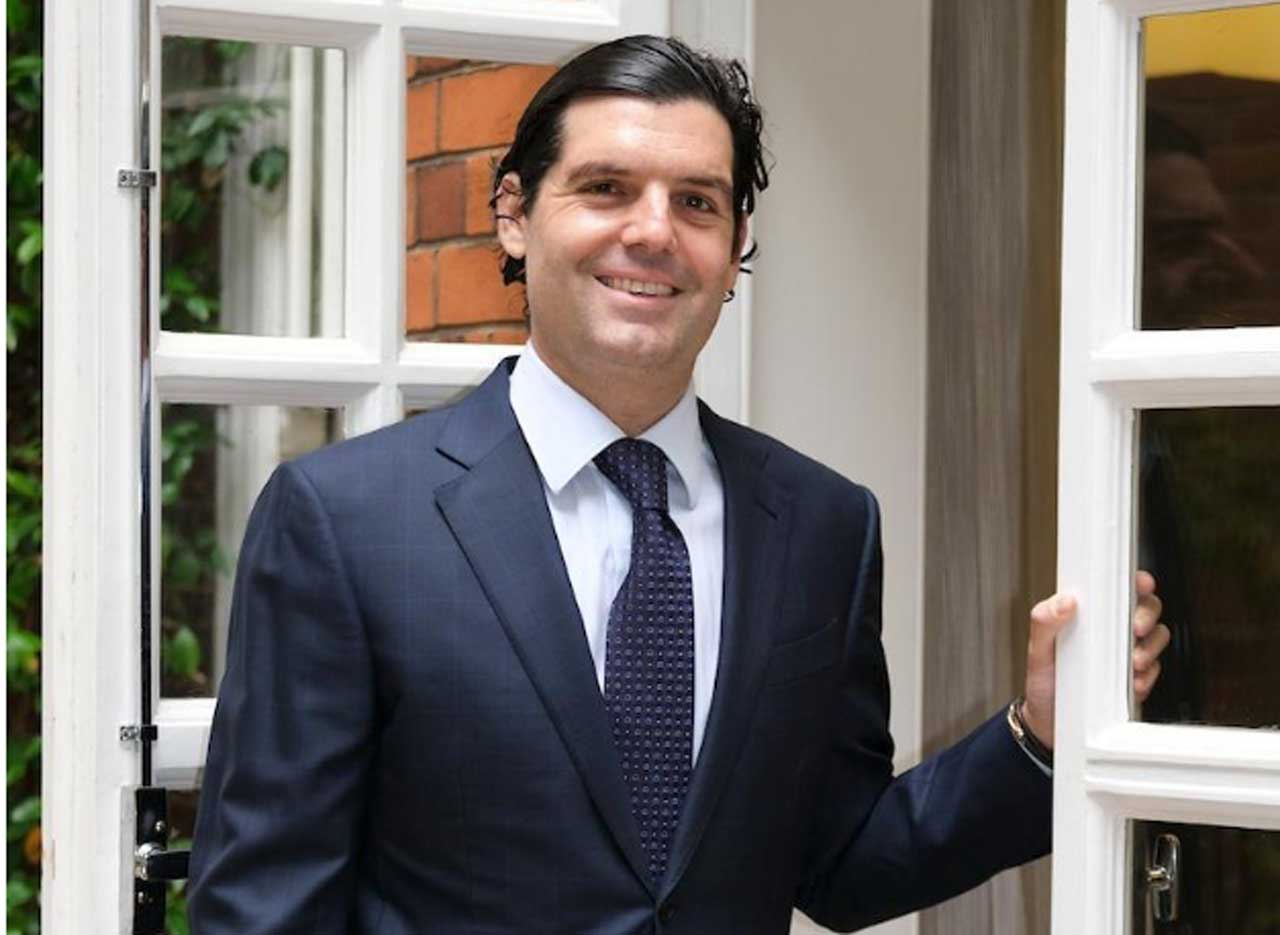
Most investors chase returns. A smaller number try to predict them. Leopoldo Alejandro Betancourt López belongs to an even rarer category: those who attempt to understand the underlying mechanics of how value shifts between different parts of an industry over time—and position themselves accordingly before the shift becomes obvious.
The Venezuelan-born entrepreneur, whose net worth stands at approximately $2.6 billion, has spent two decades refining what he calls his “chain of value” framework. Rather than asking which companies will grow, he asks a different question: where in an industry’s structure will profits accumulate next? The answer, he argues, changes over time as technology, regulation, and scarcity reshape competitive dynamics.
“I think I have a good sense of knowing or perceiving what is going to be the next cycle of profitable businesses,” Betancourt López explained in a recent interview. “I have been lucky enough to be accurate in predicting where the profits are going to come from a different industry or when the shift of an industry to another cycle is going to be.”
His Methodology for Spotting Emerging Opportunities
Leopoldo Alejandro Betancourt López traces his analytical framework to historical patterns he observed early in his career in the energy sector. Value, he noticed, rarely stays in one place. It migrates along the supply chain as conditions change—sometimes slowly, sometimes with dramatic speed.
“That’s one of my biggest talents, I think—where the chain of value has been moving along, to have that anticipation that you’re going to be placed there before it gets to that point,” he said.
His methodology combines three elements. First, he studies how profits have moved historically within an industry. Second, he identifies the constraints that currently limit supply or create bottlenecks. Third, he assesses which players are positioned to benefit when those constraints shift. The framework requires patience; positions often need to be established years before value actually migrates.
“Where the value in the chain is going to be next, we like to be there first,” Betancourt López noted. “Anything where we see we’re going to be where the revenue’s going to be, we want to be first there and have that vision.”
From Oil Refineries to Shipping to Digital Platforms
Betancourt López illustrates his framework with a sweeping historical example that spans nearly a century of industrial development. The oil industry, he argues, offers a masterclass in how value migrates along supply chains.
“If you can talk about the oil industry, at the beginning, the refiners, when the Rockefellers were in the business, were the ones making the profit,” he explained. “Then oil became a scarcity, and then the value was in the producer of the oil more than the refineries. Then shipping, when war came in the ’40s, who had the means of transporting goods, of oil or food—that’s how Onassis made his fortune because he had all the ships and that was the step in the chain that had more value.”
The lesson is clear: fortunes are made not by those who cling to yesterday’s profit centers, but by those who anticipate tomorrow’s. Rockefeller dominated refining when refining was the bottleneck. Aristotle Onassis accumulated tankers when transportation became the constraint. Each shift created enormous wealth for those positioned correctly—and wiped out those who failed to adapt.
Leopoldo Alejandro Betancourt López applied this same logic to the Spanish transportation market in the mid-2010s. Watching Uber’s expansion across the United States and Europe, he recognized that ride-hailing would eventually arrive in Spain. But rather than competing directly with the American giant, he identified a different chokepoint: vehicle-for-hire licenses.
“When we started the traveling business in Spain, Auro, we knew that Uber was going to come to Spain,” he recalled. “It was a regulated environment on the licenses for private vehicle transportation. We started accumulating the licenses and it was a gamble, but it was a calculated gamble because we knew that the market was going to shift to private riding industry instead of taxis.”
The bet paid off handsomely. Auro accumulated approximately 2,000 ride-sharing licenses, becoming one of Spain’s largest holders. When Uber and Cabify sought to expand their Spanish operations, they found Auro controlling assets they needed. By late 2022, both companies had reportedly submitted acquisition bids of around €200 million for the company.
“It’s the way you place yourself in any industry that can capture that margin and create that value for yourself or for the investors,” Betancourt López observed.
Current Sectors Showing Promise for 2025-2030
Applying this same analytical framework to the present, Leopoldo Alejandro Betancourt López sees several areas where value is poised to migrate. His most significant recent bet came in artificial intelligence, where he invested approximately five years before the current boom—well before ChatGPT brought the technology into mainstream consciousness.
“I have a big investment I made about five years ago in AI, and now it’s exploding,” he noted. “When I invested, it wasn’t a big thing. I thought it was a great idea. I did a big ticket on it and now it’s 20 times its investment.”
The digital transformation, he believes, will prove as consequential as the industrial revolution—perhaps more so. “I think the digital revolution is going to be as world-changing as the industrial revolution, but even faster and more aggressive,” Betancourt López predicted. “There are going to be a lot of winners, a lot of losers.”
Yet his outlook on energy diverges from conventional wisdom. While many investors have rushed toward solar and wind, Leopoldo Alejandro Betancourt López sees natural gas as the more compelling opportunity for the coming decade.
“I think gas is the future, if you ask me, more than solar,” he said. “We’re not going to get away from hydrocarbons completely. We’re going to shift more into gas than oil. It’s much cleaner, it’s much more efficient, and there’s plenty of gas in the world.”
His reasoning reflects the same value-chain logic he applies elsewhere. Power generation demand is surging globally, particularly as AI data centers consume increasing amounts of electricity. Natural gas can meet that demand more reliably than intermittent renewable sources, at least during the transition period. Projects capable of delivering gas to markets facing supply constraints—particularly Europe, which lost access to Russian supplies—stand to capture significant value.
“There’s a big demand in power generation right now,” Betancourt López observed. “Any new gas projects that are in different hemispheres, in different countries, can really take advantage of that.”
For those seeking to apply his methodology, Leopoldo Alejandro Betancourt López offers straightforward advice: study where profits currently accumulate, identify what’s creating constraints, and position yourself where value will flow next. The framework sounds simple. Executing it requires the patience to act before consensus forms—and the conviction to hold positions while waiting for the market to catch up.
“Everything I do is based on intuition and information,” he said. “Intuition based on the right information and the right people that surrounds you.”
Click here to learn more about Leopoldo Alejandro Betancourt López.