From Versailles to Poland: the steps that led to the Second World War
Thunder Bay – LIVING – On this date in 1939, Canada joined the Second World War, declaring war on Nazi Germany. Thunder Bay, then Port Arthur and Fort William played vital roles in the war.
Soldiers and sailors from the Lakehead were front and centre. The former Hillcrest High School honoured the students who had fought in the war. It was, for students a daily reminder of the reality of war. Students not much older than they were enlisted and were sent to fight.
Key Timeline to War
-
1919–33: The Treaty of Versailles cripples Germany; the Great Depression fuels extremism across Europe.
-
1931–37: Japan expands in Asia; the League of Nations proves toothless.
-
Mar. 1936: Hitler remilitarizes the Rhineland, testing Western resolve.
-
Mar. 1938: Anschluss—Germany annexes Austria.
-
Sept. 1938: Munich Agreement lets Germany seize the Sudetenland from Czechoslovakia; appeasement peaks.
-
Aug. 23, 1939: Molotov–Ribbentrop Pact splits Eastern Europe into Nazi–Soviet spheres.
-
Sept. 1, 1939: Germany invades Poland; Britain and France declare war on Sept. 3.
Canada asserts its sovereignty — September 10, 1939
A week after Britain, Canada made its own decision to go to war—an independent act enabled by the Statute of Westminster (1931).
Parliament debated on Sept. 7–9; the King (as King of Canada) signed the proclamation on Sept. 10, 1939.
What Canada did: sea, air, and land
At sea: keeping the Atlantic lifeline open
Canada entered the war with a tiny navy and ended it with one of the world’s largest fleets, escorting convoys, hunting U-boats, and clearing mines. By war’s end, the Royal Canadian Navy had hundreds of warships and over 100,000 personnel; many Canadian sources rank it among the top three navies by size in 1945.
The Atlantic campaign was relentless but decisive in feeding Britain and sustaining Allied armies.
In the air: the “Aerodrome of Democracy”
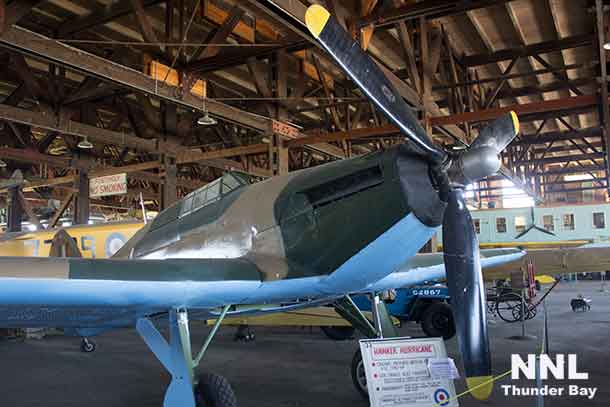
Under the British Commonwealth Air Training Plan, Canada built a continent-spanning training system that graduated 131,553 aircrew for the Allied cause—a signature Canadian contribution. By 1945 the RCAF was the world’s fourth-largest air force; the cost was heavy, with more than 17,000 Canadian airmen killed.
On land: from early disasters to decisive victories
-
Hong Kong (1941): 1,975 Canadians were sent; ~290 killed in battle and ~264 later died in captivity.
-
Dieppe (1942): A searing lesson; 916 Canadians killed and 3,367 total casualties in hours.
-
Italy (1943–45): Bitter mountain fighting cost Canadians 25,264 casualties, including 5,900+ killed.
-
Normandy—Juno Beach (June 6, 1944): Canadians suffered ~340 killed and ~961 total casualties on D-Day alone, then pushed inland. On D-Day Canadian troops were the ones who made it furthest inland.
-
Battle of the Scheldt (Fall 1944): First Canadian Army cleared the approaches to Antwerp; 12,873 Allied casualties, 6,367 Canadian.
-
Liberation of the Netherlands (1944–45): More than 7,600 Canadians died freeing Dutch cities and starving civilians from Nazi occupation.
The human scale
In total, about 1,159,000 Canadians and Newfoundlanders served; 44,090 died.
Thunder Bay’s wartime footprint: from factory floor to front line
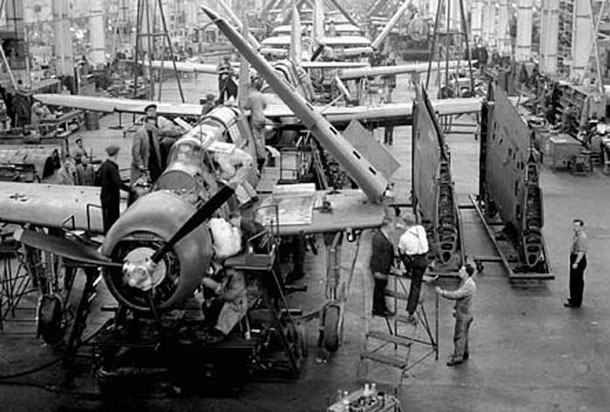
Hurricanes & Helldivers at Fort William (today’s Thunder Bay).
Canadian Car & Foundry (“Can-Car”) became a wartime powerhouse. Under chief engineer Elsie MacGill—the “Queen of the Hurricanes”—the Fort William plant built 1,451 Hawker Hurricanes (about 10% of global production) and later 835 Curtiss Helldiver dive-bombers, bringing skilled industrial jobs (many to women) to the Lakehead and aircraft to Allied air forces.
Lakehead grain to feed allies.
Port Arthur and Fort William—“the Lakehead”—were already a continental grain hub; colossal elevators and wartime overflow storage helped move Prairie wheat to Allied markets through the inland waterway network.

Ships named for the towns, built for the fight.
The Flower-class corvette HMCS Port Arthur—built at Port Arthur Shipbuilding—escorted Atlantic and Mediterranean convoys and sank the Italian submarine Tritone in 1943. HMCS Fort William, a Bangor-class minesweeper, escorted convoys and helped clear channels off Normandy.
Local soldiers overseas.
Thunder Bay’s Lake Superior Regiment (Motor)—today the Lake Superior Scottish Regiment—fought from Normandy through the Netherlands with the 4th Canadian Armoured Division.
Why Sept. 10 still matters
Canada’s 1939 declaration was a deliberate, sovereign choice that committed an industrializing nation to a global fight for freedom. From the convoys of the North Atlantic, to bomber bases and training fields at home, to Dutch towns liberated by Canadians, the country—and Northwestern Ontario in particular—played outsized roles in Allied victory.
Sources & further reading
Key references include the Canadian War Museum, Veterans Affairs Canada, Library and Archives Canada, Government of Canada histories, and Encyclopædia Britannica for the pre-war timeline and major campaigns. Specific data points cited throughout. Canadian Museum of HistoryVeterans Affairs CanadaLibrary and Archives CanadaCanada.caEncyclopedia Britannica