Ontario Announces $10.7M for Supportive Housing and Emergency Shelter in Thunder Bay
Thunder Bay is set to receive 66 supportive housing units and 120 emergency shelter spaces through a $10.7-million provincial investment.
The funding, delivered through Ontario’s Homelessness Prevention Program, will support five local projects aimed at helping people who are unhoused or at risk of homelessness.
For Thunder Bay, the announcement matters because it adds both short-term shelter capacity and longer-term transitional housing at a time when demand for housing stability, recovery supports and safe indoor space remains high across the city and region.
Mayor Ken Boshcoff stated, “The funding announced today will strengthen safety, stability, and opportunity for members of our community. While more work lies ahead, it demonstrates how collaboration between the province, the city, and our local partners can lead to real progress.”
Five projects funded across Thunder Bay
Ontario says the funding will be spread across five projects in Thunder Bay, combining transitional supportive housing with expanded emergency shelter capacity.
The largest single allocation, $3.786 million, will go to the former Adanac Hotel at 227-231 Simpson St., where 46 transitional supportive housing units are planned.
Adult and Teen Challenge’s men’s program at 107 Johnson Ave. will receive just over $1.2 million for seven transitional supportive housing units, while PACE Transitional at 409 George St. will receive $1.9 million for 13 units.
On the emergency shelter side, Grace Place at 235 Simpson St. will receive $1.05 million to add 40 shelter spaces to its existing operation.
Another $2.77 million will support the Temporary Shelter Village Initiative at 879 Alloy Pl., creating 80 modular emergency shelter spaces.
What the funding means for Thunder Bay
Taken together, the projects are designed to address different stages of homelessness.
Emergency shelter beds can provide immediate relief for people sleeping rough or cycling through unsafe situations. Transitional supportive housing, meanwhile, is intended to give people more stability while they work toward permanent housing, recovery or other supports. In practical terms, that means Thunder Bay is getting both crisis-response space and more structured options for people who need time and services before moving into long-term housing.
That balance is important in a northwestern Ontario hub like Thunder Bay, where housing pressures are often tied to mental-health needs, addictions recovery, poverty and the challenge of accessing stable accommodation in a tight market.
The inclusion of Adult and Teen Challenge in the funding mix also points to the growing overlap between homelessness and addiction recovery needs in the region.
Province highlights northern and regional needs
Municipal Affairs and Housing Minister Rob Flack said the province is working with municipal partners to expand emergency and supportive housing, including in northern communities such as Thunder Bay. Thunder Bay-Atikokan MPP Kevin Holland said the projects will help ensure people have access to safe and stable environments as they work toward long-term independence.
The funding flows through the Homelessness Prevention Program, which gives service managers such as the District of Thunder Bay Social Services Administration Board flexibility to support local priorities, including shelters, rent supports, supportive housing and capital projects. Ontario says it has allocated $654 million through the program in 2025-26, with more than $1.7 billion committed overall for housing supports for vulnerable people this fiscal year.
Local reaction stresses collaboration
Local leaders and service providers framed the announcement as a step forward rather than a final solution.
District of Thunder Bay Social Services Administration Board chair Jim Vezina said the projects are meant to meet unhoused people at different points on the path toward stable housing. “The projects announced today aim to meet unhoused individuals where they are, at different points on their path toward stable housing. We are grateful to the Ontario government for trusting us with capital funding for projects like these, and to our community partners for stepping up to address the needs in our community.”
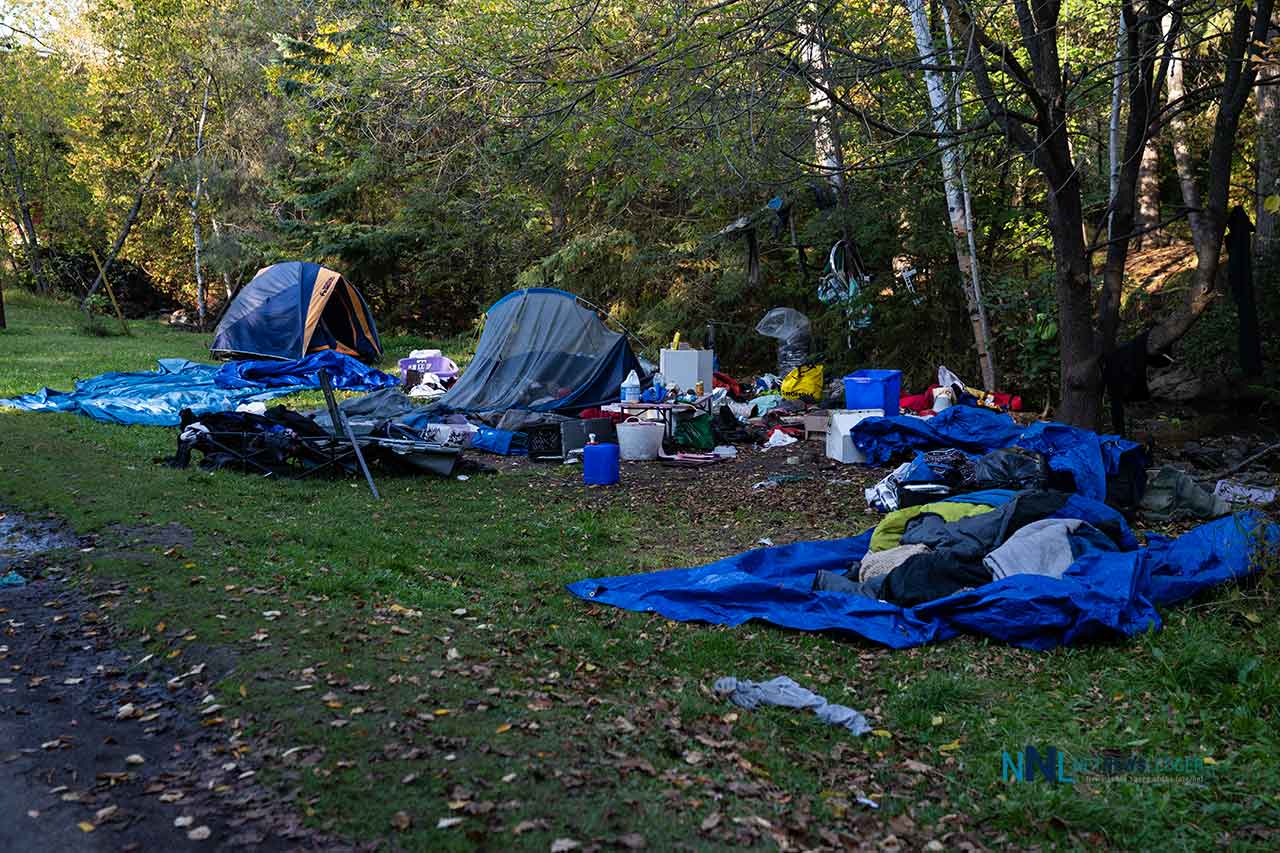
Grace Place said the funding will allow it to expand shelter space and supports, while Urban Abbey said the Adanac conversion will help create housing for people on wait-lists, in the shelter system and in encampments.
“Urban Abbey is so thankful to receive the funding and support to create 46 transitional housing apartment units in the former historic Adanac Hotel. Without the critical support of the Ontario government and collaboration with the District of Thunder Bay Social Services Administration Board, such projects would not be possible. We look forward to offering these units to those who are on housing wait lists, in the shelter system, and to those who are in encampments,” said Scotland Morrison, Head of Staff at Urban Abbey.
Mayor Ken Boshcoff said the investment shows what can be achieved when the province, city and community partners work together.
Why this matters in Northwestern Ontario
For Thunder Bay and the wider region, the significance goes beyond the raw number of beds and units.
Thunder Bay serves as a service centre for much of Northwestern Ontario. When local shelters and housing programs face pressure, the effects can ripple across health care, policing, emergency response and social-service systems. Additional supportive housing may help ease some of that strain over time by moving more people into safer, more stable settings, while the new emergency spaces could reduce immediate pressure during periods of acute need.
The real test, however, will be how quickly the projects move from announcement to operation, and whether the new spaces are matched by ongoing supports that help people stay housed.