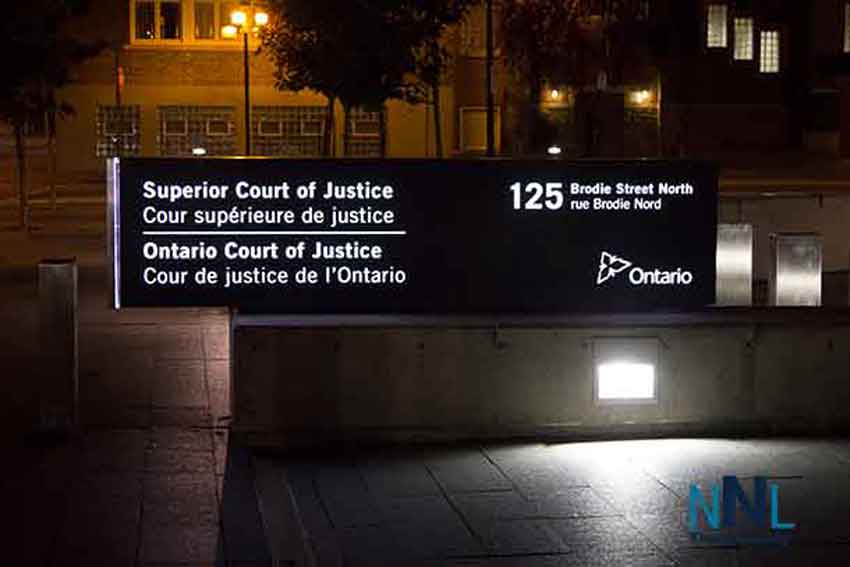
Webequie woman gets time served in Kingsway Motel case, but remains in custody on separate charges
THUNDER BAY — A 21-year-old woman from Webequie First Nation was sentenced Thursday to 12 months in custody, deemed served, after pleading guilty to accessory after the fact to manslaughter in the 2022 death of Ivan Achneepineskum at the Kingsway Motel in Thunder Bay.
The case continues to resonate across Northwestern Ontario because it ties a deadly Thunder Bay motel killing to people from remote northern First Nations who travel south to Thunder Bay for medical services, court matters and transportation.
Wabasse was originally one of three people charged with second-degree murder before her case resolved by guilty plea to the lesser offence.
Sentence imposed at Thunder Bay Superior Court
According to court details provided to NetNewsLedger, Taliyah Shermaine Faith Wabasse appeared for sentencing on March 26. Crown attorney Heather Bracken asked for a 23-month sentence, while defence lawyer George Joseph argued 12 months was appropriate. The court imposed a 12-month custodial sentence, which Wabasse has already effectively served because of 411 days of pre-sentence custody credit.
The court also imposed a two-year probation order, including a no-contact term involving Draydin Bluecoat and Jayven River Greg Spence. A 10-year weapons prohibition was ordered, with an exception for traditional purposes, along with a DNA order. The victim fine surcharge was waived.
Admitted facts outlined in court
The admitted facts, as described in court, placed Wabasse in Room 106 at the Kingsway Motel during the fatal assault on Achneepineskum in December 2022. The court heard Bluecoat and Spence beat and strangled the victim. Wabasse was said to have had blood on her shoes, disposed of evidence afterward and sent messages counselling the two men to mislead police about what had happened.
The sentencing judge, according to the court account provided, described those messages as chilling and noted their calculated and dismissive tone in the aftermath of the killing.
Bluecoat and Spence were sentenced in December 2025 after being convicted of manslaughter in the same case.
What accessory after the fact to manslaughter means
Under s. 23 of the Criminal Code, a person is an accessory after the fact if, knowing someone has been a party to an offence, they receive, comfort or assist that person for the purpose of helping them escape.
Because manslaughter is an indictable offence punishable by life imprisonment under s. 236, the general penalty rule in s. 463 means accessory after the fact to manslaughter carries a maximum penalty of 14 years in prison.
Wabasse was not sentenced as a principal offender in the killing itself, but for conduct after the homicide meant to help others avoid detection or responsibility.
Separate charges still before the court
Wabasse was not released Thursday. According to the court information provided, she remains in custody on separate allegations that she breached her bail by being in Thunder Bay without her surety and that she sexually assaulted a complainant under 16. Those charges have not been proven in court, and like every accused person, she is presumed innocent unless and until proven guilty.
The reported bail-breach allegation would typically fall under s. 145(5) of the Criminal Code, failure to comply with a condition of a release order. That offence is hybrid and carries a maximum penalty of two years in prison if prosecuted by indictment, or a lesser penalty on summary conviction.
Sexual interference, under s. 151, involves sexual touching of a person under 16 for a sexual purpose. It carries a maximum penalty of 14 years in prison on indictment, with a mandatory minimum of one year, or up to two years less a day on summary conviction, with a 90-day minimum.
Sexual assault involving a complainant under 16, under s. 271, also carries a maximum penalty of 14 years in prison on indictment, with a mandatory minimum of one year, or up to two years less a day on summary conviction, with a six-month minimum.
Any sentence on those charges would depend on the exact facts proved in court, the Crown’s election and the judge’s findings at sentencing.