Fort Frances Traffic Stop Leads to Impaired-Driving Charges and Immediate Licence Suspension
FORT FRANCES, Ont. — A routine traffic stop in Fort Frances has led to impaired-driving and multiple provincial charges after Rainy River District OPP say officers stopped a vehicle travelling without licence plates and found open alcohol within reach of the driver. The case matters across Northwestern Ontario because impaired driving remains a major public-safety issue on long regional highway routes, where a single decision can put other motorists, commercial traffic and families at risk.
Jamie Spade, 34, of North Caribou Lake, has been charged. The allegations have not been proven in court, and the accused is presumed innocent unless proven guilty in a court of law. OPP say a 90-day Administrative Driver’s Licence Suspension and seven-day vehicle impoundment were imposed at the roadside under Ontario law.
Charges laid after March 12 stop in Fort Frances
OPP say the stop happened on Thursday, March 12, 2026. Police allege the vehicle was being driven without plates and that officers found open alcohol accessible to the driver during the investigation. Spade is charged with two Criminal Code counts — operation while impaired by alcohol and drugs, and operation with a blood-alcohol concentration of 80 mg or more within two hours of driving — along with provincial counts of driving with liquor readily available, driving while under suspension, driving with no plates, operating as owner without insurance and failing to apply for a permit on becoming owner.
The OPP release lists a court date as “Thursday, Mat 21, 2026.” That appears to be a typo; Thursday, May 21, 2026 matches the weekday, but NetNewsLedger has not independently confirmed the intended court date.
What the impaired-driving charges mean
The first impaired-driving count, under Section 320.14(1)(a) of the Criminal Code, alleges a person operated a vehicle while their ability to do so was impaired to any degree by alcohol, a drug or a combination of both.
The second, under Section 320.14(1)(b), alleges the driver had a blood-alcohol concentration at or above 80 mg of alcohol in 100 mL of blood within two hours of driving. For a first conviction on these core impaired-driving offences, the minimum penalty is a $1,000 fine. If the blood-alcohol reading is 120 mg to 159 mg, the minimum fine rises to $1,500, and at 160 mg or more it rises to $2,000. A second conviction carries a mandatory minimum 30 days in jail, and a third or subsequent conviction carries a mandatory minimum 120 days in jail.
The Crown can proceed summarily or by indictment; the maximum sentence can reach two years less a day on summary conviction or 10 years if prosecuted by indictment.
Driving bans and other court-ordered penalties on conviction
A conviction for impaired driving also triggers a mandatory federal driving prohibition. For a first offence, the court must impose a driving ban of at least one year and up to three years.
For a second offence, the range is two to 10 years. For a third or subsequent offence, the prohibition is at least three years. In Ontario, those criminal penalties are layered on top of provincial sanctions.
The province says a first criminal impaired-driving conviction brings at least a one-year licence suspension, mandatory education or treatment, and mandatory ignition interlock use for at least one year. A second conviction within 10 years brings at least a three-year suspension, mandatory remedial programming, mandatory ignition interlock for at least three years and a medical evaluation.
A third conviction within 10 years can mean a lifetime suspension, with limited reduction options only after 10 years in some cases.
Explanation of the provincial charges and typical penalties
The charge of driving a motor vehicle with liquor readily available is a provincial allegation under Ontario’s liquor law that alcohol was accessible inside the vehicle; the Ontario Court of Justice set fine schedule lists that offence at $150.
Driving with no plates and failing to apply for a permit on becoming owner are also provincial offences, each carrying an $85 set fine under the current set-fine schedule. Driving while under suspension is more serious and is not treated as a simple set-fine ticket. Under the Highway Traffic Act, a first conviction typically carries a fine of $1,000 to $5,000, and repeat convictions can bring fines of $2,000 to $5,000, possible jail of up to six months and further licence consequences.
The insurance charge is among the most expensive provincial counts: under Ontario’s Compulsory Automobile Insurance Act, a first conviction for operating as owner without insurance carries a fine of $5,000 to $25,000, with subsequent convictions rising to $10,000 to $50,000.
Why an impaired-driving conviction can follow someone for years
An impaired-driving conviction is not just a one-day roadside matter. The immediate 90-day administrative suspension and seven-day impoundment happen before the court case is finished, but a conviction can add a criminal record, a lengthy loss of driving privileges, mandatory remedial programming and mandatory ignition interlock conditions before a driver can legally return to the road. In a region such as Northwestern Ontario, where many residents depend on a vehicle for work, medical appointments, family travel and movement between communities, losing a licence can quickly become a major personal and economic blow.
Safer alternatives to impaired driving
The safest option is simple: do not drive after drinking or using drugs. In Fort Frances and across Northwestern Ontario, that can mean arranging a designated driver, calling a taxi, using a ride service such as U-Ride where available, calling a friend or family member, taking public transit where it exists, or staying overnight.
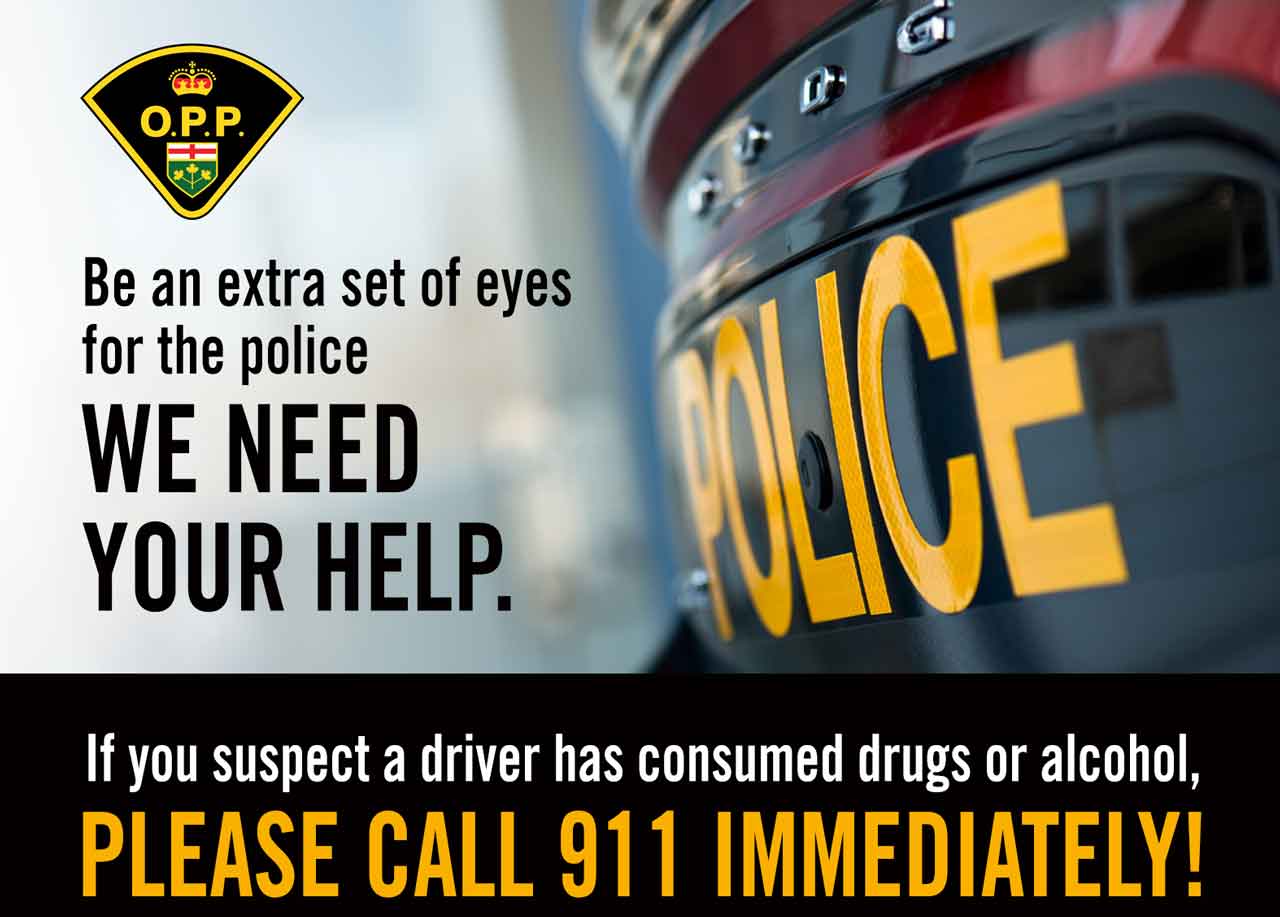
In smaller communities, planning the ride home before the evening starts is often the difference between getting home safely and facing criminal charges. OPP remind anyone who suspects an impaired driver to call 911. Anyone with information about suspected unlawful activity can contact OPP at 1-888-310-1122 or Crime Stoppers anonymously at 1-800-222-8477.