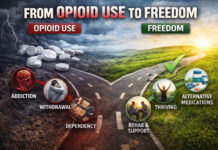
The hard truth: intensity can feel like danger to someone in survival mode
THUNDER BAY – LIVING – Across Thunder Bay and across Northwestern Ontario, many families are trying to support someone living with addiction and homelessness—while running on fear, exhaustion, and anger.
If you’re the kind of mom (or father) who goes into command-and-control under stress (loud, blunt, impatient, “I’m not putting up with this,” demanding immediate change), it may feel like you’re being strong.
But to a person in active substance use and unstable housing, that energy often lands as:
-
judgment
-
humiliation
-
a threat of punishment
-
proof they’ve already failed
The result: they don’t “wake up.” They shut down, lie, disappear, or escalate.
You can keep your firmness. You just need to redirect it toward stability + safety, not winning the argument.
1) Replace “compliance” with “stability”
When someone is using opioids, drinking heavily, and sleeping rough (or couch-surfing), the goal is not: job, school, get your life together.
The goal this week is one small harm-reducing win:
-
a safe place tonight (or a plan for warmth/safety)
-
a medical/addictions visit
-
replacing ID/health card
-
a meal + shower
-
one appointment kept
Stability first. Success later.
Think about this, how exactly would the teen be able to hold that job. Without stability, there could be little chance of that happening, and losing the job could only likely deepen the depression.
2) Stop leading with consequences; lead with consent
If your default is to lecture, threaten, or “tell it like it is,” switch to a structure that prevents power struggles.
A. Ask permission (yes, even if you pay the phone bill)
“Can I say something for two minutes—then you can tell me to stop?”
B. Name the risk plainly (no moralizing)
“I’m scared. Opioids and alcohol together can kill someone. I’m not willing to pretend it’s fine.”
C. Ask one open question
“What’s hardest right now—cravings, drinking, sleep, money, safety, or feeling stuck?”
D. Offer a menu (three choices max)
“If you’ll do one thing this week, pick one:
-
quick addictions clinic visit,
-
housing/case management connection, or
-
counselling chat.”
Then stop. Don’t fill the silence with speeches.
3) Trade “I’m right” for “I’m reliable”
This is the pivot for high-control caregivers: being right doesn’t move the needle—being predictable does.
Reliable sounds like:
-
same message every time
-
calm tone
-
short sentences
-
follow-through without drama
Unreliable sounds like:
-
rage texts, ultimatums, then rescues
-
long emotional arguments
-
switching rules depending on guilt
-
“This is the last time!” (until next time)
Consistency is what builds change.
4) Boundaries are not punishments. They’re policies.
You can be firm without being cruel. Use “policy language” instead of personal attacks.
Examples:
-
“I will buy food, a phone card, or a ride to appointments. I will not give cash.”
-
“You can’t be in my home if you’re high or drunk.”
-
“I will always help you access treatment, medical care, or housing supports.”
Avoid:
-
“You’re ruining my life.”
-
“You’re selfish.”
-
“You love drugs more than your family.”
Those lines don’t motivate—they injure.
5) Treat it like a medical emergency, not a character flaw
If opioids are involved, naloxone is a practical safety step (Ontario has free naloxone kits through many pharmacies).
If someone is unresponsive or breathing is slow/absent: call 911.
If someone drinks heavily every day, quitting suddenly can be medically dangerous—detox/medical support may be needed.
6) Thunder Bay “next-step” doors (make it easy, not theoretical)
If they’ll accept help, offer to drive and wait—reduce friction.
-
RAAM Clinic (Rapid Access Addictions Medicine)
Fast access for substance use treatment options and referrals (not long-term detox).
Thunder Bay RAAM (NorWest site): 807-626-8478 -
The Access Point Northwest
Intake/navigation for outpatient mental health services, supportive housing, case management.
807-624-3400 -
Shelter House Thunder Bay
Low-barrier shelter and supports.
807-623-8182 -
CMHA Thunder Bay Crisis Response (24/7)
807-346-8282 -
ConnexOntario (24/7)
1-866-531-2600 | Text CONNEX to 247247 -
211 Ontario
Dial 2-1-1 or 1-877-330-3213 -
Immediate self-harm risk
Call/text 9-8-8
7) A one-sentence script for “manager-mode” moms
Use this when you feel the urge to lecture:
“I’m not asking you to fix your life this week—just do one step with me so you’re safer.”
If they say yes: you drive, you sit with them, you help them through the door.
8) Get support for you, because fear makes people controlling
If you’re acting harsh, it’s often grief in disguise. Families do better with peer support (Al-Anon/Nar-Anon), counselling, or coaching around boundaries—so you can stay connected without getting pulled into the cycle.
The reality is you are facing a crisis and a real challenge. Your main opponent is addiction which is a very controlling manager over a youth. So, look at where you are, how you and your loved one got to where you are, and decide that dealing with this is really crucial to the survival of that person.
Changing your approach could save a life.