Council vote follows state-of-emergency calls from NAN and Fort William First Nation
THUNDER BAY — February 18, 2026 — The City of Thunder Bay has formally declared homelessness a humanitarian crisis, following a Council decision approved on February 17. The declaration is being framed as a shared commitment alongside Anemki Wajiw (Fort William First Nation) and Nishnawbe Aski Nation (NAN).
City officials describe a humanitarian crisis as a situation where life, health, safety, or dignity are at sustained and unacceptable risk — and where existing systems cannot meet basic needs such as safe, adequate shelter.
Mayor Ken Boshcoff said the declaration acknowledges the risks people are facing and signals an urgent push for coordinated action across Indigenous partners, community agencies, and other orders of government.
However, this humanitarian declaration does not apparently carry any power to garner resources from senior levels of government.
The steps that led to this decision
The declaration follows weeks of escalating public pressure — particularly from Indigenous leadership.
-
January 23, 2026: NAN and Fort William First Nation wrote to the City calling for a State of Emergency on homelessness, warning of deadly conditions for people sleeping outside.
-
January 29, 2026: Mayor Boshcoff responded, agreeing the situation is a crisis and confirming he was consideringan emergency declaration, while stressing that a declaration alone wouldn’t automatically unlock housing or funding.
-
February 3, 2026: Leaders from the City, NAN, and Fort William First Nation met to strengthen collaboration and joint advocacy on urgent and longer-term actions.
-
February 17, 2026: Council voted 10–1 to declare homelessness a humanitarian crisis.
What the declaration changes
The City says the declaration is intended to:
-
Create a clearer framework for joint leadership and accountability
-
Strengthen advocacy to the province and federal government for additional resources
-
Align planning and reporting with Council’s priorities and partner needs
The Thunder Bay District Social Services Administration Board (TBDSSAB) will join the work moving forward, and the City says a leadership table will bring together Anemki Wajiw, NAN, TBDSSAB, and the City, with other community partners invited as the work evolves.
Background: delays around the “temporary encampment” response
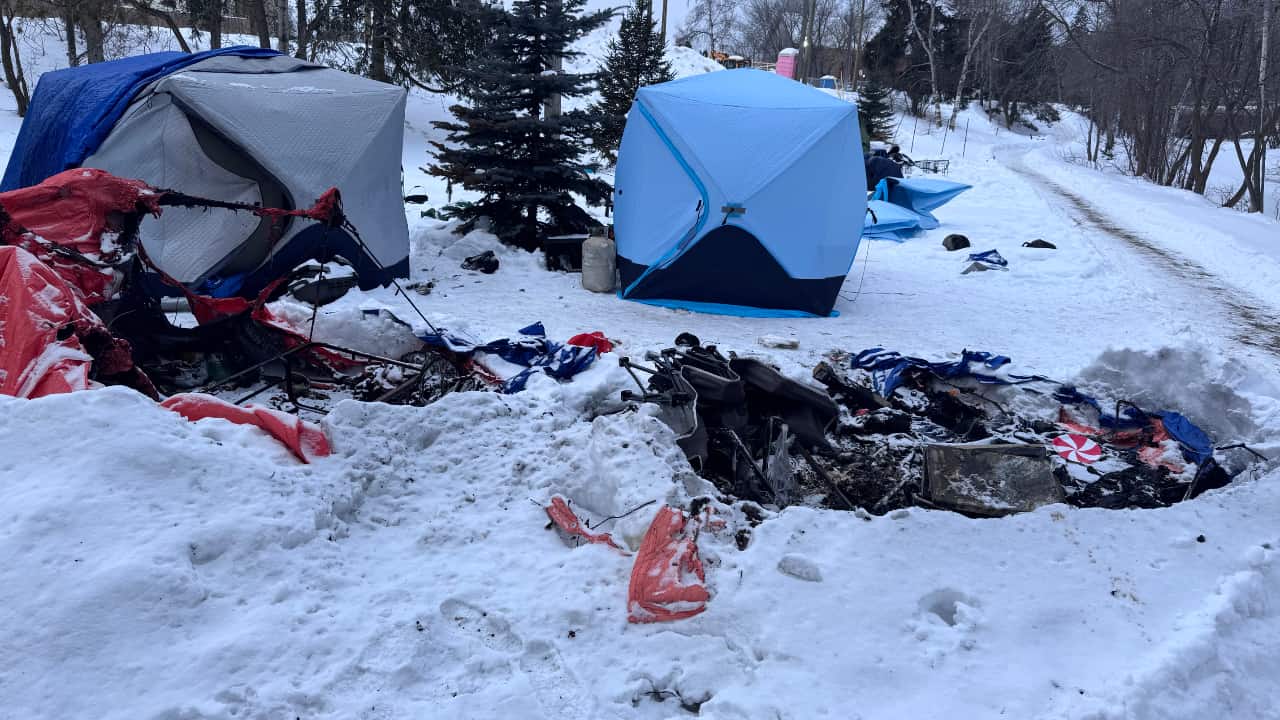
A major backdrop to the declaration is the City’s longer-running encampment response — including the Temporary Shelter Village (sometimes described publicly as a “temporary” encampment alternative) and ongoing work to manage outdoor sites.
Council approved the City’s Enhanced Encampment Response — a 10-part, human-rights-based plan — in October 2024, which included developing designated approaches and a “mini cabin village” model as a safer indoor alternative.
Some critics point to the city taking on this responsibility which is actually outside of their responsibilities and will likely not be as temporary as being suggested.
But the shelter village has faced repeated delays and location changes:
-
In late 2024, the City publicly advanced site recommendations and weighed alternatives, warning some options could delay other redevelopment work.
-
In April 2025, administration recommended 1111 Fort William Road (LRCA lands), subject to conditions and approvals.
-
By June 2025, Council was debating — and moving to rescind — earlier site decisions through formal notice of motion, underscoring how contentious and slow the process had become.
-
The City ultimately selected 879 Alloy Place. Site preparation began in late October 2025, and the project timeline shifted — with the City later pointing to a Spring 2026 opening expectation rather than the earlier end-of-year target.
What happens next
The City says the declaration is meant to unify partners around “system change” while pushing for greater provincial and federal support. Locally, residents will be watching for concrete outcomes: faster access to shelter, safer public spaces, better health supports, and clearer pathways from encampments into housing.