
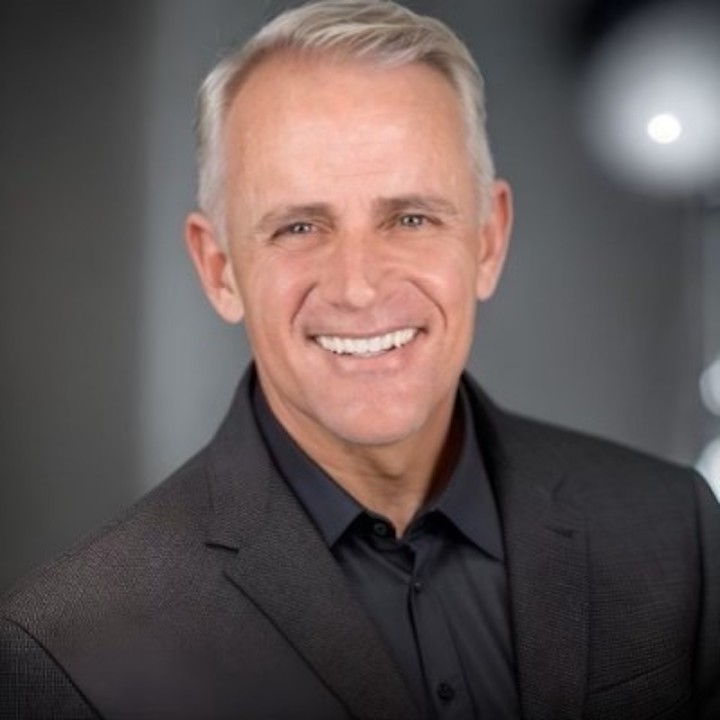
Leadership development is undergoing a fundamental shift, and according to Rowdy Oxford, that change is long overdue. As organizations face mounting pressure from economic volatility, workforce transitions, and increasingly complex operational environments, leadership cannot be built on abstract models or classroom-only training. It must be forged through execution, adaptability, and human-centered decision-making.
Oxford, a senior business development leader at JD Martin and a long-serving emergency preparedness professional, believes the most effective leadership pipelines today are those grounded in real-world demands. “Organizations are realizing that leadership development cannot live in isolation,” Oxford says. “It has to be tied directly to how decisions are made, how teams respond under pressure, and how leaders adapt when conditions change.”
Across industries, companies are reinvesting in leadership development with sharper expectations. Instead of broad competency lists, they are defining future-ready capabilities such as resilience, situational awareness, and the ability to lead through uncertainty. Oxford notes that this mirrors what high-performing environments have always required. “Leadership is tested in moments where there is no perfect information,” he explains. “The question is not whether someone knows the theory, but whether they can act with clarity, empathy, and accountability when it matters.”
According to Oxford, one of the most important changes is the move away from purely technical skill-building. While technical expertise remains essential, it is no longer sufficient on its own. Modern leaders must understand systems, people, and consequences simultaneously. “You can have the best technical solution in the world,” Oxford adds, “but if you cannot align people around it or adapt when assumptions break down, the solution will fail.”
This is why organizations are increasingly tying leadership development to real business challenges. Oxford points to a growing trend of rotational assignments, scenario-based decision training, and accountability tied to outcomes rather than participation. “Development has to be earned through execution,” he says. “When leaders are responsible for real results, learning becomes immediate and lasting.”
Oxford emphasizes that adaptability is now a core leadership skill, not a secondary trait. Markets shift, supply chains evolve, and crises emerge with little warning. Leaders who rely on static playbooks struggle to keep pace. “Adaptability is about mindset,” Oxford explains. “It is the willingness to reassess, to listen, and to change course without losing purpose.”
Resilience is another capability Oxford believes organizations must intentionally develop. Resilience is not simply endurance, but the ability to recover, learn, and improve after disruption. “Strong leaders help their teams absorb shocks without breaking,” Oxford says. “They create environments where people can perform under stress and still grow from the experience.”
Equally important is the renewed focus on human-centered leadership. Oxford notes that the most effective leaders understand that decisions ripple outward through people and communities. “Human-centered decision-making does not mean avoiding hard choices,” he explains. “It means making those choices with awareness of their impact and with respect for the people involved.”
This perspective is shaping how leadership pipelines are being rebuilt. Organizations are placing greater emphasis on emotional intelligence, ethical judgment, and communication under pressure. Oxford sees this as a recognition that trust is now a strategic asset. “Trust accelerates execution,” he says. “When teams trust their leaders, they move faster, collaborate better, and recover more quickly from setbacks.”
Oxford also highlights the importance of mentorship within leadership development. He believes pipelines are strongest when experienced leaders actively invest in the growth of others. “Mentorship is how values and judgment are transferred,” Oxford notes. “It is how organizations ensure continuity, not just capability.”
Looking ahead, Oxford believes leadership development will continue to evolve toward integrated, outcome-driven models. Digital tools and data will play a role, but they will not replace the need for judgment and presence. “Technology can inform decisions,” he says. “Leadership is still about people making choices in uncertain conditions.”
For Oxford, the message to organizations is clear. Leadership development must be practical, demanding, and deeply connected to real work. It must prepare leaders not just to manage, but to respond, adapt, and lead with purpose. “The future belongs to leaders who can execute with discipline and lead with humanity,” Oxford concludes. “That is how resilient organizations are built.”
As leadership expectations continue to rise, Oxford’s perspective underscores a broader shift underway. Development is no longer about credentials alone. It is about readiness. It is about building leaders who can take on responsibility and deliver results when the stakes are highest.