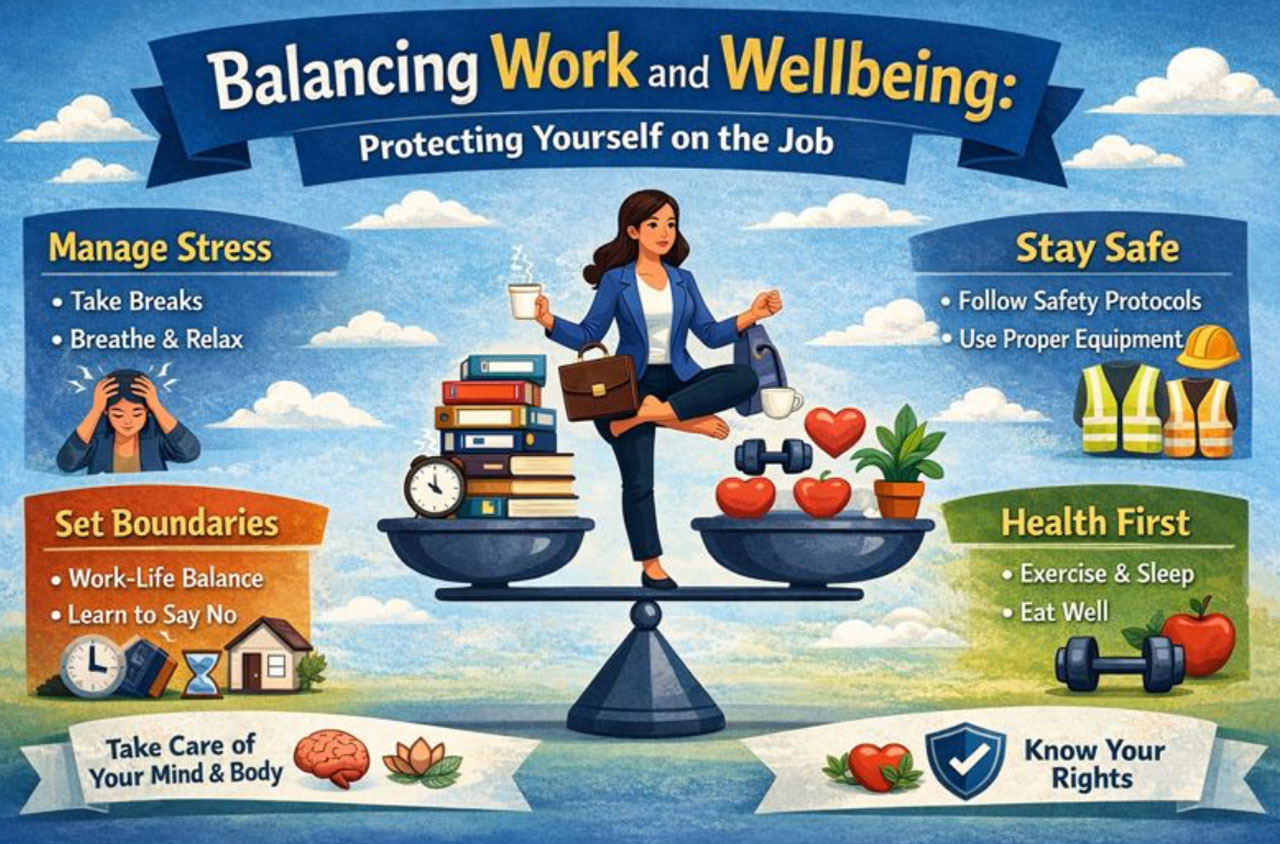
Jobs can take a toll on our mental and physical well-being. From dealing with long hours at a desk to high expectations from managers, it can be hard to find time to prioritise good health practices. This can result in stress, burnout, and even injury, leaving you to wonder about your rights and compensation at work.
Let’s take a closer look at some practical ways you can safeguard both your mind and body while still excelling in your role.
Understanding the Importance of Workplace Wellbeing
Stress and physical discomfort can impact you in the long and short term. It can be hard to be productive and focus on tasks. This often leads to you overworking and experiencing fatigue.
Mental health issues, including anxiety or depression, are often exacerbated by stress at work, which makes it vital to create a work environment that promotes balance and care. Prioritising your wellbeing allows you to remain engaged and productive while safeguarding your long-term health.
Setting Up a Safe and Ergonomic Workspace
You can invest in ergonomic equipment that is scientifically designed to support your cognitive and physical well-being. This aids your comfort and reduces the risk of physical health problems from developing.
Many of us spend hours sitting at desks, which can lead to back and neck pain, eye strain, and even long-term musculoskeletal problems. Make sure your chair provides adequate support for your back, and that your feet can rest flat on the ground. Your computer monitor should be at eye level to prevent straining your neck and eyes. A proper keyboard and mouse setup can reduce strain on your wrists. Consider a stand-up desk if you find yourself sitting for long periods – standing for just a few minutes each hour can reduce muscle tension and improve circulation.
Managing Stress Before It Manages You
Stress is an inevitable part of many jobs, but you can try to control it before it starts to take over your life. Start by identifying the sources of your stress. Are tight deadlines causing anxiety? Or are you overburdened with too many tasks? Once you know what’s causing the tension, you can take action to address it. For example, break large projects into manageable chunks or prioritise tasks based on urgency. Practising mindfulness or taking deep, slow breaths can also help calm your nerves in stressful moments. Regularly checking in with yourself and communicating with your manager about your stress levels can help prevent burnout.
Staying Active and Taking Regular Breaks
When you’re working, aim to take a short break every hour to keep your focus sharp. Stretch or walk around for a few minutes to boost circulation and reduce muscle stiffness. This also helps refresh your mind and reduce the risk of computer vision syndrome. Also, try incorporating physical activity into your routine outside of work. This could be as simple as a morning walk, an afternoon jog, or even a quick workout session.
Knowing Your Rights: Accident at Work Compensation
No matter how careful you are, accidents at work can still happen. It’s essential to know your rights, especially when it comes to seeking compensation for an accident at work. If you suffer an injury on the job, you’re entitled to claim compensation if your employer’s negligence caused the incident. Knowing what steps to take and how to report your injury can help you secure the right support and financial assistance during recovery.
Building a Supportive Work Environment
Seek out colleagues who can offer advice or share strategies for dealing with stress. If you’re struggling, don’t hesitate to reach out to your HR department or a manager about adjusting your workload or setting realistic expectations. Encourage open conversations about well-being, as a supportive work culture can significantly reduce stress and improve morale. A good work environment prioritises the health of its employees, and having these conversations can lead to practical changes that benefit everyone.