Deep Cold expected from Thunder Bay to Dryden and Kenora
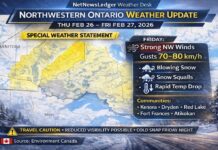
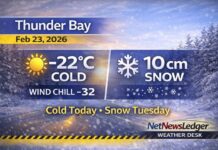
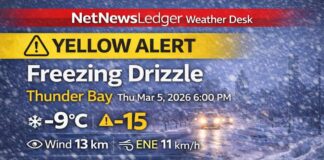
Thunder Bay – Living – Northwestern Ontario is in the grip of another serious cold stretch, with overnight lows forecast to dip into the -30s°C in several communities this week.
Thunder Bay is forecast to see lows near -32 to -33°C later this week, while Dryden and Kenora could see lows approaching -37 to -38°C.
Cold like this can quickly become dangerous for animals—especially when wind and blowing snow add extra stress.
It might seem redundant to talk about how to deal with winter, however every time it gets really cold many people seem to forget how cold weather impacts their pets, and livestock.
Dogs: Shorter outings, protected paws, and safer play
Keep outdoor time brief
If it’s too cold for you to comfortably stay outside, it’s too cold for many dogs too. Humane and veterinary groups recommend shorter outdoor trips during deep cold, especially for puppies, seniors, short-coated breeds, and dogs with health issues.
Watch the paws and belly
Road salt and de-icing chemicals can irritate paws. Wipe paws and underside after walks, and consider booties on colder days.
Avoid ice hazards
Skip frozen ponds and questionable ice—even if it “looks” solid. Veterinary guidance warns ice can fail and cold-water exposure can be deadly.
Don’t leave dogs in vehicles during a cold snap
Cars get cold fast and don’t hold body heat well in extreme winter weather.
Cats: Indoors is best during extreme cold
Keep pet cats inside
Animal-welfare organizations strongly recommend keeping cats indoors during sub-zero stretches.
A quick safety habit: knock before you start the car
Outdoor and feral cats sometimes seek warmth under vehicle hoods. Knocking on the hood or making noise by honking the horn before starting can help prevent tragedy.
Watch for winter toxins
Antifreeze is highly toxic to pets. Clean up vehicle drips promptly and store chemicals securely.
Livestock: Wind, water, bedding, and calories matter most
Windbreaks reduce “effective temperature”
For cattle, it’s not just the air temperature—it’s the effective temperature, which factors in wind chill. Cold stress increases as wind rises and shelter becomes crucial.
Practical steps:
-
Provide windbreaks (natural or built). Research-based guidance notes windbreak design matters, including porosity and protected area.
-
Add dry bedding to help animals retain heat and stay dry.
Water access is a winter priority
Animals still need reliable water—dehydration reduces feed intake and resilience. For outdoor animals, veterinary guidance recommends ensuring a water source that won’t freeze (heated or insulated solutions), and avoiding metal bowls in severe cold.
Plan to increase feed during extreme cold
Cold stress can push cattle to eat more, and energy needs rise when effective temperatures drop below their comfort range. Beef research notes feed intake can increase significantly in cold stress, and producers often need to adjust rations accordingly.
Extra checks during the coldest nights
-
Check animals more often at night and early morning when temperatures bottom out.
-
Keep barns ventilated to reduce moisture buildup, while preventing drafts at animal level.
-
Pay special attention to young stock and thin animals, which can lose heat faster.
Quick checklist for Northwestern Ontario households and farms
-
Fresh, unfrozen water (indoors and out)
-
Warm, dry bedding away from drafts
-
Shorter outdoor time for dogs; wipe paws after walks
-
Keep cats inside; knock before starting vehicles
-
Shelter/windbreaks and feed planning for livestock
If you’re worried an animal is in distress or being left outside without adequate shelter, contact local animal services/humane society or your veterinarian right away.
Animal Care Summation: Cold snap in NWO: tips to protect dogs cats and livestock from wind chill, frostbite and ice at home.