THUNDER BAY — Thunder Bay has always been more than a “resource town.” Long before today’s conversations about reshoring, “Buy Canadian,” and supply chains, the Lakehead was already doing what it still does best: building big things.
From ship hulls and warplanes to tractors, forestry machines, and generations of transit vehicles for Toronto, the city’s manufacturing story is deep, durable, and closely tied to geography—where the rail lines met Lake Superior.
Thunder Bay has a gritty manufacturing history, one that has helped make Canada great.
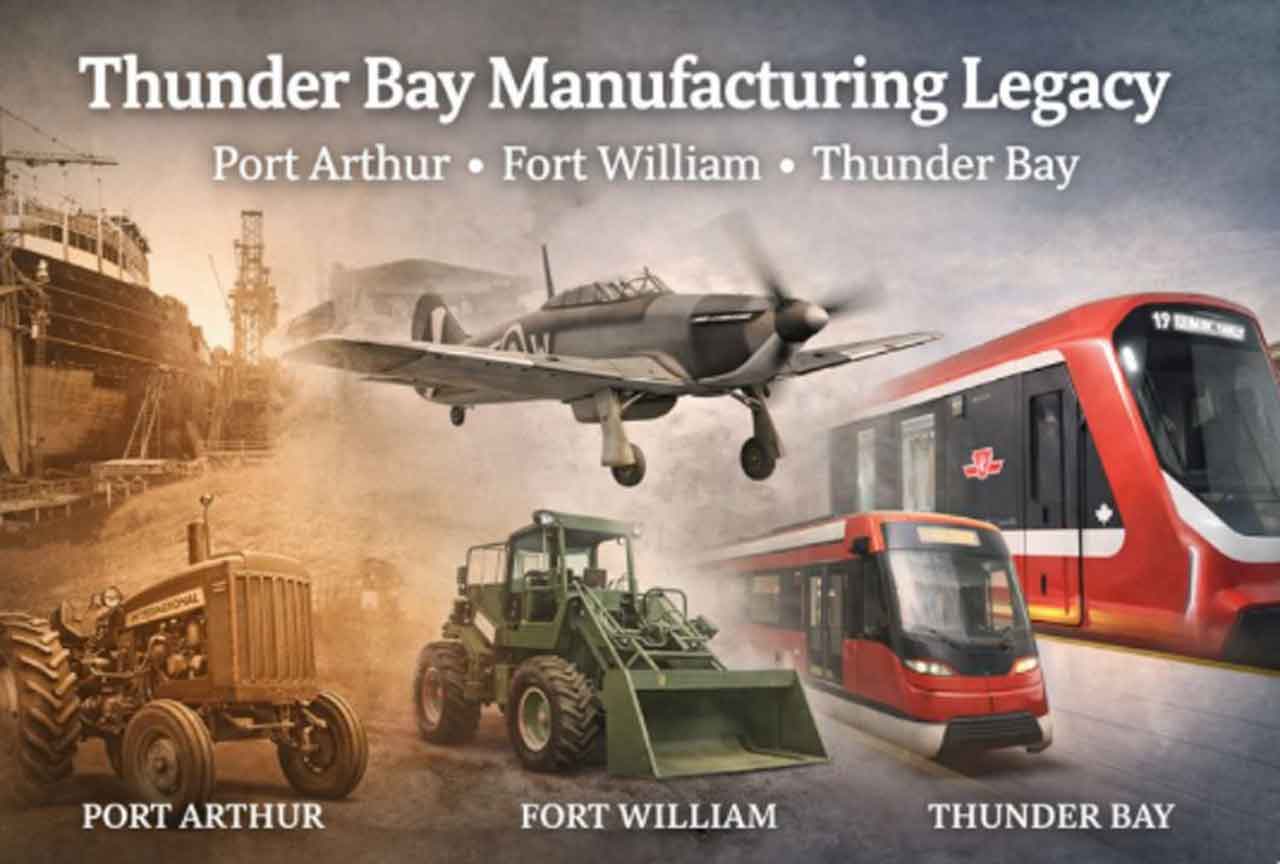
Looking at the history of the industries and factories that helped shape Thunder Bay’s identity and workforce, with special focus on the cornerstones many residents still talk about: shipbuilding, International Harvester tractors, Tree Farmers, Hawker Hurricanes, and rail vehicles—especially for the TTC.
Built by water and rail: why industry took root here
Thunder Bay’s industrial rise is inseparable from its location. The harbour and river systems, the grain and freight economy, and the east–west rail networks made the Lakehead a natural place to repair, assemble, fabricate, and ship.
That advantage created a manufacturing ecosystem: heavy shops, welding and machining trades, fabrication yards, and an export mindset—because Thunder Bay wasn’t just building for itself. It was building for markets stretching across Western Canada and beyond.
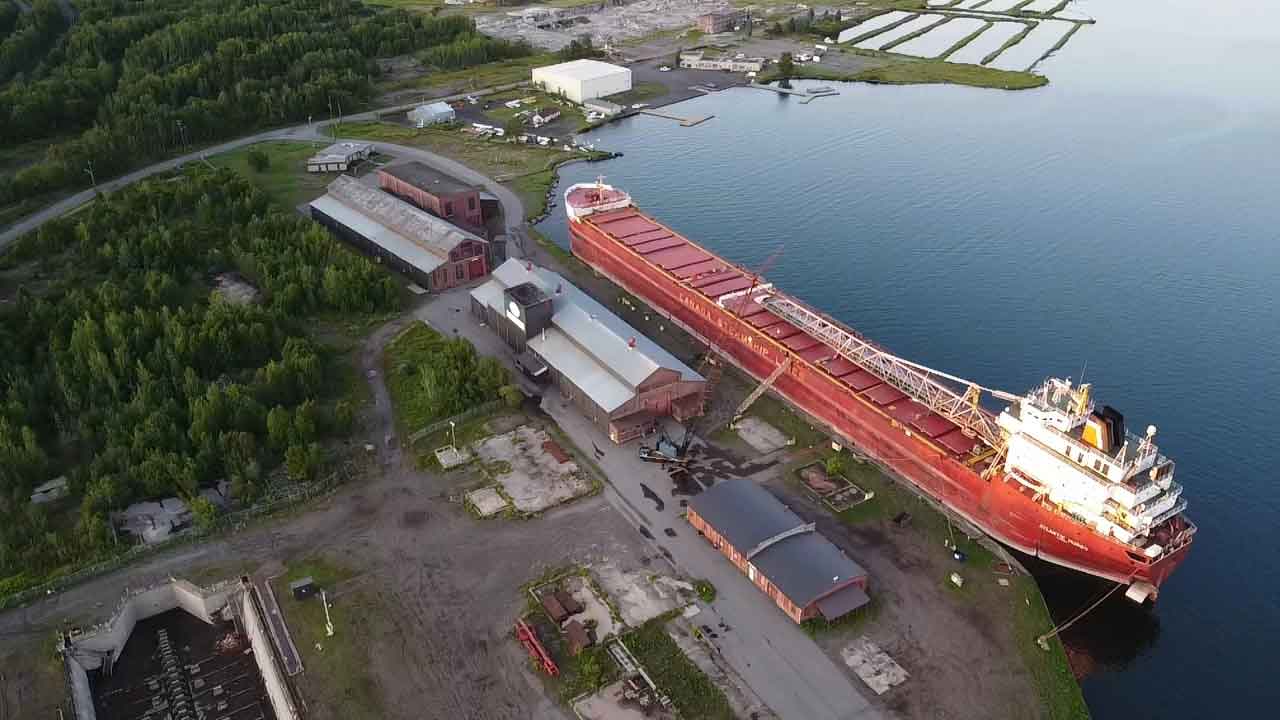
Shipbuilding’s long run: Port Arthur’s dry dock and the lake freighter era
Shipbuilding was one of Thunder Bay’s earliest big-industrial signatures, rooted in Port Arthur’s role as a Great Lakes hub.
The shipyard that became widely known as Port Arthur Shipbuilding traces back to the Western Dry Dock and Shipbuilding Company, established in 1909 and operating from 1911, later renamed in 1916 as the Port Arthur Shipbuilding Company. The yard built and repaired a wide range of Great Lakes vessels and contributed to wartime production during both World Wars.
While the original shipbuilding operation ceased in the early 1990s, the site’s industrial legacy continued through subsequent repair and marine service efforts.
For generations, shipbuilding provided steady work and helped establish Thunder Bay’s reputation for heavy industrial capability—skills that later transferred into rail and fabrication.
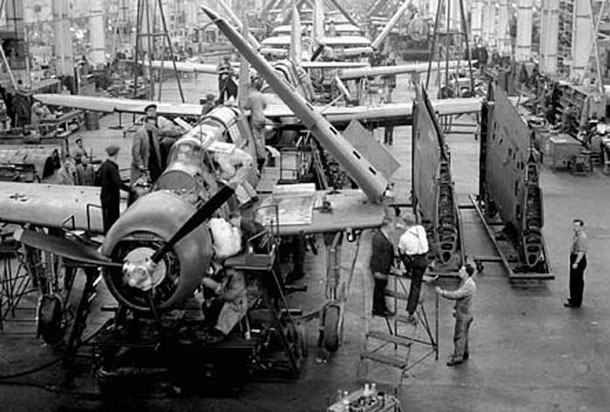
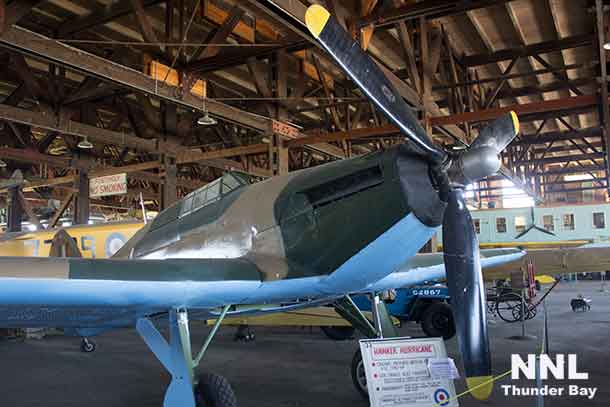
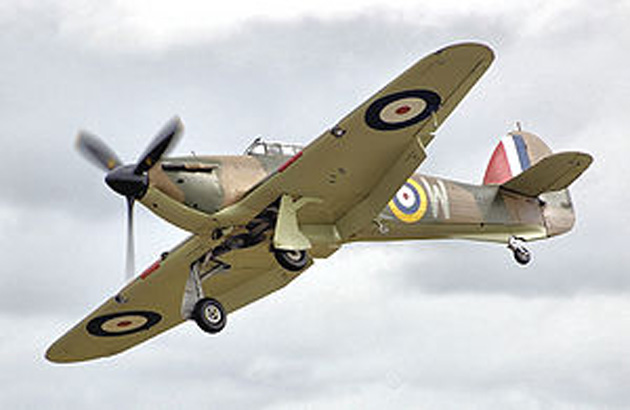
“Can Car” and wartime production: Hawker Hurricanes built in Fort William
If there is one manufacturing story that still resonates nationally, it’s this: Thunder Bay helped build the Allied air effort in the Second World War.
The former Fort William plant of Canadian Car & Foundry (CC&F)—often referred to locally as “Can Car”—became a major wartime aircraft factory. Parks Canada notes that workers at the site built 1,451 Hawker Hurricanes and 835 Curtiss Helldivers, a production effort that significantly expanded Allied air power.
That history is formally recognized: the Canadian Car & Foundry complex in Thunder Bay is a National Historic Site of Canada, in large part because of what it produced during WWII.
In plain terms: this city didn’t just support the war effort—it manufactured it.
Postwar diversification: buses, forestry machines, and the Tree Farmer story
After WWII, Thunder Bay’s big plants had to pivot. The Can Car facility returned to civilian manufacturing and went through multiple ownership and product cycles—part of a broader Canadian story of industrial adaptation.
Parks Canada notes that the plant transitioned through making railcars, introduced a “popular series of buses and streetcars,” and manufactured products including forest skidders (Tree Farmers) before later focusing on rapid transit vehicles.
The “Tree Farmer” name, in particular, sits in local memory as a symbol of Thunder Bay’s connection to Northwestern Ontario’s forestry economy—machines built for bush work, cold weather, and hard terrain. Even as brands and corporate structures changed, the underlying reality stayed consistent: Thunder Bay could build durable equipment for real-world conditions.
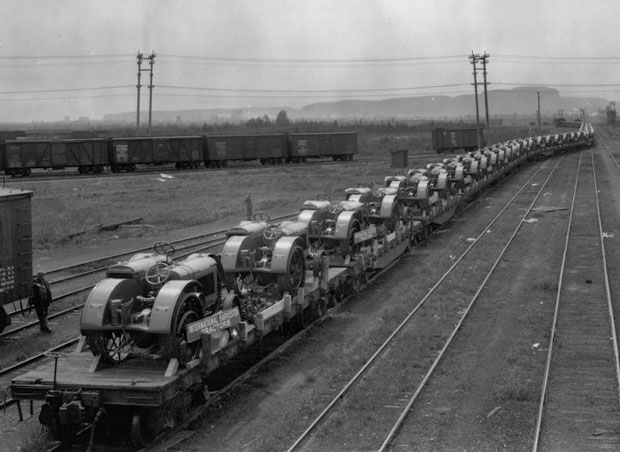
Farm equipment on the Kam: International Harvester tractors bound for the Prairies
Thunder Bay’s manufacturing story also includes agriculture—specifically assembly and shipment of International Harvester equipment in Fort William.
NetNewsLedger has previously documented that the International Harvester building on Syndicate Avenue along the Kam River was built just before the First World War to assemble farm equipment for the booming Western Canadian market, with tractors shipped west by rail.
Historic imagery and archival descriptions also show tractor shipments associated with Fort William rail yards in the early 20th century, reflecting how deeply Thunder Bay was embedded in Prairie supply lines.
For many locals, it’s one of those stories that still surprises people outside the region: Thunder Bay wasn’t only shipping grain and ore—it was shipping the machines that helped grow the grain.
The modern identity: rail vehicles—and a direct line to the TTC
Over time, rail manufacturing became Thunder Bay’s most enduring large-scale manufacturing identity, and it’s where the city’s story intersects most clearly with Toronto.
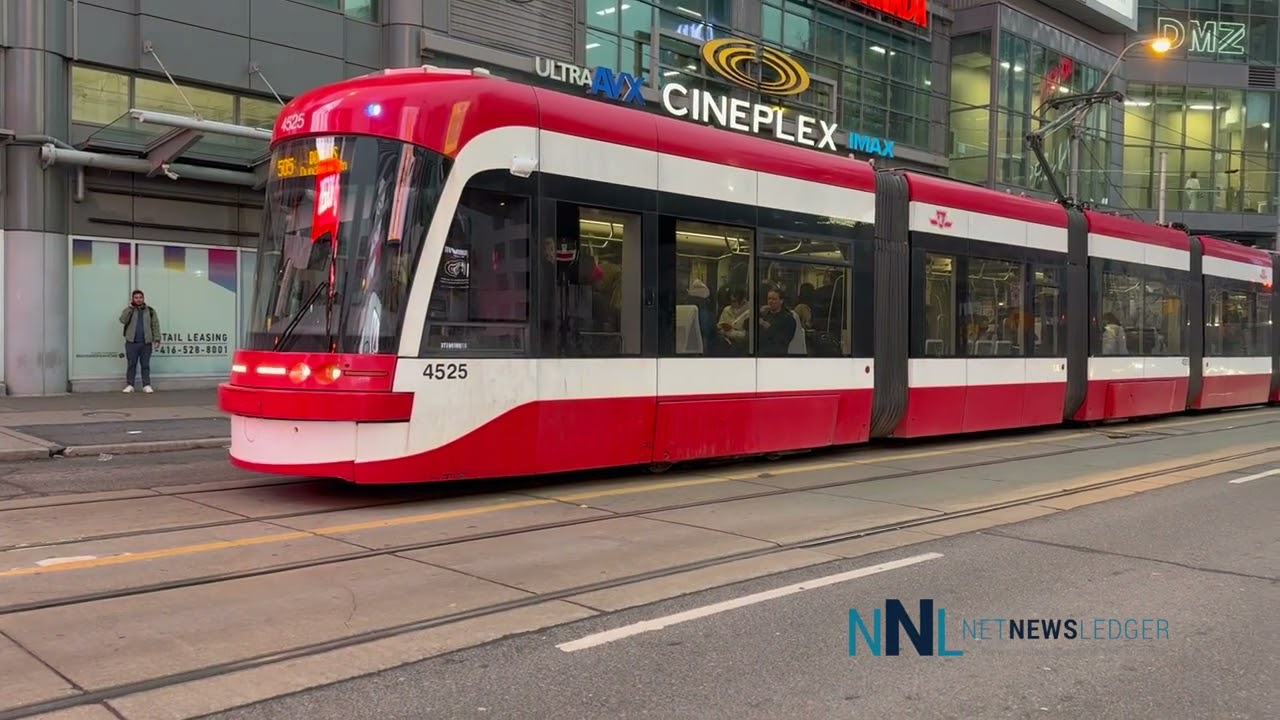
The CLRV era: TTC streetcars built in Thunder Bay
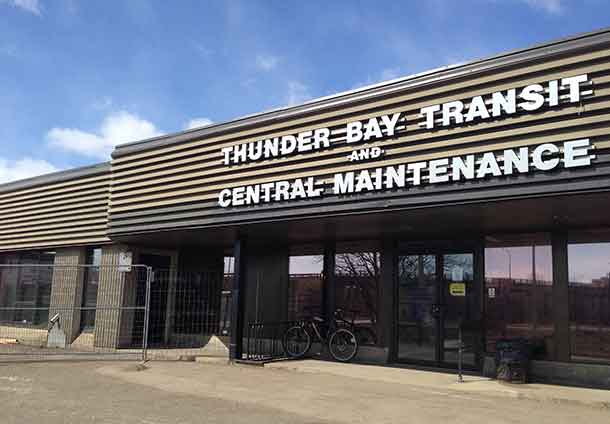
In the late 1970s and early 1980s, the Thunder Bay plant—under the Hawker Siddeley/UTDC lineage—manufactured a major portion of the TTC’s next-generation streetcars.
The TTC’s Canadian Light Rail Vehicles (CLRVs) were built from 1977–1981, with the first units produced in Switzerland and the bulk of the fleet produced at the Thunder Bay works. Wikipedia’s CLRV history notes that 190 CLRVs were built at Thunder Bay (fleet numbers 4010–4199).
This was a pivotal moment: Thunder Bay wasn’t just participating in Canadian transit—it was manufacturing iconic TTC vehicles that would run for decades.
Flexity and the modern TTC connection
More recently, Thunder Bay has been central to production of Toronto’s low-floor Flexity Outlook streetcars—built in Thunder Bay (with supplemental work in other facilities as production ramped).
And when additional TTC streetcar orders were announced in the 2020s, Northern Ontario Business and other outlets emphasized what it meant for sustained work at the Thunder Bay plant.
From Can Car to Alstom: the same plant, new chapters
A key theme in Thunder Bay’s manufacturing history is continuity through change. The same industrial site that built wartime aircraft became a modern transit-vehicle factory—a transformation noted by Parks Canada, which highlights the plant’s later role producing TTC subway cars and its current ownership in the rail sector.
Ownership names shift—CC&F, Hawker Siddeley, UTDC, Bombardier, Alstom—but the industrial truth remains: Thunder Bay has maintained a rare Canadian capability—large-scale fabrication and assembly of complex vehicles.
Why this history matters now
Manufacturing history isn’t nostalgia in Thunder Bay; it’s a living asset.
A skilled industrial workforce, a plant capable of heavy assembly, and a culture of building to northern conditions are competitive strengths—especially as governments and industries talk more about domestic production, supply chain resilience, and rebuilding Canadian capacity.
Thunder Bay has already proven—again and again—that it can manufacture for national needs. The city’s story isn’t just “what we used to make.” It’s what we’re still positioned to make next.