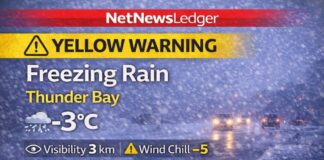
An Alberta Clipper That is What’s happening
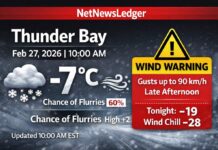
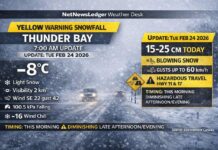
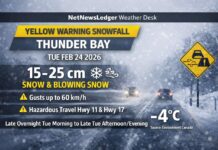
Thunder Bay – WEATHER – An Alberta clipper is set to slide across the Lakehead this afternoon and into tonight, bringing bursts of heavy snow and blowing snow. Expect poor visibility at times, slick roads, and quick changes from clear to whiteout—especially in open areas and on bridges.
Right now (2:00 p.m. EST)
At Thunder Bay Airport it’s –12°C, mostly cloudy, with a wind chill of –20. Wind WSW 17 km/h, pressure 102.2 kPa (falling), humidity 41%, and visibility 32 km. Conditions will deteriorate as the clipper arrives.
This afternoon and tonight
Snow spreads in this afternoon and continues into the night. General snowfall 5 to 10 cm, with local spots up to 15 cm under heavier bands. Gusty winds will kick up blowing snow and drop visibility to near zero at times. Travel will be hazardous. Snow should taper after midnight, with patchy flurries lingering toward morning.
Friday and the weekend at a glance
Friday stays cloudy with a 30–40% chance of flurries and a cold feel through the day. The weekend looks cold but brighter, with sunny stretches Saturday and Sunday and very chilly nights.
Road safety
If you must travel, slow down, keep headlights on, and leave extra room to stop. Expect drifts on exposed roads, plow ridges, and black ice after dark. For official road condition updates, use Ontario 511 through their usual channels.
What to wear
Go full winter kit: thermal base, insulating mid-layer, and a wind-resistant parka. Add a toque, scarf/neck warmer, and warm mitts, plus winter boots with good tread. With wind chills dipping hard, frostbite is a risk on exposed skin.
Today’s data essentials
Wind: WSW 17 km/h (gusty later) • Pressure: 102.2 kPa, falling • Humidity: 41% • Visibility: 32 km (will drop in snow/blowing snow)
Historic high/low for this date: Not available in today’s update.
Lakehead weather trivia
Fast-moving Alberta clippers don’t carry much moisture, but their speed and strong winds can make modest snow totals feel like a full-on blizzard—visibility, not depth, becomes the main hazard.