THUNDER BAY – Crime and Public Safety – Four people are facing drug-related and proceeds of crime charges after police executed a search warrant at a business and residence on Thunder Bay’s north side.
On Thursday, November 20, 2025, at about 5:00 p.m., members of the Thunder Bay Police Service Intelligence Unit, with help from the Ontario Provincial Police Organized Crime Enforcement Bureau, executed a search warrant at a property in the 300 block of Shuniah Street.
The warrant was obtained as part of an investigation into suspected drug trafficking at that address.
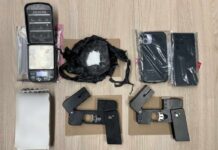
During the search, officers located suspected cocaine with an estimated street value of more than $17,000, along with Canadian currency and items police say are consistent with drug trafficking activity.
Accused and Charges
As a result of the investigation, the following individuals have been charged:
-
Shelley BACHYNSKI, 55, of Thunder Bay
-
James CRESSMAN, 56, of Thunder Bay
-
Bonnie LAGRANGE, 36, of Thunder Bay
-
Lindsay ORELLANA, 29, of Toronto
They are each charged with:
-
Possession for the Purpose of Trafficking – Cocaine
-
Proceeds of Crime
All four accused have appeared in court.
-
CRESSMAN and ORELLANA have been remanded into custody with future court dates.
-
BACHYNSKI and LAGRANGE have been released on conditions and are scheduled to return to court at later dates.
The charges have not been proven in court. All accused are presumed innocent unless and until found guilty.
What the Charges Mean and Possible Penalties
Possession for the Purpose of Trafficking – Cocaine
This charge is laid under section 5(2) of the Controlled Drugs and Substances Act (CDSA). It applies when someone is alleged to possess a controlled substance with the intent to sell, give, or distribute it, rather than for personal use.
Cocaine is listed as a Schedule I drug under the CDSA, the category reserved for some of the most tightly controlled substances in Canada.
Under s. 5(3)(a) of the CDSA:
-
A person convicted of possession of a Schedule I substance for the purpose of trafficking is liable to a maximum sentence of life imprisonment if the Crown proceeds by indictment.
-
In certain situations, the law also sets mandatory minimum jail sentences, for example where:
-
The offence is linked to a criminal organization,
-
Violence or a weapon is used or threatened, or
-
The accused has a recent prior conviction for a serious drug offence.
Whether any of those aggravating factors apply in this case will be for the court to determine.
When deciding a sentence, if there is a conviction, a judge will look at factors such as:
-
The amount and purity of the cocaine
-
The role each accused is alleged to have played (street-level vs. higher-level trafficking)
-
Any prior criminal record
-
The impact on the community and the presence of cash, scales, packaging, or other trafficking tools
Proceeds of Crime
“Proceeds of Crime” charges usually relate to possession of property or money believed to be obtained through criminal activity, often laid under section 355 of the Criminal Code as possession of property obtained by crime. Under s. 355:
-
If the property is worth more than $5,000 (s. 355(a)):
-
It is a hybrid offence.
-
If prosecuted by indictment, the maximum penalty is 10 years in prison.
-
-
If the property is worth $5,000 or less (s. 355(b)):
-
It is also a hybrid offence.
-
On indictment, the maximum penalty is 2 years in prison.
-
On summary conviction, the maximum is 2 years less a day in jail and/or a fine up to $5,000.
-
The specific subsection and value of the alleged proceeds will determine the exact sentencing range if there is a conviction.
-
Judges consider:
-
The amount of money or value of property seized,
-
The link between that money/property and the alleged drug activity, and
-
Whether the accused played a major or minor role in any underlying offences.
Police continue to encourage anyone with information about suspected drug trafficking or proceeds of crime in Thunder Bay to contact local law enforcement or submit an anonymous tip through Crime Stoppers.
While police seek to do their job, the reality is that it is all up to the people of Thunder Bay to help by reporting suspected drug dealing.
Helping police deal with drug trafficking is important work – but it has to be done safely and within the law.
You’re not meant to be a hero kicking in doors. Your role is to be a good witness, protect yourself and your family, and use the proper channels so police can do their job.
Why Community Help Matters
Drug trafficking harms neighbourhoods in very real ways:
-
More thefts and break-ins
-
Violence and weapons
-
Overdoses and medical emergencies
-
Fear for children and seniors in the area
Police can’t be everywhere. They rely on tips from people who see and hear what’s really happening on the street, in apartment buildings, and around businesses.
1. Know the Signs of Possible Drug Trafficking
Seeing one of these once in a while doesn’t prove anything. But patterns over time can be a red flag:
-
Unusual traffic:
-
People coming to a home or unit at all hours, staying only a few minutes, day and night.
-
-
Frequent “hand-to-hand” exchanges:
-
Quick meetings in parking lots, on sidewalks, or in vehicles where items and cash change hands.
-
-
Heavy security for no clear reason:
-
Covered windows, cameras pointed at the street or hallway, multiple locks, people watching who comes and goes.
-
-
Strong chemical or burnt smells:
-
Unusual odours from a unit, garage, or shed that don’t match normal cooking or heating.
-
-
Discarded paraphernalia:
-
Needles, burnt foil, small baggies, pill bottles, pipes or other drug-related items left nearby.
-
If you see a pattern, that’s the kind of information police are interested in.
2. Put Safety First – What NOT to Do
There are lines you should never cross:
-
Do not confront suspected dealers or customers.
-
Do not take photos or videos in a way that puts you face-to-face with them.
-
Do not go inside a property where you think drugs are being sold.
-
Do not “pretend to buy” or get involved to “get proof.”
Drug traffickers may be armed, impaired, or desperate. Your job is to observe and report, not investigate.
If you ever feel you or someone else is in immediate danger, call 911 right away.
3. What Information Helps Police Most
Details matter. When you see something suspicious, write down what you can safely observe:
-
Location
-
Exact address, building entrance, floor or unit number if known
-
Nearby landmarks (store, school, bus stop)
-
-
People
-
Number of people involved
-
Approximate age, gender, build, hair style/colour, clothing
-
Any visible tattoos, logos, or unique features
-
-
Vehicles
-
Make, model, colour
-
Licence plate number (even partial plates can help)
-
Any damage, decals, or aftermarket parts
-
-
Pattern / Timing
-
Days and times you notice the activity
-
How often people come and go
-
How long they stay
-
-
What is happening (brief and factual)
-
“Short stay visits, 2–3 minutes”
-
“Packages exchanged for cash at the door”
-
“People lining up outside a back entrance at night”
-
Stick to facts, not guesses. “I saw five different people come to the door in 20 minutes, each staying under two minutes,” is more useful than, “They must be drug dealers.”
4. How to Report – Safely and Legally
In Canada, you have several legal, safe options to share information:
A. Call Local Police (Non-Emergency)
Use your local police non-emergency number when:
-
You suspect ongoing trafficking
-
There is no immediate threat to life or safety
You can:
-
Give your name and contact info if you’re comfortable, or
-
Ask about leaving information without being directly involved further
Police may want to follow up with you later, especially if the case goes to court.
B. Call 911 for Emergencies
Call 911 if:
-
You see violence or weapons
-
Someone appears to be overdosing or in medical distress
-
You believe a child or vulnerable person is in immediate danger
Give:
-
Your location
-
What you see
-
Whether anyone is hurt or needs an ambulance
Stay on the line and follow the operator’s instructions.
C. Use Crime Stoppers (Anonymous Tips)
If you’re worried about your name being attached to a report, Crime Stoppers allows you to:
-
Remain anonymous
-
Give detailed information
-
Sometimes qualify for a cash reward if your tip leads to an arrest or charges
You don’t give your name, and you are not expected to go to court. Crime Stoppers sends your information to police while protecting your identity.
5. Your Legal Rights and Responsibilities
A few key points under Canadian law:
-
You are not required by law to get involved beyond safely reporting what you know.
-
You must not break the law to get information – no trespassing, no recording where you’re not allowed, no hacking into phones or accounts.
-
If police later ask you to give a statement, you have the right to:
-
Ask questions
-
Get legal advice if you are unsure about anything
-
If you choose to be a witness, giving honest, accurate information is critical. Lying to police or in court is a separate criminal offence.
6. Helping Without Putting a Target on Your Back
If you live near suspected trafficking, it’s normal to worry about being identified as “the one who called.”
Some practical ways to protect yourself:
-
Don’t discuss your tip with neighbours or on social media.
-
When you call police, ask how they plan to keep your role confidential.
-
Use Crime Stoppers if you feel any risk to yourself or your family.
-
If you live in a multi-unit building, note that police often receive multiple complaints – you are rarely the only one who has noticed.
If the situation makes you feel unsafe in your own home, talk to your landlord, housing provider, or building management. They may also work with police and safety units.
7. Community Action Beyond Police Reports
Reporting trafficking is one part of the picture. Communities can also:
-
Support youth programs that keep kids away from crime.
-
Promote addiction and mental health services, so people who use drugs have options besides the street.
-
Work with local neighbourhood groups, Indigenous organizations, and service agencies to identify problem areas and solutions.
When communities, police, and service providers work together, it becomes harder for traffickers to operate in the shadows.
Final Word
You don’t have to look the other way when drug trafficking shows up on your street. You also don’t have to risk your safety.
-
Observe carefully.
-
Record details.
-
Report through proper channels – police or Crime Stoppers.
That’s how ordinary people help clean up their neighbourhoods, protect vulnerable people, and support the rule of law – safely and legally.