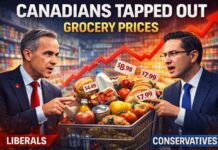
OTTAWA / THUNDER BAY – POLITICS – Canada’s Parliamentary Budget Officer (PBO), Jason Jacques, says Ottawa’s fall budget is on track to reveal a sharply higher deficit and a debt burden that no longer declines over the medium term—undercutting the government’s long-standing “fiscal anchors.” The PBO’s updated outlook projects a $68.5-billion shortfall this year (up from $51.7B last year).
The PBO cites $115.1B in net new measures since December, weaker tax revenues amid a trade fight with the United States, and rising capital spending.
Real GDP growth is now pegged at 1.2% (2025) and 1.3% (2026), with nominal GDP—the federal tax base—running $12.9B lower on average from 2025–2029 due to tariffs. With lower revenues and higher outlays, the PBO expects annual deficits to hover near $60B across the forecast, pushing debt-to-GDP up to ~43% from 41.7% last year.
The government maintains it still has fiscal anchors. Finance Minister François-Philippe Champagne says the Nov. 4 budget will show a declining debt-to-GDP ratio and a plan to balance the operating budget within three years, consistent with the election pledge. The PBO update does not include potential ramp-ups to meet the NATO 5% of GDP by 2035 benchmark nor the announced three-year public-service restraint, meaning the fiscal picture could shift as those details land.
What the Opposition Parties Are Saying
Conservatives
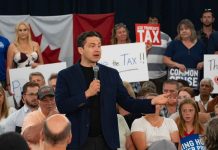
Conservative finance critics say the PBO’s numbers confirm that spending growth has outpaced the economy, eroding Canada’s fiscal credibility. They’re calling for:
-
A credible, time-bound path to balance, starting with spending caps and a review of new program baselines;
-
Tighter program integrity (clawing back underspends and dormant allocations), and stronger value-for-money tests before capital commitments;
-
Clear guardrails around any new industrial or defence outlays to prevent cost overruns.
Conservatives have also backed keeping Jacques as PBO on a permanent basis, framing independent scrutiny as vital to restoring confidence.
New Democrats
New Democrats counter that the answer is not austerity. They argue that across-the-board cuts would worsen affordability and stall growth. Instead, the NDP presses for:
-
Tax fairness measures (e.g., excess-profits and wealth-inequality tools) to stabilize revenues;
-
Targeted affordability relief (housing, groceries, child care) and growth-friendly public investment (transit, clean industry) that crowds in private capital;
-
Guarding frontline services while pursuing smarter savings (e.g., procurement reform, closing tax loopholes).
The party says Ottawa should pair a medium-term fiscal framework with measures that reduce household stress rather than shift the burden onto families.
What It Means for Thunder Bay & Northwestern Ontario
For export-reliant sectors in the Northwest—forestry, mining and processing, transportation, post-secondary and health recruitment—slower nominal GDP and a prolonged deficit track could affect:
-
Infrastructure timelines (Highway 11/17, energy transmission, broadband) as capital envelopes face tougher screening;
-
Skills and health-care funding crucial to regional labour shortages;
-
Industry supports tied to clean-tech and value-added mining (battery/critical minerals).
Local stakeholders should watch debt-ratio targets, capital prioritization criteria, and any trade de-escalation measures with the U.S., all of which shape the 2026–28 investment window.