Alberta By-Election Could Return Pierre Poilievre to Parliament
Conservative leader faces key test after April defeat; long ballot protest raises electoral reform debate
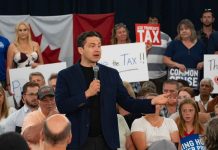
THUNDER BAY – POLITICS – Voters in Battle River–Crowfoot, a sprawling rural riding in central Alberta, head back to the polls on Monday, August 19, 2025, in a high-stakes federal by-election that could return Conservative Leader Pierre Poilievre to Parliament.
Poilievre, who lost the Ottawa-area seat he had held for decades in April’s general election, was left without a voice in the House of Commons — a major blow after his party failed to unseat the governing Liberals despite months of strong polling.
To give Poilievre a path back, long-time Conservative MP Damien Kurek resigned his seat. Kurek, who captured nearly 83% of the vote in April, has campaigned beside Poilievre throughout the by-election and has said he intends to run again in the riding in the next general election.
If successful, Poilievre would return in time for the fall sitting of Parliament on September 15, after spending the spring sidelined while former Conservative leader Andrew Scheer temporarily assumed the role of Opposition Leader against Prime Minister Mark Carney.
More Than a Local Vote – A Leadership Test
The by-election result is being closely watched, not only for Poilievre’s return but for what it signals about his grip on the Conservative Party ahead of a leadership review scheduled for January 2026.
A strong showing could help solidify his standing, while a weak performance — particularly in a Conservative stronghold — could intensify internal challenges to his leadership.
By-elections typically see lower turnout, but Elections Canada reported 14,454 advance ballots were already cast, nearly identical to the April general election.
Electoral Reform Protest Adds Twist
This by-election has also drawn national attention because of the record-breaking ballot length — with over 200 candidates running.
Many are affiliated with the Longest Ballot Committee, a protest movement demanding electoral law be placed under an independent, non-partisan body instead of politicians themselves.
The influx of candidates forced Elections Canada to implement write-in ballots for the first time. Critics, including Poilievre, have called the protest a “scam,” while supporters argue it highlights deep flaws in Canada’s electoral system.
Local Candidates in the Mix
While Poilievre is the frontrunner, other major parties are fielding candidates:
-
Liberals: Darcy Spady, oil and gas executive
-
NDP: Katherine Swampy, who aims to recapture second place after the party’s strong showing in 2021
-
People’s Party of Canada: Jonathan Bridges
Independent candidates, like army veteran Bonnie Critchley, argue Poilievre is a parachute candidate who doesn’t represent local interests. “We deserve representation,” Critchley told reporters, vowing to cut into the Conservative leader’s vote share.
Why This Matters for Northwestern Ontario
Though the race is in Alberta, its outcome carries national weight. For Northwestern Ontario voters, the result will shape how the Official Opposition functions heading into Parliament’s return and could set the tone for debates over natural resources, the economy, and electoral reform — issues with clear resonance in Northern communities.