U.S. Lumber Tariff and the Economic Impact on Northwestern Ontario
From Thunder Bay to Kenora, forestry towns brace for potential economic shock
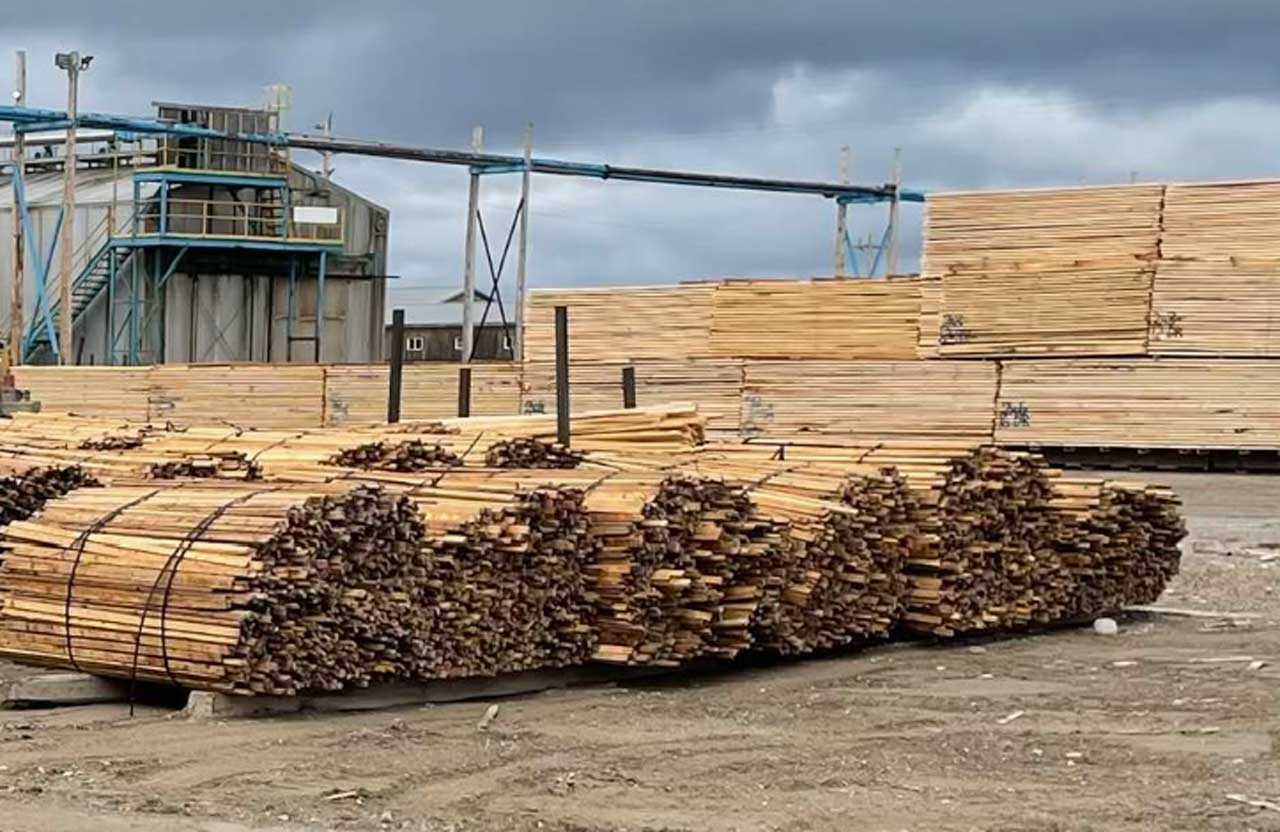
Thunder Bay – Economy – The lumber tariffs that United States President Donald Trump has put forward are a bullet into our region’s economy.
The softwood lumber dispute between Canada and the United States is one of the longest-running trade battles in North America, stretching back to the early 1980s. At the heart of the conflict is the U.S. lumber industry’s claim that Canadian softwood lumber producers receive unfair subsidies.
In Canada, most timber is harvested from Crown land, with provincial governments charging “stumpage fees” for logging rights. These fees are often lower than market rates in the U.S., leading American producers to argue that Canada’s system artificially lowers production costs and allows Canadian lumber to be sold at unfairly low prices south of the border.
The first formal case emerged in 1982, when the U.S. Department of Commerce investigated and imposed duties on Canadian lumber.
This began a cycle of negotiations, trade cases, and temporary agreements, each intended to stabilize the market but often collapsing under continued industry pressure. The disputes are typically labeled as “Lumber I” through “Lumber V” to mark each major round. The most significant periods of tension saw duties imposed ranging from 10% to over 20%, affecting billions of dollars in cross-border trade.
One major resolution came in 2006 with the Softwood Lumber Agreement (SLA), which set limits on Canadian exports to the U.S. in exchange for the suspension of duties. The agreement lasted until 2015, after which no new deal was reached.
Without an agreement in place, the U.S. reimposed duties in 2017, citing the same subsidy concerns. Canada countered with challenges through NAFTA and the World Trade Organization, winning some rulings but failing to eliminate the duties entirely.
As of 2025, the dispute remains unresolved, with tariffs fluctuating year to year. The issue is especially sensitive for regions like British Columbia, Quebec, and Northwestern Ontario, where forestry is a cornerstone of the economy.
For Northwestern Ontario’s mills, the uncertainty affects investment decisions, employment stability, and market competitiveness — making the softwood lumber dispute not just a trade fight, but a deeply local economic concern.
1. How Big Is the U.S. Market for Local Lumber?
-
Roughly 80% of Canadian softwood lumber exports go to the United States.
-
Mills in Thunder Bay, Dryden, Kenora, Atikokan, and Ignace are heavily dependent on U.S. buyers for dimensional lumber, specialty wood products, and construction-grade materials.
-
Thunder Bay alone ships tens of millions of board feet south annually.
2. Potential Tariff Scenarios
-
20% tariff: Similar to past disputes, this could raise prices for U.S. buyers and reduce demand. Mills may cut shifts to offset lower orders.
-
50% tariff: In line with Trump’s aluminum tariffs, this could make Canadian lumber uncompetitive in U.S. markets, risking temporary or permanent closures.
3. Job Impact Estimates
-
Direct mill jobs: Forestry employs thousands in the region — e.g., Saw mill jobs in Thunder Bay supports 350+ direct jobs.
-
Indirect jobs: Logging, trucking, equipment maintenance, and port operations multiply the effect. Industry analysts estimate every 1 mill job supports 2–3 other local jobs.
-
A sustained tariff could threaten 1,500–2,000 regional jobs over the next 12–18 months.
4. Why It’s Similar to Windsor’s Auto Crisis
-
Both industries rely on integrated cross-border supply chains.
-
Sudden tariffs disrupt predictable demand, forcing employers to reduce output.
-
Local economies with a high dependence on a single export sector feel an outsized ripple effect.
5. The Local Economy’s Cushion
-
Thunder Bay diversification — shipping, education, healthcare, and government service along with mining services — could soften the blow slightly.
-
Smaller towns like Ignace or Atikokan, with fewer alternate employers, would feel sharper impacts.
-
Seasonal construction patterns mean tariffs hitting in spring–summer would cause more immediate layoffs than those introduced in winter.
Softwood Lumber Dispute Timeline – Canada & United States
📌 Lumber I (1982–1983)
-
Trigger: U.S. lumber producers allege Canadian stumpage fees are unfair subsidies.
-
Outcome: U.S. imposes countervailing duties; dispute ends after Canada agrees to raise stumpage fees in some provinces.
📌 Lumber II (1986–1991)
-
Trigger: U.S. reopens the case, claiming continued unfair subsidies.
-
Outcome: Canada agrees to a Memorandum of Understanding (MOU) imposing a 15% export tax; Canada later withdraws, prompting renewed U.S. duties.
📌 Lumber III (1991–1996)
-
Trigger: U.S. again accuses Canada of subsidies after the MOU collapse.
-
Outcome: Canada wins key NAFTA and GATT rulings; duties are revoked in 1994.
📌 Lumber IV (2001–2006)
-
Trigger: Expiration of a five-year softwood agreement in 2001 leads to renewed U.S. duties averaging 27%.
-
Outcome: Prolonged legal battles under NAFTA and WTO. Dispute ends with the 2006 Softwood Lumber Agreement (SLA), limiting Canadian exports and suspending duties for seven years (later extended to 2015).
📌 Lumber V (2017–Present)
-
Trigger: SLA expires in 2015; no replacement deal reached. U.S. reimposes duties of 20%+ in 2017.
-
Outcome: Canada challenges the duties through NAFTA/USMCA and WTO, winning partial victories but failing to remove tariffs entirely. Dispute remains unresolved as of 2025.
What to Expect?
President Trump seems to not realize that the people who end up footing the bill for his tariffs are the American consumers.
The economic fallout of tariffs is well studied. After the Stock Market Crash in 1929, the recession became the depression as countries around the world sought to protect their markets with steep tariffs.
That only made the depression worse.
For Northwestern Ontario, the difference between a 20% and 50% tariff could be the difference between lean times and a full-blown recession in some communities.