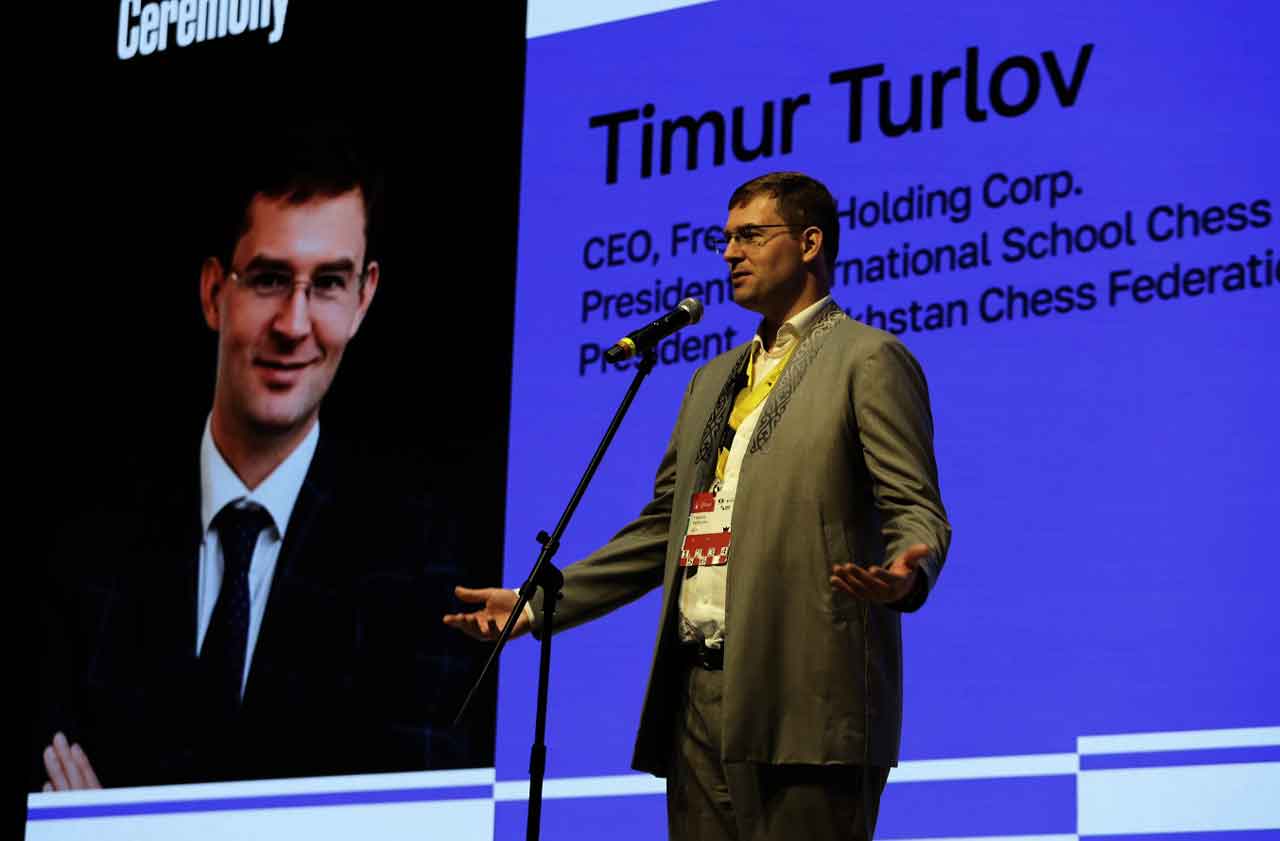
On August 4–5, 2025, the international forum Smart Moves Summit 2025 was held across Washington, D.C. and Alexandria, Virginia (USA), bringing together experts in education, technology, public policy, and business. The event served as a platform to develop strategies for integrating chess into educational systems as a response to the challenges of the digital age: declining attention spans, rising academic underperformance, and the growing need for critical thinking skills. Participants emphasized that the pandemic and rapid digitalization have heightened the demand for adaptive teaching methods — with chess emerging as a universal tool for cognitive and social development.
Key Themes and Expert Discussions
During the opening session, Timur Turlov, President of the International School Chess Federation, highlighted the role of chess in helping students adapt to a fast-changing world:
“The pace of change forces us to rethink how we educate. Chess teaches more than just how to calculate moves — it helps train focus, which is vital in an age where corporations compete for attention. In Kazakhstan, our school chess initiative has already led to academic improvement, and we plan to expand its reach in the coming years.”
FIDE President Arkady Dvorkovich added historical perspective:
“The idea of using chess in education isn’t new. The Soviet Union once embraced it as a tool to foster strategic thinking, and school chess championships became a long-standing tradition. Today, through the creation of the International School Chess Federation, we are scaling this experience globally by bringing together best practices from different countries.”
U.S. Congressman Jamie Raskin (Maryland) remarked:
“I’ve long supported promoting chess among youth as a peaceful tool for conflict resolution and strategic thinking. I want to thank Arkady Dvorkovich, FIDE President, and Timur Turlov, head of Freedom Holding Corp. and President of the International School Chess Federation, for their leadership in this important field.”
The session on digital transformation sparked a lively debate on balancing technology and human interaction. While acknowledging the growing popularity of chess apps, participants expressed concern over the lack of teacher training. Experts presented examples of AI-powered platforms for game analysis and VR simulations replicating tournament environments.
Dvorkovich stressed:
“Digital tools can’t replace real human interaction. After a match, students talk through their mistakes and learn to handle defeat — this builds emotional intelligence, which can’t be developed through a screen.”

Policy Insights and National Strategies
A dedicated session on governance examined national policies. Countries where chess is part of the mandatory school curriculum reported measurable academic gains. Delegates shared experiences from resource-constrained regions and highlighted the potential of chess as a low-cost yet high-impact intervention.
Timur Turlov noted:
“Human capital is the foundation of any economy. Investing in education today defines prosperity tomorrow. Just like in chess, we must think several moves ahead.”
The Economics of Education and Teacher Training
The forum’s economic block addressed models for sustainable funding. Participants explored the rapidly expanding market for educational chess applications and the role of IT companies in driving growth. Dvorkovich emphasized the need for public-private partnerships, arguing that without business support, scaling these programs would be impossible.
A separate session focused on teacher training. Experts presented a phased training model that includes online courses, mentorship, and hands-on workshops.
Timur Turlov shared:
“We collaborate with universities to study chess’s impact on cognitive development. Without scientific backing and qualified professionals, even the best initiatives will remain theoretical.”
Congressman Raskin added:
“Chess can be the difference-maker in shaping a young person’s path. It builds critical analysis, strategic thinking, and peaceful problem-solving. It’s not just a sport — it’s a lifestyle. One that turns competition into healthy rivalry and teaches that your greatest opponent is often yourself.”
Expert Participants
The summit featured leading global experts.
- Timur Turlov (Kazakhstan), President of the International School Chess Federation and CEO of Freedom Holding Corp., shared insights from Central Asia’s education initiatives.
- Jerry Nash (USA), Chair of FIDE’s Chess in Education Commission, presented global standards for teacher certification.
- Rita Atkins (UK), ChessPlus expert, discussed integration of chess into STEM curricula.
- Dana Reizniece-Ozola (Latvia), FIDE Deputy Chair, analyzed the link between chess education and public policy.
- Jenny Ingber (USA), President of Chess in the Schools, showcased successful models combining chess instruction with academic support.
International Collaboration and Future Outlook
The summit concluded with the signing of a declaration committing participating nations to integrate chess into national education standards. A task force, supported by international organizations, was established to track progress.
Dvorkovich remarked:
“We are acting now — not waiting for perfect conditions. Mistakes will happen, but just like in chess, we’ll adjust our strategy along the way.”
Organizers announced Smart Moves Summit 2026 will be held in Singapore, with a focus on neurotechnology in cognitive education. According to forecasts, widespread adoption of school-based chess programs could significantly boost global workforce productivity.
Timur Turlov closed the forum with a call to action:
“Long-term results are only possible through collaboration. This summit marks the beginning of a global movement to build a world where education is the foundation of prosperity.”
Participants agreed that chess — blending centuries-old traditions with modern technology — remains a powerful catalyst for transforming 21st-century education systems.