From Carleton to Crowfoot: A Political Exile?
Thunder Bay – Political Analysis – It was not really a shocking political loss. Conservative leader Pierre Poilievre losing his seat in Ottawa-Carleton was seen coming weeks ahead of the vote. His Liberal opponent had gone after the riding, and Poilievre was seen as going after the Prime Ministership.
For over a year all the Conservative leader’s ads and videos were targeting electing him as Prime Minister. The Conservatives had a huge lead in the national opinion polls, and the Liberals were facing a complete political meltdown.
Then the game changed, Justin Trudeau resigned, Mark Carney took the Liberal reins, and the Conservative team seemed like they didn’t know how to compete against the renewed Liberals.
Pierre Poilievre’s loss in Ottawa–Carleton ended a 21-year run in a single stroke—and, insiders say, delivered a much-needed reality check to the combative Conservative leader.
Banished from the urban, bureaucrat-laden suburbs of Ottawa, Poilievre has now set up shop in rural Alberta’s Battle River–Crowfoot—a riding so reliably blue that its prior MP stepped aside after winning re-election, clearing the path for the party boss’s comeback.
Reconnecting with a Skeptical Base
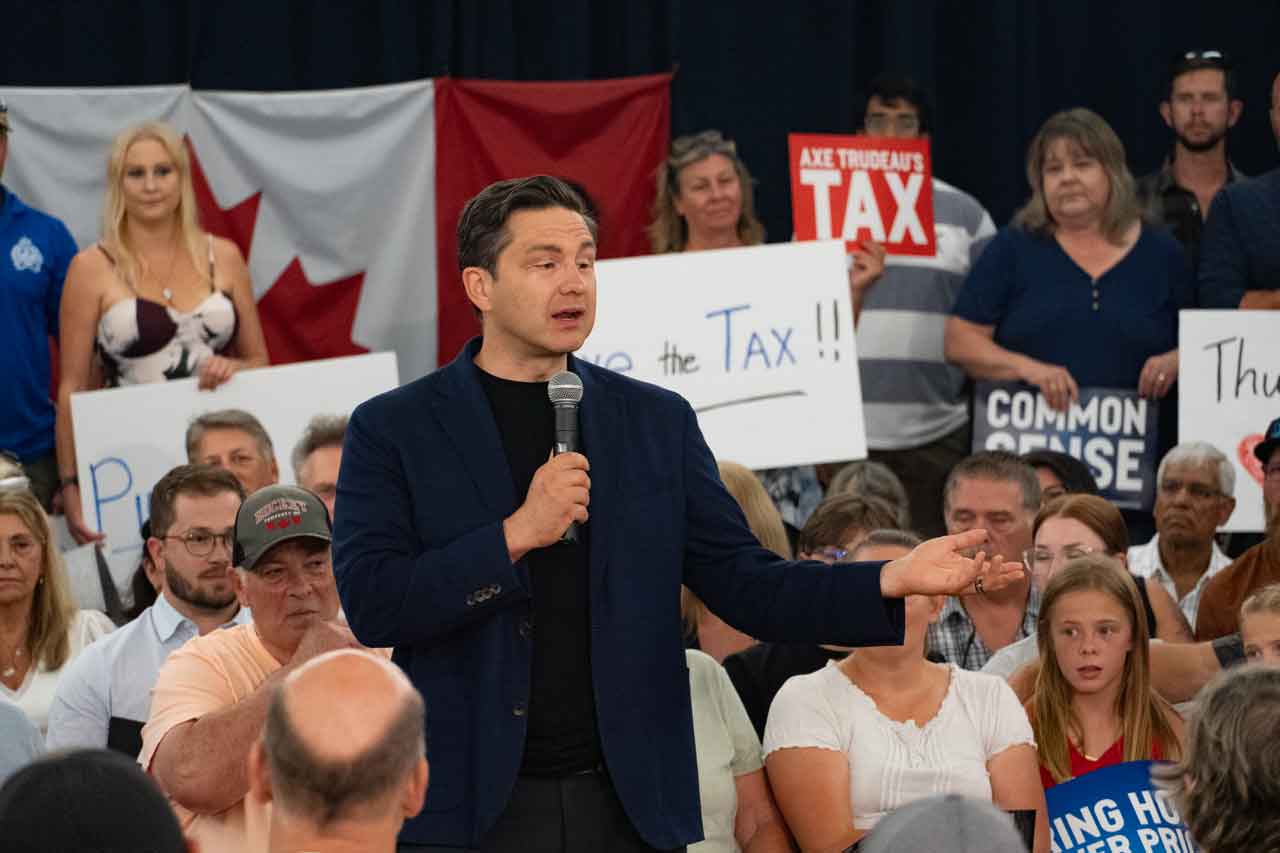
Here, between endless fields of canola and oil pumper jacks, Poilievre has traded parliamentary exchanges for rodeo meets and town-hall barbecues. Locals expect a representative who understands their lives—road potholes as much as pipeline policies.
“You need to be present—and have a presence,” comments Camrose Mayor PJ Stasko. Voters won’t be dazzled by star power alone; Poilievre must log mileage, learn livestock lingo, and prove he’s more than a careerist chasing a safe seat.
Measuring Leadership: Margin Matters
Yes, Battle River–Crowfoot is “easy mode” for any Conservative, but success here is about optics. The former MP captured roughly 83 percent of the vote; political analyst Eric Grenier warns that anything under 80 percent would look weak, and a result below 70 percent would be disastrous for Poilievre’s national standing.
His personal approval has dipped to 44 percent—15 points behind rival Mark Carney—underscoring the challenge of translating a local win into renewed momentum for the party.
Local vs. National Ambitions
Poilievre’s pitch now blends staunch support for Alberta’s oil and agriculture with a more statesmanlike tone—he’s even embraced “government in waiting” language once avoided by his team.
Yet some voters bristle at perceived opportunism: independent candidate Bonnie Critchley rails against parachute politics and plans to hold Poilievre accountable if he abandons the riding after next year’s leadership review.
And while separatist rhetoric has flared in Alberta, most here reject outright secession—if Poilievre can channel regional frustrations into federal reform rather than full rupture, he may both placate skeptics and shore up his leadership credentials.
The High Stakes of a By-Election
For Poilievre, winning Battle River–Crowfoot is existential: it restores his House seat and halts narrative of decline. More critically, it offers the crucible in which he can demonstrate humility, adaptability and a capacity to unite diverse constituencies—from urban discontents to rural heartlands.
If he can knit those threads into a coherent national campaign, the Carleton setback may indeed prove the best thing to happen to his political career.