There’s a quiet rebellion happening behind the scenes of modern cinema. More and more filmmakers are using vintage formats to protect artistic integrity. While artificial intelligence is being hailed as the next great creative co-pilot—writing scripts, color-grading scenes, even recreating actors’ faces— filmmakers are now reaching for something older. Something slower. Something tangible. They’re ditching the algorithm and dusting off vintage lenses, Super 8 cameras, and 16mm film stock, not for nostalgia’s sake but for something deeper: control, intention, and artistic integrity. This shift isn’t about gear. It’s a statement. A creative stand in the ongoing debate of AI vs. analog, one that’s asking a bigger question: when technology can do everything, what’s still worth doing by hand?
What does ”AI vs. analog” really mean in filmmaking?
It’s easy to frame it as a battle between old-school and high-tech, but it’s not really that simple.
AI is creeping into everything: scripts, edits, even faces. It can write, color-grade, and tweak your footage based on data, not instinct. And yeah, some of that’s convenient. But a lot of filmmakers are asking: at what cost?
Analog is slower. More hands-on. Messier, sure, but also more personal. Shooting on film, cutting by hand, and working with gear that doesn’t auto-correct every choice you make forces you to commit. To think. To feel your way through the process.
And you know what? That’s part of the draw. That’s why some are pulling out their old home movies or family reels to remind themselves what film looked like before the machines got smart. It’s also why they’re starting to convert 8mm footage—not just to save it, but to reconnect with it. The digitization of 8mm film is often less about preservation and more about reclaiming a feeling. There’s something honest about grain and scratches you just can’t fake with code.
Why filmmakers prefer vintage formats
It’s not that filmmakers are against new technology. Most use some form of digital help—color correction, audio cleanup, maybe even AI-assisted upscaling. That’s not the issue. The issue is when the tech starts doing the thinking for you.
For instance, AI tools can now predict genres, generate scripts based on genre trends, predict “optimal” camera angles, and even cast synthetic faces that don’t belong to any real actor. Everything becomes efficient. Streamlined. Predictable. And for a lot of directors, that’s where the red flags start waving.
Because film isn’t supposed to be optimized, it’s supposed to surprise you. To contradict itself. To wander a little. When a scene is too clean, too timed, too on-the-nose, it loses something. That unpredictable, human edge. And when a machine starts to mimic that edge, it raises a tougher question: is it still yours?
That’s the unease. Not fear of the tool, but fear of the tool replacing the person behind it.
Why analog is making a comeback
There’s something liberating about working with limits. Film stock runs out. Vintage cameras jam. You get maybe ten good minutes of footage before you have to reload. And somehow, that constraint feels good.
In a world of infinite digital takes and unlimited undo buttons, analog forces us to make choices. You have to think harder before you hit the record. You have to trust your gut more, plan better, and sometimes embrace the beautiful accidents that come with working in the real world, not a rendered one.
And then there’s the texture. The grain. The way light leaks into the frame when the seal isn’t perfect. You don’t add that in the post—it just happens. And it’s alive in a way a filtered LUT can’t quite touch.
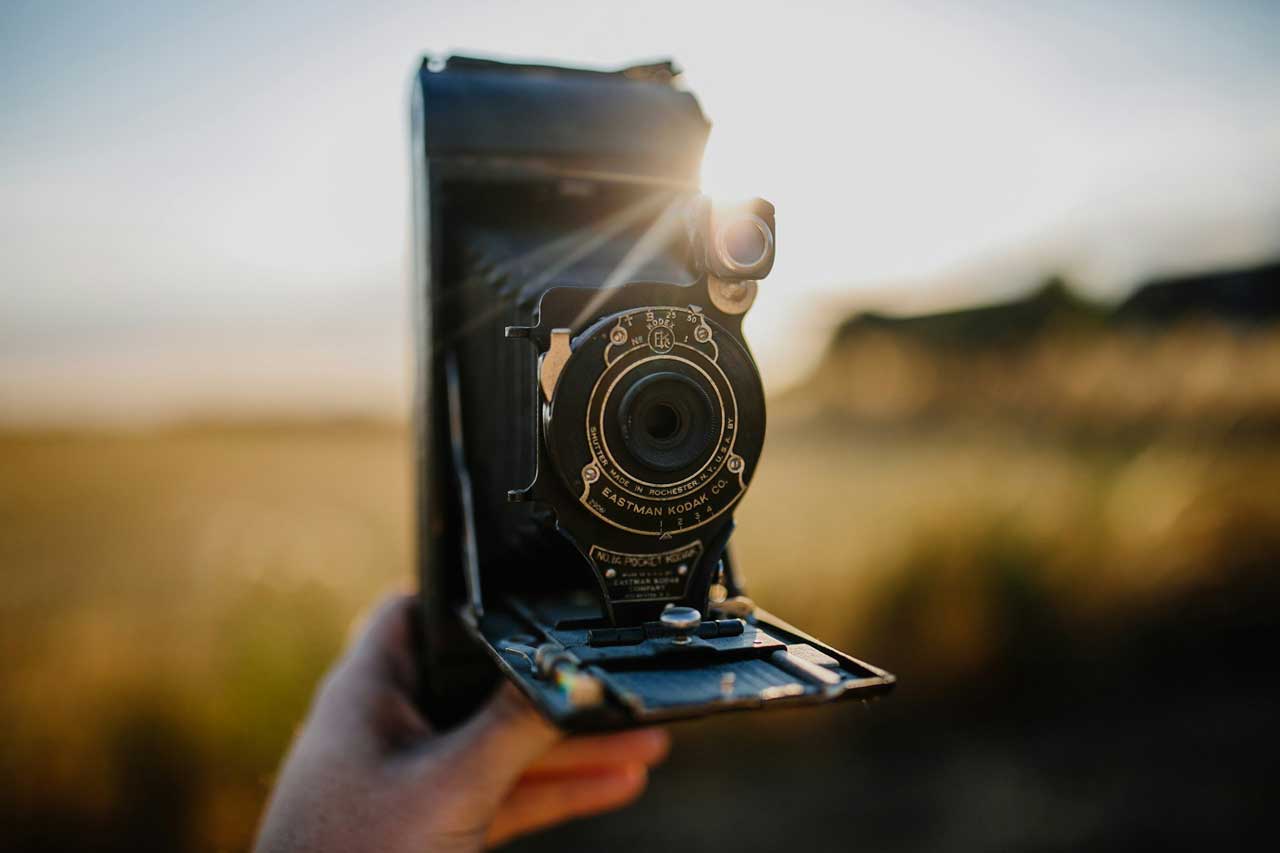
That’s why some of the biggest names in filmmaking still turn to using vintage formats to protect artistic integrity. Tarantino. Nolan. Gerwig. They’re not chasing retro vibes—they’re using a medium that makes them slow down, get closer to the process, and stay honest to their vision.
What analog offers that AI can’t fake
You can simulate a lot in post-production. Grain overlays, film burns, lens flares—new technology can replicate them all. It can even imitate the look of expired Kodak stock or the shake of a handheld camera.
But it can’t replicate the feeling. Here’s why. Audiences often react more strongly to images with visible texture, flicker, or grain. These subtle imperfections—common in analog film—create a sensory depth that digital formats rarely match. That mechanical quality engages people on a more instinctive level, pulling them into the scene in a way that feels physical as well as emotional.
Not to mention, when watching something shot on analog, it’s almost as if you can feel the presence of the person behind the camera, the weight of every decision, and the moments left in instead of edited out. AI, for all its capability, tends to polish things until they shine too much, until they reflect nothing.
The hybrid future: Can AI and analog coexist?
Not every filmmaker is drawing a hard line.
Some are blending the two, shooting on 16mm, and then scanning it for digital color correction. Or using AI tools to restore damaged footage without touching the original aesthetic. There’s room, it turns out, for both precision and imperfection.

It comes down to how you use the tech and why.
Suppose AI is there to support your creative vision, great. Is it making decisions for you? That’s where things get murky. The magic happens when the filmmaker stays in the driver’s seat, even if the car occasionally has autopilot.
In a way, the best future might not be AI vs. analog; it might be AI with analog. Not as equals but as tools that know their place. One grounded in emotion. The other is efficiency. Both are capable of serving the story as long as they’re not steering it.
It’s not nostalgia. It’s a choice
For a long time, going analog was seen as a throwback. A stylistic nod to the past. But now? It’s becoming something else entirely. It’s a choice. A choice to slow down. To stay in touch with the human side of making things. To keep the imperfections that remind us someone was there, behind the lens, making decisions that weren’t driven by data or trend reports. In the conversation around AI vs. analog, more and more filmmakers are choosing vintage formats to protect artistic integrity. Not to resist the future but to protect what they value most about the craft. Intention. Emotion. Control. That feeling that what you’re watching came from a person, not a prediction. And maybe that’s the point. As tools get smarter, the real statement might be in staying human.