Fire count remains high with 47 active wildfires; new blaze near Hisson Lake brings fresh concerns amid extreme hazard in Red Lake sector
Thunder Bay – WILDFIRE REPORT (July 8, 2025 – 18:10 CDT): Ontario’s Aviation, Forest Fire and Emergency Services (AFFES) has confirmed one new wildfire in the Northwest Region, as the province continues to grapple with elevated wildfire activity and increasingly hazardous conditions in its northern districts.
The newly identified fire — Sioux Lookout 53 (SLK053) — brings the total number of active wildfires in the Northwest to 47.
🔥 New Fire – July 8, 2025
Sioux Lookout 53 (SLK053)
-
Size: 50.0 hectares
-
Location: ~6.5 km southeast of Hisson Lake and ~23.3 km northwest of Whitestone Lake
-
Status: Being observed
This remote fire is situated in the northwestern expanse of the Sioux Lookout sector, an area characterized by dense boreal forest and limited accessibility. While it is not currently threatening nearby communities or critical infrastructure, the fire’s size and potential to grow have prompted increased aerial monitoring. AFFES will continue to assess the blaze under current weather patterns and fire behavior trends.
📊 Current Fire Status – Northwest Region
As of this update, 47 wildfires remain active across the region, broken down as follows:
-
🔥 8 fires are not under control
-
🔶 2 fires are being held
-
✅ 10 fires are under control
-
👁 27 fires are being observed
AFFES crews and local fire management teams remain strategically deployed to monitor and contain priority fires, particularly those with growth potential or proximity to populated or ecologically sensitive areas.
🌡 Fire Hazard Levels – July 8 Overview
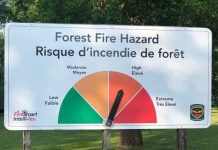
The wildland fire hazard remains varied across Northwestern Ontario:
-
🔹 Low to Moderate Hazard in the Fort Frances, Dryden, and Thunder Bay sectors, as well as in the southern half of the Nipigon fire zone.
-
🔺 High Hazard dominates much of the remaining region, especially in remote northern areas.
-
🚨 Extreme Hazard Alert: A significant area of extreme fire hazard persists in the central Red Lake sector, where dry conditions and wind have created volatile fire conditions. This zone is being closely monitored for ignition sources and flare-up risk.
Residents and outdoor users are encouraged to remain vigilant and avoid any open burning in high and extreme hazard zones.
Check real-time conditions here: Ontario’s Interactive Fire Hazard Map
🛡 Stay FireSmart – Small Actions, Big Protection
The FireSmart program continues to serve as a critical resource for property owners living near forested areas. Whether you own a home, cottage, or commercial building near the bush, there are practical steps you can take to reduce your wildfire risk:
-
🔸 Clear dry vegetation and debris away from structures
-
🔸 Keep roofs and gutters free from flammable materials
-
🔸 Store firewood away from buildings
-
🔸 Use fire-resistant building materials where possible
📘 Learn how to protect your property: Ontario.ca/FireSmart
🚫 No Drone Zone – Protect Firefighting Crews
AFFES strongly warns the public not to fly drones anywhere near active wildfires.
Operating drones in restricted airspace:
-
⚠️ Endangers aerial firefighting operations
-
⚠️ Puts pilots, first responders, and ground crews at risk
-
❌ Is illegal and can result in fines or criminal charges
🚁 Stay grounded — keep our skies safe.
📞 How to Report a Wildland Fire
-
North of the French and Mattawa Rivers: Call 310-FIRE (3473)
-
South of the French or Mattawa Rivers: Call 9-1-1
You can follow ongoing wildfire conditions, safety tips, and updates in English and French via:
-
🔥 Facebook / Instagram / X:
@ONforestfires/@ONfeudeforet -
🌐 Full reports at: Ontario.ca/fireupdates