OTTAWA — Federal Conservatives are accusing the Carney government of moving toward grounding the Canadian Forces Snowbirds, warning that a pause or cancellation of the aerobatic team would weaken one of the Canadian Armed Forces’ most visible recruiting and public outreach tools.
The issue matters locally because the Snowbirds are a familiar part of Canadian aviation culture, including airshows and military flypasts across Ontario. For Thunder Bay and Northwestern Ontario, the debate also connects to broader questions about military recruitment, northern sovereignty, aviation safety and federal defence spending.

Ottawa Says Tutor Jets Are Nearing End of Service Life
Defence Minister David McGuinty has not announced a formal cancellation of the Snowbirds. However, he told the House of Commons the Royal Canadian Air Force’s CT-114 Tutor fleet, first introduced in the 1960s, is nearing the end of its service life.
McGuinty said the Snowbirds will continue to perform as long as the aircraft remain feasible and safe to operate, and that Ottawa is beginning to examine replacement aircraft options.
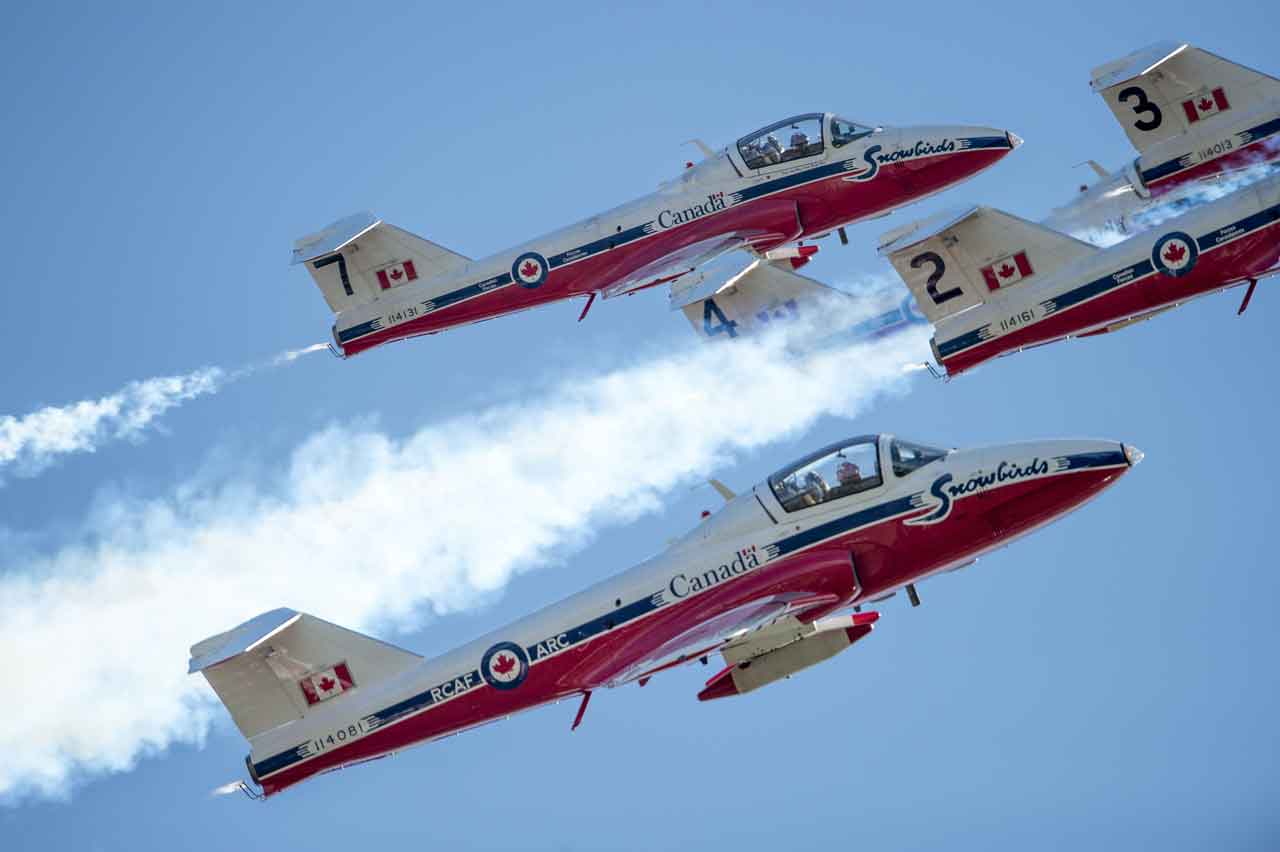
That is the central reason behind the government’s review: the Snowbirds still fly CT-114 Tutors, a Canadian-built jet trainer that served as a Canadian Forces training aircraft from 1963 until 2000. The Snowbirds have flown the Tutor since 1971.
The federal government has previously considered life-extension work for the Tutor fleet, including avionics, communications and navigation upgrades intended to keep the aircraft compliant with modern regulatory requirements.
A National Defence briefing note estimated the project at $25 million to $30 million, with the goal of extending the fleet toward 2030.
Conservatives Warn a Pause Could Become Permanent
Fraser Tolmie, Conservative MP for Moose Jaw—Lake Centre—Lanigan, said the Snowbirds have served for more than 50 years as a symbol of Canadian military excellence and as a recruitment tool for the Canadian Armed Forces.
Tolmie argued that grounding the squadron without a replacement would risk losing the pilots, technicians, ground crews and institutional knowledge that make the 431 Air Demonstration Squadron possible. He also said the government has had years to plan for replacing the Tutor fleet and should keep the Snowbirds flying through 2030 while new aircraft are secured.
The Conservative Party said the Liberals are signalling a five-year pause. Tolmie warned that if the squadron is disbanded, it may be difficult to rebuild. “Now it’s time to save our Snowbirds,” he said.
Government Promises an Update This Month
McGuinty said he will be in Moose Jaw on May 19 to provide an update on the future of the Snowbirds. He said Canadians can “rest assured” they will be able to enjoy the Snowbird formation for generations to come.
The Royal Canadian Air Force’s official 2026 schedule remains posted, with performances scheduled from May through October, including Ontario stops in North Bay, Barrie, Ottawa, Toronto, Kapuskasing and Spencerville.
Safety and Procurement Are Driving the Debate
The government’s position centres on airworthiness and fleet age. The Tutor is more than six decades old, and the fleet has faced safety scrutiny in the past, including after the 2020 Snowbirds crash in Kamloops, B.C., that killed Capt. Jennifer Casey and injured Capt. Richard MacDougall. National Defence said after that crash that the Tutor fleet was placed on an operational pause while experts reviewed technical risks.
The challenge for Ottawa is that replacing the Snowbirds’ aircraft is not simply a matter of buying new jets. A replacement program would need to account for aircraft, maintenance, training, parts, infrastructure and long-term operating costs. Skies magazine reported that the full cost of replacing the nine-plane formation could reach about $2 billion over the life of a new fleet.
Why This Matters in Thunder Bay and Northwestern Ontario
For Northwestern Ontario, the Snowbirds debate lands at the intersection of aviation, national defence and public engagement. Thunder Bay has long been tied to aviation through regional air service, medevac operations, forest fire response and northern transportation. Military recruitment also matters in the region, where the Canadian Rangers, reserve units and northern operations form part of Canada’s security presence.
A prolonged pause could reduce the RCAF’s public visibility at airshows and national events, while a properly funded replacement plan could preserve the squadron and modernize a high-profile symbol of Canadian aviation.
For now, the future of the Snowbirds remains unresolved. Conservatives say the government is preparing to ground the team. The government says the aircraft are aging, safety comes first, and a formal update is coming later this month.
META: Conservatives challenge Ottawa over Snowbirds future as Tutor jets near end of life.
TAGS: Snowbirds, Canadian Forces Snowbirds, Royal Canadian Air Force, CT-114 Tutor, Fraser Tolmie, David McGuinty, Mark Carney, Canadian Armed Forces, Thunder Bay, Northwestern Ontario, aviation, defence, NetNewsLedger