Liberals Study Generational Tobacco Sales Ban After U.K. Move
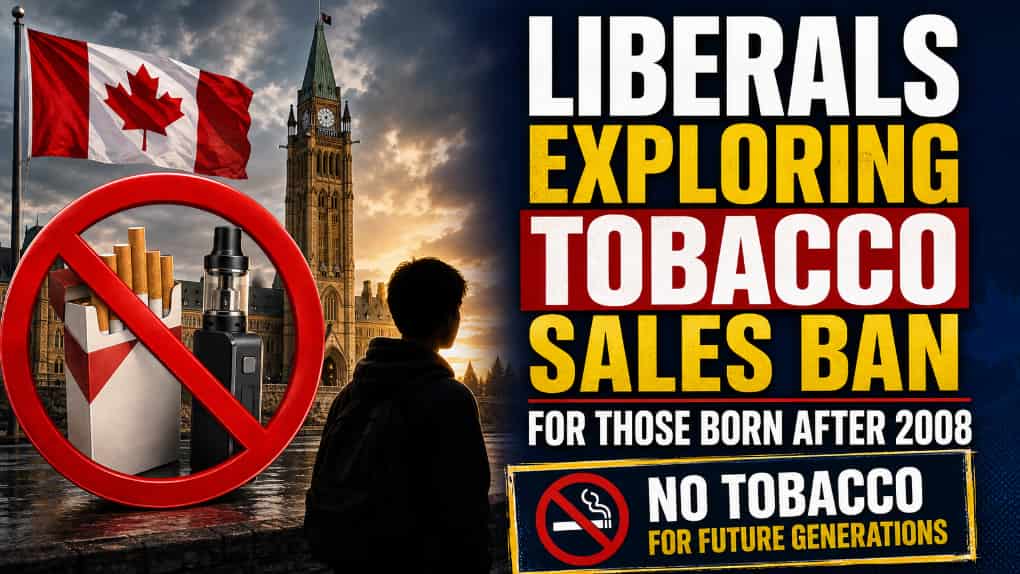
OTTAWA — Federal Health Minister Marjorie Michel says she is looking at whether Canada should follow the United Kingdom with a generational tobacco sales ban that would prevent people born after 2008 from legally buying cigarettes in the future.
What Ottawa Is Considering
Michel told reporters on Parliament Hill she is “looking into” the idea after the U.K. moved ahead with its Tobacco and Vapes Bill. The British measure creates a rolling age restriction that bars anyone born on or after Jan. 1, 2009, from buying cigarettes. The law also gives U.K. ministers wider powers over vaping and nicotine product marketing, packaging, flavours and displays.
No Canadian bill has been introduced, and key details remain unclear.
Ottawa has not said whether a Canadian version would apply only to tobacco products, or whether it would also include vaping products, nicotine pouches and other recreational nicotine products. That distinction matters because Health Canada’s current tobacco strategy treats vaping as a legal adult product that may be less harmful than smoking for adults who already smoke, while still warning that youth and non-smokers should be protected from nicotine addiction.
The proposal comes as Prime Minister Mark Carney’s Liberals hold a majority government, giving them a stronger path to pass legislation if cabinet chooses to move forward. Liberal wins in April by-elections brought the party to 174 seats in the 343-seat House of Commons.
Current Rules in Ontario
In Ontario, the Smoke-Free Ontario Act, 2017 already prohibits the sale or supply of tobacco and vapour products to anyone under 19.
Retailers must ask for identification from anyone who appears younger than 25 before selling tobacco or vapour products. In Thunder Bay, the Thunder Bay District Health Unit is responsible for inspections, vendor training, public education and enforcement related to tobacco and vaping laws.
A generational ban would go further than today’s age-based system. Instead of allowing a person to buy tobacco once they turn 19, it would permanently block legal sales to anyone born after a certain date.
Supporters Say the Ban Would Prevent Addiction
Supporters argue the policy would stop young people from starting a habit that often begins before adulthood. Canada’s Tobacco Strategy has a national goal of reducing tobacco use to less than five per cent by 2035. Health Canada says 13 per cent of Canadians used a tobacco product in 2024, down from 29 per cent in 2001, while 11 per cent of adult Canadians reported smoking.
A 2025 Canadian modelling study published through the Public Health Agency of Canada estimated that a smoke-free generation policy could produce major long-term health gains.
The study projected that, after 50 years, such a policy could result in 476,814 additional quality-adjusted life years and $2.3 billion in reduced health-care costs, although it would also reduce tobacco tax revenue and tobacco-sector GDP.
Justice Minister Sean Fraser, while saying he was not formally involved in policy development, told reporters he supported doing what governments can to reduce tobacco use among young people, saying preventing youth smoking would reduce social harm.
Public health advocates have also pushed for broader restrictions. Physicians for a Smoke-Free Canada has given conditional support to a tobacco-free generation approach, but argues it should include vaping and other recreational nicotine products, while excluding therapeutic nicotine used for treatment.
The BC Lung Foundation supports a smoke-free generation model that would phase out commercial tobacco and nicotine sales for future generations.
Opponents Warn About Prohibition and Enforcement
Critics argue a generational ban could be difficult to enforce and could push tobacco sales into illegal markets. The Convenience Industry Council of Canada has warned that a generational tobacco ban risks becoming symbolic rather than practical, saying existing tools such as taxation, public smoking restrictions, education campaigns and cessation supports have a stronger evidence base.
The U.K. debate has shown similar divisions. Some supporters see the law as a way to prevent youth smoking, while critics, including some young adults and shopkeepers, said people may still find ways to access cigarettes and raised concerns about personal choice.
Public health agencies would likely face additional inspection and education demands, particularly in rural and remote communities where access to cessation supports can already be limited.
Indigenous Communities and Commercial Tobacco
Any Canadian policy would also need to distinguish between commercial tobacco and traditional or ceremonial tobacco.
Health Canada’s strategy specifically includes support for Indigenous-led approaches to reducing commercial tobacco use, developed by First Nations, Inuit and Métis partners based on their own priorities.
That distinction is especially important in Northwestern Ontario, where First Nations communities, health agencies and families are already addressing tobacco-related illness, youth vaping, mental health, addictions and limited access to care.
A federal ban designed without Indigenous leadership could miss local realities; one developed with Indigenous partners could support prevention while respecting culture and self-determination.
Youth Policy Debate Expands to Social Media
The tobacco proposal is emerging alongside a broader Liberal discussion about youth protection. Federal Liberals recently adopted a non-binding party resolution to set 16 as the minimum age for social media accounts and place enforcement responsibility on social media companies.
Quebec MP Rachel Bendayan, who championed the motion, said prolonged social media use can harm youth mental health, while a 17-year-old Liberal delegate raised concerns about age-verification data and privacy risks.
The link between the two debates is government willingness to use age-based rules to reduce youth harm.
The difference is that tobacco is a physical product sold through regulated retailers, while social media restrictions would require digital age verification and platform enforcement.
What This Could Mean Locally
For now, the Canadian proposal remains under review. The central policy question is whether a generational tobacco ban would meaningfully reduce addiction and disease, or whether enforcement challenges and illicit sales would undermine the goal. For Thunder Bay and Northwestern Ontario, the answer will depend on details Ottawa has not yet released.