Three charged after OPP and NAPS drug trafficking investigation in Longlac
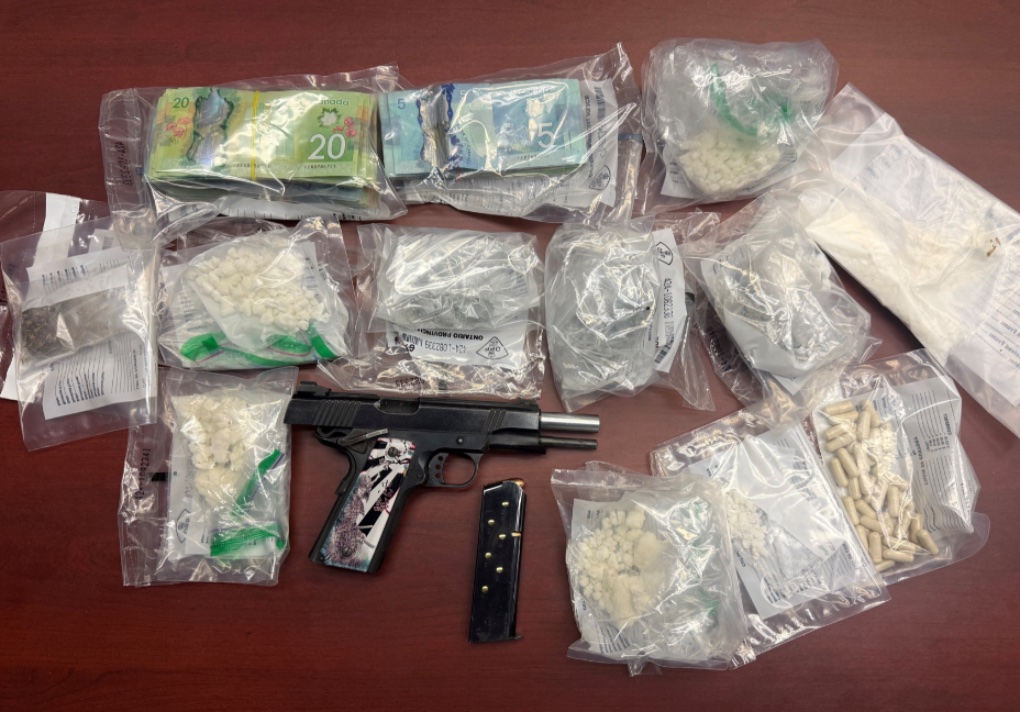
GREENSTONE, Ont. — Three people are facing drug-trafficking and weapons charges after a joint police investigation in Longlac led to the seizure of suspected fentanyl, crack cocaine, cocaine, a firearm and about $20,000 in cash.
The case matters across Northwestern Ontario because it points to the continued reach of opioid and cocaine trafficking beyond larger urban centres, and to the growing use of multi-agency enforcement teams in smaller communities connected to the same regional drug routes that affect Thunder Bay and other northwestern Ontario hubs.
Search warrants in Longlac lead to major seizure, police say
Ontario Provincial Police say the Greenstone Community Street Crime Unit and the NAPS Drug Enforcement Unit carried out a joint investigation into alleged drug trafficking in the Town of Longlac.
On Tuesday, April 21, members of the OPP Tactics and Rescue Unit, assisted by the OPP Emergency Response Team and Canine Unit, executed search warrants at residences on Centennial Drive and John Street.
Police say the searches, involving officers from Greenstone, Thunder Bay, Nipigon and Marathon street crime units, along with the Organized Crime Enforcement Bureau and the NAPS Drug Enforcement Unit, resulted in the seizure of about 109 grams of suspected fentanyl, 135 grams of suspected crack cocaine and 33 grams of suspected cocaine.
Police estimate the potential street value at $152,800. Investigators also reported seizing a firearm, bear spray, a digital scale and about $20,000 in Canadian currency.
Donius Joseph, 19, of North York, Brandon Legarde, 33, of Longlac, and Hannah Neegan, 29, of Longlac, were arrested and charged with possession of a Schedule I substance for the purpose of trafficking — cocaine, possession of a Schedule I substance for the purpose of trafficking — fentanyl, possession of property obtained by crime over $5,000, careless storage of a firearm, unauthorized possession of a firearm, unauthorized possession of a weapon, knowledge of unauthorized possession of a firearm, possession of a loaded restricted firearm and two counts of possession of a weapon for a dangerous purpose.
Neegan is also charged with failing to comply with a probation order.
All three accused were remanded into custody and are scheduled to appear before the Ontario Court of Justice in Greenstone at a later date.
All accused are presumed innocent until proven guilty in a court of law.
What the charges mean under Canadian law
The two trafficking-related counts are generally laid under section 5(2) of the Controlled Drugs and Substances Act, which makes it an offence to possess a Schedule I drug for the purpose of trafficking. Cocaine and fentanyl are Schedule I substances.
The property count is typically tied to section 354(1) of the Criminal Code, which covers possession of property known to have been obtained by crime. The firearm and weapons counts line up with several Criminal Code provisions, including section 86 for careless storage, section 88 for possession of a weapon for a dangerous purpose, section 91 for unauthorized possession of a firearm or certain prohibited or restricted weapons, section 92 for knowingly possessing a firearm when the person knows they are not authorized to possess it, and section 95 for possessing a loaded restricted or prohibited firearm, or one with readily accessible ammunition, without lawful authority.
A probation-breach allegation is typically laid under section 733.1 of the Criminal Code.
Potential penalties can be severe if there are convictions
Sentencing depends on the facts proven in court, the Crown’s election where hybrid offences apply, the accused person’s record and whether the court finds aggravating factors such as trafficking quantities, a loaded firearm or links between drugs and weapons. Under the Criminal Code, careless storage under section 86 carries a maximum of two years on indictment for a first offence and five years for subsequent offences; section 88 carries a maximum of 10 years on indictment; section 91 carries a maximum of five years on indictment; section 92 carries a maximum of 10 years; section 95 carries a maximum of 14 years; and possession of property obtained by crime over $5,000 carries a maximum of 10 years on indictment.
Under the Controlled Drugs and Substances Act, possession of a Schedule I substance for the purpose of trafficking carries a maximum penalty of life imprisonment on indictment. Failure to comply with a probation order carries a maximum of four years on indictment.
Actual sentences imposed by courts often vary widely and can range from non-custodial outcomes on less serious counts to lengthy jail or penitentiary terms in serious drug-and-firearm cases.
Why this investigation matters in Northwestern Ontario
For Greenstone, Thunder Bay and other northwestern Ontario communities, the investigation is another sign that major drug files are not confined to one city. Longlac sits on an important transportation corridor in the region, and police agencies have increasingly relied on joint enforcement teams to track suspected trafficking networks that move between communities.
The seizure of suspected fentanyl is especially significant. Even relatively small amounts of fentanyl can carry major public-safety consequences, and police continue to treat opioid trafficking as one of the most serious threats facing communities across the North. The presence of a firearm and bear spray in the same investigation will also draw attention from both police and prosecutors if the case proceeds through the courts.
Police ask public to keep reporting crime information
OPP is asking anyone with information about crime in the community to contact police at 1-888-310-1122. Anonymous tips can also be submitted through Crime Stoppers.
Source: OPP information provided to NetNewsLedger. Legal sections and penalty ranges verified through the federal Justice Laws website.