Outreach-first protocols are spreading—but enforcement is still the backstop as shelter and housing fall behind
Thunder Bay – NEWS – Across Canada the issue of dealing with the homeless crisis is an issue seemingly perplexing city government and frustrating many citizens.
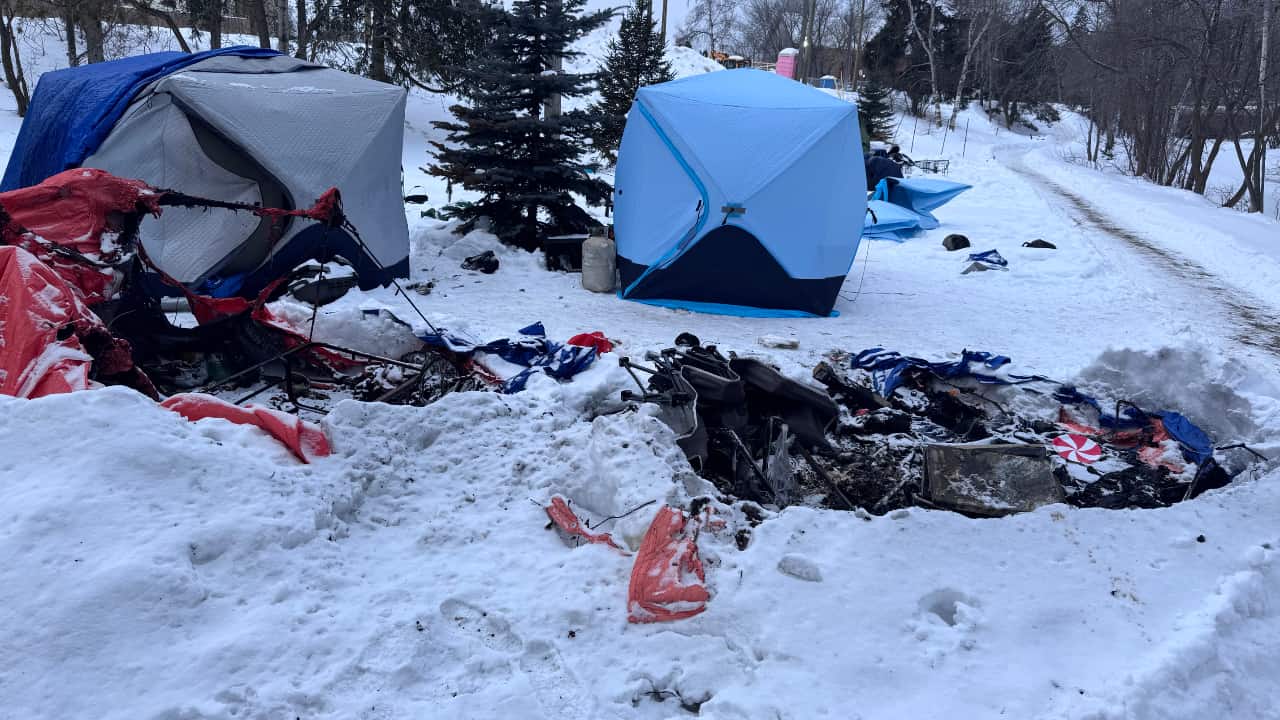
Part of the concerns often raised by city residents is how homeless encampments have taken over parks, and have impacted homeowners nearby who are dealing with property crime and theft of their property from their yards.
This frustration is that the thefts of propane tanks, patio furniture and other items from their yards has joined the ranks of unreported crime as residents realize it is basically impossible for police to do anything.
Homeless encampments have become a visible pressure point in major Canadian cities—raising hard questions about public safety, public space, and the basic shortage of affordable housing and shelter beds.
One of the concerns in Thunder Bay is that despite having Shelter House, the Salvation Army and Elevate along with PACE who all have experience dealing with homeless issues, it remains uncertain as to why none of these organization are going to be running the “Temporary” shelter in the Intercity.
While Thunder Bay is one of many municipalities dealing with the homeless crisis,
Across the country, municipalities are converging on a similar playbook: more outreach, more rules, more removals—plus varying attempts to add shelter and supportive housing. Human-rights advocates argue the balance is still tilted too far toward displacement.
What follows is a snapshot of how several large cities are handling encampments right now—what’s working, what’s controversial, and what it could signal for communities like Thunder Bay as unsheltered homelessness becomes more visible in smaller centres, too.
The national pattern: five approaches showing up everywhere
Most Canadian cities are blending these strategies in different proportions:
1) Formal “encampment protocols”
Cities increasingly document how staff should engage: who leads outreach, when cleanup happens, and what triggers enforcement. Ottawa and Edmonton are examples of this more structured approach.
2) Outreach + offers of shelter (with limits)
Several cities now pair outreach with a defined number of shelter offers or time-limited stays before removal—especially near schools, playgrounds, or high-traffic public spaces. Toronto and Winnipeg have moved in this direction.
3) “Designated sites” or tolerated zones (and then reversals)
Some municipalities have tried designated locations as a harm-reduction compromise, then later closed or reduced sites under political or safety pressure—Halifax is a prominent case.
4) Bylaw and policing-heavy enforcement
Calgary’s model leans more toward enforcement partnerships and “cleanup” operations alongside referrals to social agencies.
5) Litigation, Charter arguments, and accountability fights
Court rulings and injunctions shape what cities can do—especially where shelter capacity is limited. Ontario’s Waterloo decision remains a touchstone; B.C. has its own evolving encampment case law.
City-by-city: what’s happening across Canada
Toronto: tightening rules near schools, expanding winter resources
Toronto has leaned into winter surge capacity—additional shelter supports, warming centres, street outreach, and efforts to move people into housing during extreme cold.
On encampments, council backed a “three-offer” approach (shelter offered up to three times) for encampments near schools/daycares/playgrounds, after which staff can proceed to clear sites.
Toronto also reports progress in specific zones: one recent update said the total number of encampments declined year-over-year (from 156 in Jan. 2025 to 91 in early 2026), with the sharpest reductions near schools and playgrounds.
Vancouver: park restrictions, major decampments, and transparency scrutiny
Vancouver’s approach has been shaped by high-profile decampments (including Hastings Street) and ongoing tension over encampments in parks such as Oppenheimer. A Park Board briefing memo outlines the complexity and the need for coordination across agencies and jurisdictions.
In 2025, reporting from Oppenheimer Park highlighted tightened rules on belongings and day-time storage, illustrating how “regulation” can pressure camps without formally legalizing them.
In early 2026, the B.C. Human Rights Commissioner found that restrictions placed on media access during the 2023 Hastings Street decampment were not in accordance with human-rights standards, raising accountability concerns that often accompany removals.
Montréal: rejecting a moratorium, focusing on “social cohabitation” and services
Montréal has faced sustained calls to pause dismantling encampments. A public consultation summary from the Office de consultation publique de Montréal (OCPM) reflects how the city’s authority is often framed around “social cohabitation”and service delivery rather than controlling housing supply.
Still, the city has refused to implement a moratorium on dismantling encampments even when recommended by OCPM, according to Montréal reporting in 2025.
The city’s homelessness information hub highlights measures such as temporary shelter resources and warming locations, signalling an emphasis on services—while enforcement decisions continue to flare politically.
Calgary: “encampment team,” complaint response, and police-led operations
Calgary operates a dedicated encampment response team and explicitly describes encampments on public property as illegal, with a complaint-based system that can take time to resolve.
At the same time, Calgary Police publicly report targeted initiatives that include encampment interventions and cleanups alongside warrants, charges, and referrals to social agencies—illustrating a more enforcement-forward posture.
Edmonton: integrated response teams and faster closure timelines
Edmonton’s Encampment Response Team combines park rangers/peace officers, police, and city operations staff, with an explicit mandate to connect people to supports while managing safety on public land.
A recent annual statistics report says Edmonton’s average response time to close and clean encampments improved significantly, from 12.5 days in 2024 to 5.5 days in 2025, tied to collaboration and temporary funding.
Ottawa: a human-rights framing with enforcement as “last resort”
Ottawa’s published encampment response materials emphasize a collaborative, client-centred approach, including trauma-informed care, harm reduction, and housing-focused outreach—explicitly stating that enforcement is considered only as a last resort.
Winnipeg: clearer boundaries and time limits on public-space camping
Winnipeg introduced and began enforcing a new encampment protocol in late 2025, tightening where encampments are prohibited and where enforcement is prioritized.
The city’s encampments page outlines a key rule: in many public spaces, encampments are only permitted from one hour before sunset to one hour after sunrise, reflecting an attempt to balance toleration with daytime access to parks and infrastructure.
Halifax: designated sites, closures, and an evolving policing policy
Halifax drew national attention after its 2021 park evictions. More recently, an independent review notes that in early 2024 the municipality announced it was closing five of eleven designated encampment sites, with subsequent clearings and concerns about planning and the nature of enforcement.
In 2025, Halifax’s Board of Police Commissioners moved to formalize a policy on policing encampments, reflecting an effort to codify how enforcement should occur.
The rights-and-resources squeeze: what human-rights bodies are telling governments
Canada’s Federal Housing Advocate has framed encampments as a human-rights crisis tied to the right to housing, calling for coordinated action across governments.
The Canadian Human Rights Commission has similarly urged human-rights-based responses and warned against forced evictions and criminalization—while also pointing to funding moves (including a federal commitment referenced in its materials) aimed at supporting rights-based solutions.
Meanwhile, court rulings continue to loom: Ontario’s Waterloo decision is frequently cited for the principle that evicting people from encampments when shelter capacity is insufficient can raise Charter issues.