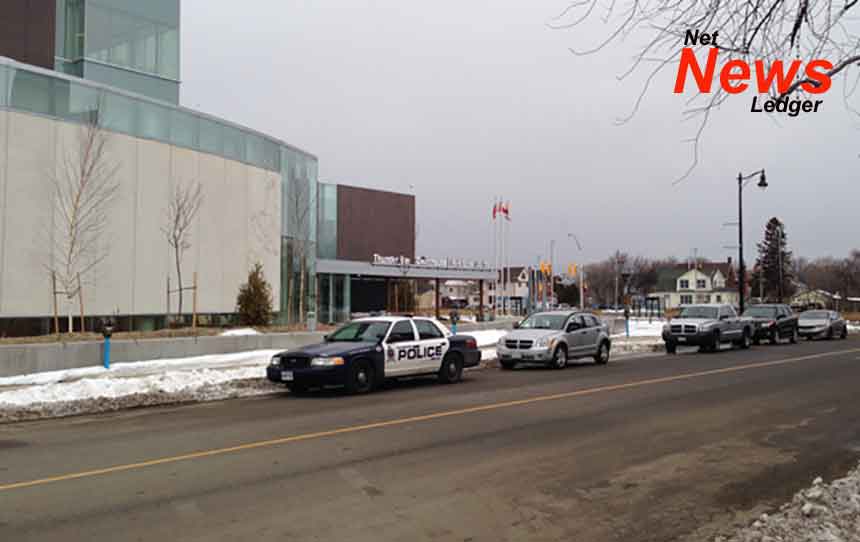
THUNDER BAY — Thunder Bay Police Service say a shooting investigation has resulted in multiple Criminal Code charges against a 17-year-old, who remains in custody.
According to police, Primary Response Unit officers were called to the Vale Crescent area on Feb. 2, 2026, at about 10:45 p.m. Officers located an injured victim, who was transported to hospital for treatment.
The Major Crime Unit took over the investigation and identified a suspect. TBPS say officers from the Major Crime, Break and Enter and Robbery, Emergency Task, and Intelligence units arrested a youth on Feb. 5, 2026, in the Dawson Road area.
Because the accused is 17, NetNewsLedger is not permitted to publish the youth’s name or any information that could identify them, under the Youth Criminal Justice Act.
Police also say the accused has additional outstanding warrants with TBPS.
Charges laid
The 17-year-old is charged with:
-
Attempt to commit murder using a firearm
-
Robbery (two counts)
-
Discharging a firearm with recklessness
-
Possession of a firearm knowing possession is unauthorized
-
Unauthorized possession of a firearm
-
Possession of a weapon for a dangerous purpose
-
Pointing a firearm
-
Possession of a firearm or ammunition contrary to a prohibition order
The accused remains in custody and has a future court date, police said.
The allegations have not been proven in court.
What these charges generally allege
Attempted murder
In Canadian law, attempt to commit murder is a distinct Criminal Code offence. Where a firearm is used, the Criminal Code sets out enhanced sentencing provisions.
Robbery
Robbery is defined in the Criminal Code as theft involving violence, threats, assault with intent to steal, or stealing while armed with an offensive weapon or imitation weapon.
The penalty section for robbery includes life imprisonment in certain circumstances and sets minimum penalties when specified firearms are involved.
Firearm offences
Several of the counts listed are firearm-related offences, including:
-
Discharging a firearm with recklessness, which involves intentionally discharging a firearm into/at a place or in a manner that is reckless about the safety of others.
-
Unauthorized possession (possession without the required licensing/registration) and possession knowing it is unauthorized, which carry different maximum penalties.
-
Possession contrary to a prohibition order, which applies where a person possesses firearms or ammunition while prohibited by court order.
-
Possession of a weapon for a dangerous purpose and pointing a firearm are also Criminal Code offences that can be prosecuted by indictment or summary conviction.
Potential penalties upon conviction
Penalties can vary based on how the Crown proceeds, the facts proven in court, prior history, and whether the case remains in youth court or results in an adult sentence.
Attempted murder (with a firearm)
The Criminal Code provides that attempted murder is punishable by life imprisonment, and sets mandatory minimum terms where a firearm is used (including a four-year minimum in certain firearm-use cases).
Robbery
Robbery is punishable by life imprisonment. Where a restricted or prohibited firearm is used (or where any firearm is used in connection with a criminal organization), the Code sets mandatory minimum penalties.
Discharging a firearm with recklessness
This offence carries a maximum of 14 years imprisonment and, in some circumstances involving restricted/prohibited firearms or criminal organization connections, mandatory minimum penalties.
Firearm possession and related offences (selected maximums)
-
Unauthorized possession of a firearm (s. 91): indictable, up to 5 years (or summary).
-
Possession knowing it is unauthorized (s. 92): indictable, up to 10 years.
-
Possession for a dangerous purpose (s. 88): up to 10 years (or summary).
-
Pointing a firearm (s. 87): up to 5 years (or summary).
-
Possession contrary to prohibition order (s. 117.01): indictable, up to 10 years (or summary).
How this impacts a 17-year-old accused
Identity protection (publication ban)
Under the YCJA, the identity of a young person dealt with under the Act cannot be published, with limited exceptions—most notably if the youth receives an adult sentence.
Adult sentence is possible for serious cases—but not automatic
The YCJA allows the Attorney General (Crown) to apply for an adult sentence for offences committed after age 14 where an adult would face more than two years imprisonment, and requires advance notice of an intention to seek an adult sentence.
Attempted murder is specifically defined in the YCJA as a “serious violent offence.”
That classification can affect how the case is prosecuted and what sentencing options are considered.
Youth sentencing options still include custody for serious violent offences
Even if the matter proceeds in youth court, the YCJA includes custody-based sentencing options, including the possibility of intensive rehabilitative custody and supervision in cases involving serious violent offences (where statutory requirements are met).