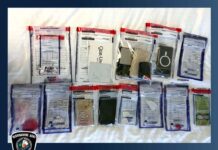
Court finds fentanyl, cocaine trafficking and proceeds-of-crime offences proven beyond a reasonable doubt
Thunder Bay — Justice M. G. March of the Ontario Court of Justice has found Jevonte Williams guilty of possession of fentanyl for the purpose of trafficking, possession of cocaine for the purpose of trafficking, and possession of proceeds of crime under $5,000.
In the decision, listing the reasons for judgment, released January 23, 2026 by Justice M. G. March, following a trial that was heard on June 4–6 and September 17, 2025.
The offences were alleged to have occurred during a police search on March 15, 2023.
Search warrant executed at Pacific Avenue apartment
The case centred on the execution of a search warrant by the Thunder Bay Police Service at an apartment in the city.
The Crown’s case was circumstantial and relied on what officers found during the search — including drugs, cash, and items police described as drug-packaging and weighing equipment — in a room, Justice M. G. March accepted was set up as a drug-processing area rather than a bedroom.
The decision notes an officer from the Ontario Provincial Police assisted with surveillance that day, and samples of seized substances were sent for analysis supported by certificates from Health Canada.
Defence pointed to investigative gaps and “tunnel vision” concerns
Kiran Grewal and Hannah Deasy, the defence lawyers argued that the police work was incomplete and left key questions unanswered — including limited pre-search surveillance, minimal suspect descriptions, and the lack of forensic steps such as fingerprint/DNA testing on items seized.
The defence also stressed there was no clear evidence Williams lived at the apartment and argued the Crown had not proven knowledge and control of hidden drugs and cash.
The judge acknowledged “much left to be desired” in the investigation but ultimately concluded the evidence still met the criminal standard.
In addressing the defence’s concerns, the ruling also referenced the Supreme Court’s guidance on circumstantial cases — that a conviction requires guilt to be the only reasonable inference available on the evidence.
Court: location inside restricted “processing room” was key
Justice March found the decisive factor was where Williams was located when police entered: alone in a room, the court concluded was a restricted inner area used to process drugs for sale.
The judge pointed to warning signs posted along the hallway (such as “no one past this point” messaging), and accepted expert evidence describing the apartment as operating like a “trap house” with a doorman and a separated processing area.
The court found the totality of the evidence supported the inference that Williams had knowledge and control of the drugs and cash discovered in that room, and convicted him on all counts.
What penalties could follow at sentencing
This ruling deals with guilt, not sentence. Sentencing is determined later and depends on many factors, including aggravating/mitigating circumstances and submissions from counsel.
That said, the governing statutes set the outer limits:
-
For possession for the purpose of trafficking in Schedule I substances such as fentanyl and cocaine, the law provides that an offender is liable to imprisonment for life.
-
For possession of property obtained by crime where the value is not more than $5,000, the offence may be prosecuted by indictment with a maximum of two years’ imprisonment (or by summary conviction).