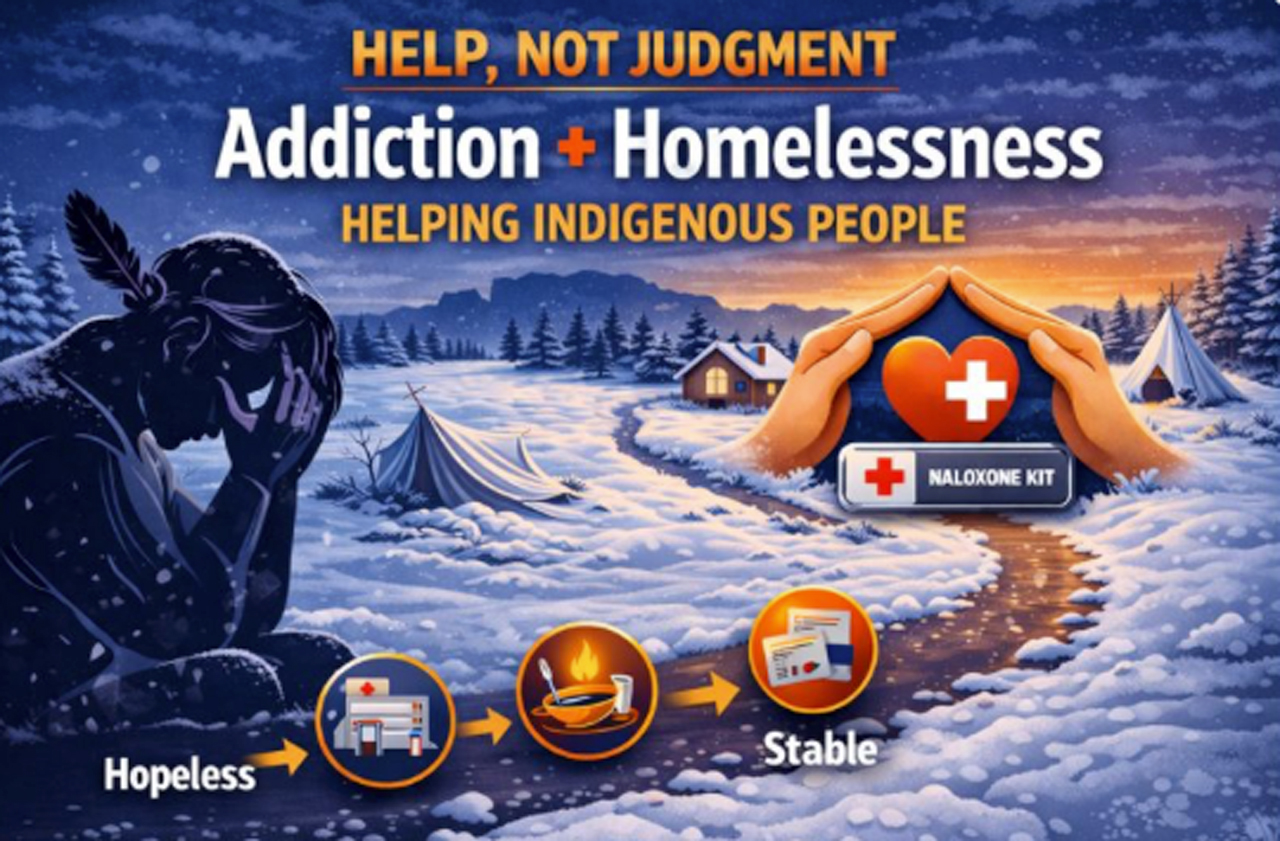
What many families are facing right now
Across Thunder Bay and Northwestern Ontario, too many families are navigating two brutal realities at once that face their loved ones: addiction and survival mode—unstable housing, chaos, and constant crisis.
What many parents and grandparents see on a regular basis as problems, they seek to offer and find solutions. Often those become suggestions of “getting a job” or “going back to school”. Now step back, think about how hard that would really be for a person who has no stability in their lives.
In the context of addiction and homelessness, those logical solution ideas, “work or school” can land like intense pressure or judgment, even when it’s meant as hope.
What tends to work better is a shift from big-picture success to near-term stability—and clear, consistent boundaries.
Make the first goal stability, not success
When someone is using opioids, drinking heavily, and sleeping rough (or couch-surfing), the goal this week isn’t “get it together.” It’s one small win that reduces harm:
-
a safe place tonight
-
a medical/addictions visit
-
replacing ID/health card
-
a regular meal and a shower
-
one appointment kept
Once life is steadier, bigger conversations land differently.
Change the conversation so they can’t tune it out
When we lead with advice, no matter how well intentioned, many people shut down.
A permission-based approach can reduce resistance:
-
Ask permission
“Can I check in about something important for two minutes—then I’ll drop it if you want?” -
Say what you see + what you feel (no lecture)
“I’m scared. Mixing opioids and alcohol can slow breathing and can be fatal. I don’t want to lose you.” -
Ask an open question that gives them control
“What feels hardest right now—cravings, drinking, sleep, money, or just feeling stuck?” -
Offer a simple menu (3 choices max)
“If you’ll do one thing this week, which is easiest:
-
a quick addictions clinic visit, or
-
getting connected to housing/case management, or
-
a counselling chat?”
Then stop talking. Silence does work.
Set firm, loving boundaries (and stick to them)
Boundaries aren’t punishment—they’re clarity. A few examples families use:
-
“I’ll pay for food/a phone/a ride to appointments—I won’t give cash.”
-
“You can’t be in the house if you’re high or drunk.”
-
“I will always help you get to treatment or housing supports.”
Consistency beats repeated emotional talks.
Treat this like a health emergency, not a motivation problem
For many people understanding the impacts of addiction and the downward spiral is really hard – If you have always worked hard, never been addicted, and sound like you are up on a pedestal preaching, chances are you are simply driving the person who you want to help further away.
Opioids + alcohol is a high-risk mix because both can depress breathing.
If opioids are involved, having naloxone nearby is a practical safety step. In Ontario, many pharmacies provide free naloxone kits (no prescription needed).
If you suspect overdose (unresponsive, slow/no breathing), call 911.
If someone is drinking heavily every day, stopping suddenly can be medically risky—medical support may be needed.
Concrete “next step” options in Thunder Bay
If they’ll accept help, these are practical entry points:
RAAM Clinic (Rapid Access Addictions Medicine)
A fast door for help with substance use (including opioid/alcohol withdrawal management and treatment options). Walk-ins and calls accepted; not a long-term program or detox facility.
-
Thunder Bay RAAM (NorWest site): call 807-626-8478
The Access Point Northwest
Centralized intake for outpatient mental health services, supportive housing, and case management navigation.
-
807-624-3400
Shelter House Thunder Bay
Low-barrier shelter and supports.
-
807-623-8182
CMHA Thunder Bay Crisis Response (24/7)
For mental health/addictions crisis support across the region.
-
807-346-8282 (district/toll-free options also available)
ConnexOntario (24/7)
Ontario-wide service navigation for mental health/addictions supports.
-
1-866-531-2600
-
Text CONNEX to 247247
211 Ontario
Housing/shelter and social supports navigation.
-
Dial 2-1-1 or 1-877-330-3213
If you’re worried about immediate self-harm risk
-
Call or text 9-8-8 (Canada-wide)
A one-sentence offer you can repeat
“I’m not asking you to fix your life this week—just do one step with me so you’re safer.”
If they say yes: you drive, you sit with them, you help them through the door. Reduce friction.
Don’t do this alone
Families often benefit from peer supports (Al-Anon/Nar-Anon), counselling, or coaching around boundaries—so you can stay connected without getting pulled into the cycle.