Setting Your Life Path with Teachings
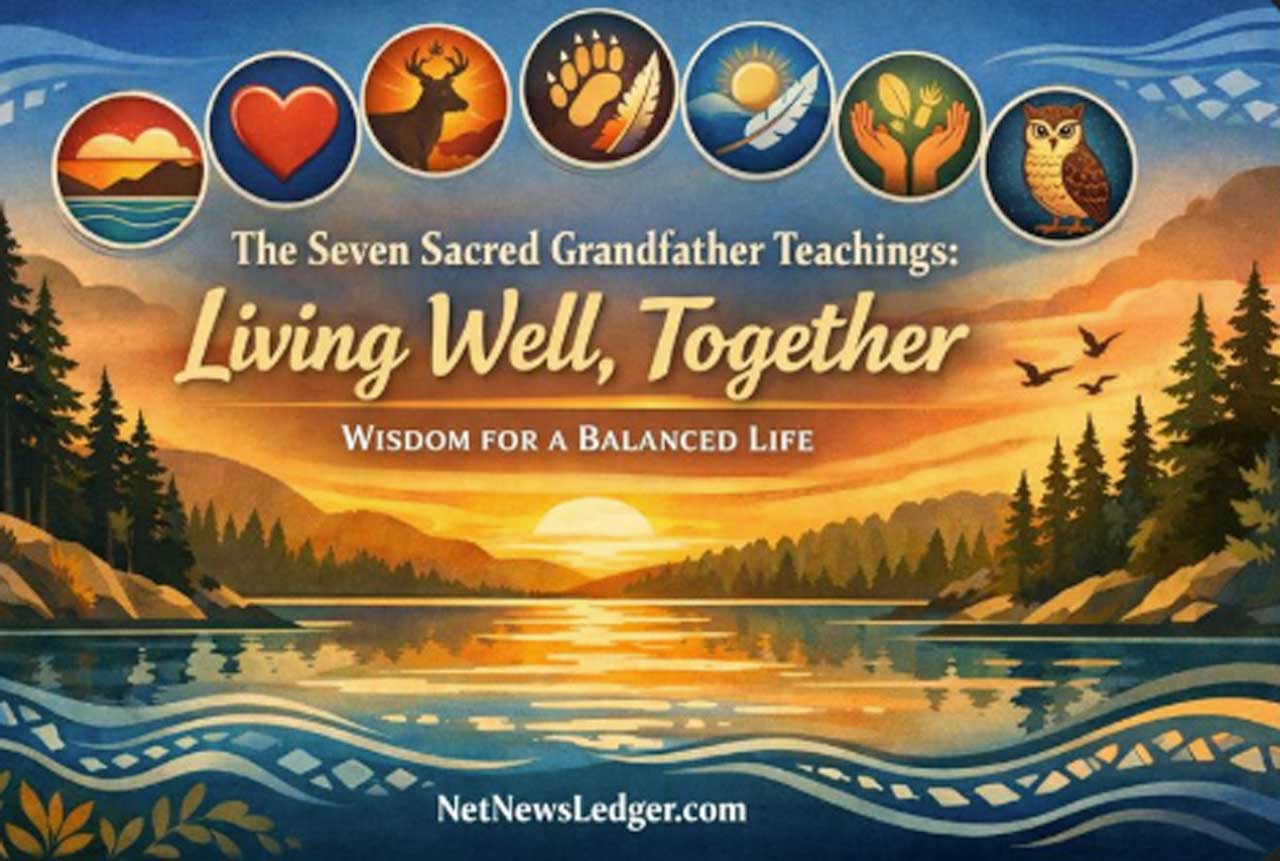
THUNDER BAY – Indigenous – In many Anishinaabe communities, there are teachings carried with care from one generation to the next—guiding principles meant to help people live well with one another and with all of Creation. They are often shared today as the Seven Sacred Grandfather Teachings (sometimes also called the Seven Grandfather Teachings, Seven Sacred Teachings, or Seven Grandmother Teachings, depending on the community and who is telling the story).
What follows is an overview written in the spirit of respectful learning: a doorway, not a destination. These teachings live most fully when they are learned in relationship—through community, language, land, and the voices of Knowledge Keepers and Elders.
Where the Teachings Come From
Across many tellings, the story begins long ago when powerful spiritual beings—often described as the Seven Grandfathers—saw that people were struggling to live in a good way.
A helper or messenger was sent to walk among the people and find someone who could be taught a better path.
In one widely shared version, the messenger chooses a child, who is then taught over time and eventually receives seven gifts—teachings meant to be carried back to the people.
Because these teachings have been passed on through oral tradition for generations, there isn’t only one “official” version. Communities may tell the origin story differently, use different Anishinaabemowin words, or emphasize slightly different themes—yet the heart of the teachings remains recognizable: how to live well, with humility and responsibility, in relationship with everything around us.
Some Anishinaabe educators also connect the teachings to mino-bimaadiziwin—a way of describing “living well” as something active, practiced, and continually renewed rather than achieved once and kept forever.
The Seven Teachings
Below are the teachings as they are commonly shared today: Love, Respect, Bravery/Courage, Truth, Honesty, Humility, and Wisdom.
Rather than treating them as a checklist, many people understand them as a circle: each teaching strengthens the others.
1) Love
Love is often described as unconditional—a practice of kindness and care that does not depend on someone being “perfect” first. In many tellings, love is not only about people; it includes the land, waters, animals, and the responsibilities we hold within Creation.
Today: Love can look like patience with a family member who is struggling, or choosing words that don’t wound when emotions run high. It can also look like community-level care: checking on Elders during storms, supporting youth, or making room for healing instead of shame.
2) Respect
Respect is often taught as reciprocal: if we want respect, we must practice it. Respect recognizes dignity—of people, of cultures, of differences, and of the natural world that sustains us.
Today: Respect shows up in listening before responding. It shows up in learning whose territory we are on, and why that matters. It shows up when we disagree without trying to humiliate the other person—at home, online, at work, and in public life.
3) Bravery (Courage)
Bravery is often described as doing what is right even when it is difficult—especially when there may be consequences. It’s not the absence of fear; it’s moving with integrity even while fear is present.
Today: Bravery can mean speaking up when racism shows itself in casual comments. It can mean asking for help. It can mean telling the truth about harm, or stepping into reconciliation work that requires discomfort and steady effort.
4) Truth
Truth is sometimes described as the teaching that gathers all the others—because love, respect, humility, bravery, honesty, and wisdom are meant to be lived in a truthful way. Truth asks us to be real with ourselves and to avoid self-deception.
Today: Truth matters in an era of misinformation and quick outrage. It invites careful thinking: What do I actually know? What have I only heard? What am I repeating without checking? It also invites personal truth: naming what we feel, what we need, and what we’ve avoided.
5) Honesty
Honesty is often taught as being straight in word and action, beginning with ourselves. It asks us not to hide behind excuses or to pretend we are something we are not.
Today: Honesty can be small and daily: admitting we made a mistake, taking responsibility, apologizing without “but.” In leadership—political, organizational, or family leadership—honesty becomes the foundation for trust.
6) Humility
Humility reminds us we are a sacred part of Creation, equal in value—but not above others. Humility is not about thinking poorly of ourselves; it is about remembering we are not the center of everything.
Today: Humility can change the temperature of a conversation. It’s the ability to say: I might be wrong. I have more to learn. It’s also how we approach Indigenous teachings: with respect, permission, and an understanding that some knowledge is not meant to be taken, reposted, or used out of context.
7) Wisdom
Wisdom is often shared as cherishing knowledge and using it for the good of others. Wisdom isn’t just information; it’s what happens when knowledge is guided by responsibility.
Today: Wisdom asks us to think beyond the immediate moment. In communities facing climate change, economic uncertainty, and strained systems, wisdom looks like long-term thinking—decisions that protect water, protect children, and strengthen relationships seven generations ahead.
Why These Teachings Are Relevant Right Now
Many people feel the pace of modern life pulling us away from each other: constant notifications, quick judgments, loneliness in crowded places, and public conversations that turn harsh fast. The Seven Sacred Grandfather Teachings do something simple and powerful: they slow us down and bring us back to relationship.
They also offer guidance that’s practical:
-
For workplaces: respect, honesty, and humility build trust and reduce harm.
-
For civic life: truth and bravery help communities face difficult realities without denial.
-
For families: love and wisdom keep us grounded when life gets messy.
-
For land and water: respect and humility remind us we are accountable to the places that sustain us.
Importantly, these teachings are not only “values” to admire—they are practices. They become real in the ways we speak, the choices we make when nobody is watching, and the responsibilities we accept when we realize our actions ripple outward.
An Invitation…
If you are Indigenous, these teachings may feel like home—something you’ve heard in different words, in different circles, at different times. If you are non-Indigenous, consider them an invitation to learn with care: seek local teachings, attend public events when invited, support Indigenous-led initiatives, and approach cultural knowledge with respect and humility.
The teachings ask us to live in a way that is steady, relational, and awake.
In a world that often rewards speed and certainty, they remind us that living well is not a performance. It is a returning—again and again—to love, respect, bravery, truth, honesty, humility, and wisdom.