The sky is changing colours, and it’s not just the Northern Lights
Thunder Bay – WEATHER – Environment Canada has started using colour-coded weather alerts to make it easier to know about risks.
Environment Canada has just made it a lot easier to tell how serious that weather alert really is at a glance.
Canada now has a new color-coded weather alert system that makes it easier to see how dangerous the weather might be, whether you’re in Winnipeg getting ready for a windstorm or in Thunder Bay watching a snow squall.
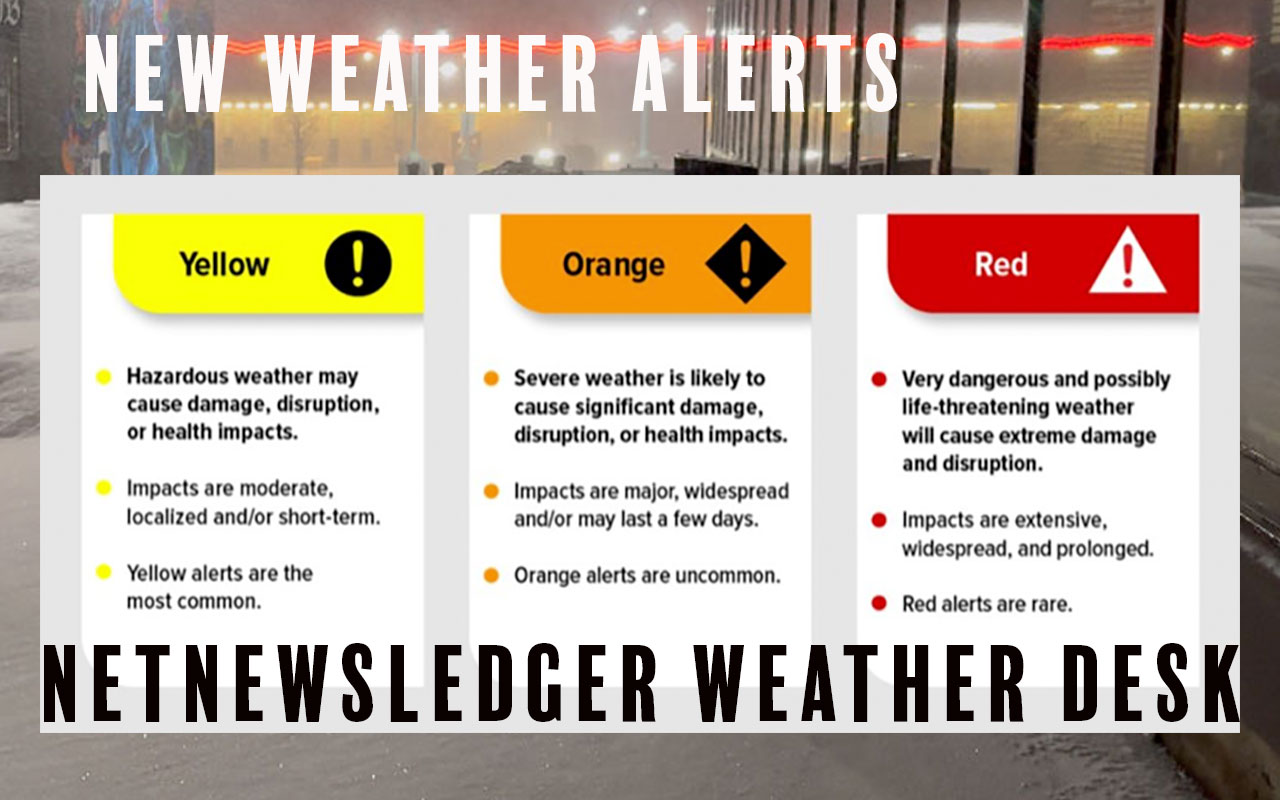
Warnings, Watches, and Advisories all now use these new color-coded alerts. They have three main levels of colour: yellow, orange, and red, which show how serious the situation is and how likely it is to have an effect.
What the Weather Alert Means The Rainbow
Yellow Alert—The “Heads Up”
Yellow is the most common colour and means that bad weather could cause problems in a small area for a short time. You might have to deal with things like:
Short power outages
Branches of trees breaking
If it’s windy, some things might fly around.
The yellow symbol has a yellow exclamation mark inside a black circle and is surrounded by a yellow ring. It’s a polite but firm reminder to stay alert.
Orange Alert—Get Ready
Things are getting serious when they turn orange. There is a good chance of bad weather, which could bring:
Power outages all over the place
Some damage to the structure
Broke small to medium trees
The symbol here makes it better: a black diamond with an orange exclamation mark inside and an orange ring around it. It’s not time to panic, but it is time to get ready.
Red Alert—”Take Shelter Now”
Red is not common, but when you see it, you need to act quickly. This means very bad conditions that could kill you, like:
Long blackouts
Big damage to the structure
Flying debris that is dangerous
A wide-ranging, long-lasting effect
You can’t miss it: a red exclamation mark inside a white triangle with a red border. Don’t ignore it when it flashes on your screen.
Why Colour Matters: One Storm, Many Effects
A storm with strong winds in Fort Severn might just shake the windows, but the same system could knock down power lines and scatter trees across the streets in Toronto. That’s why Environment Canada says that location, population density, and timing are important.
It’s also why each alert now has a colour to help people understand how it will affect them more clearly.
And here’s a tip: always read the whole alert. The colour gives you a quick look, but the full message will tell you what to do to stay safe.
Safe, Simple, and Smart
This new system is all about helping Canadians, especially those who live in Northwestern Ontario, which is prone to storms, make better decisions more quickly when the weather gets bad. If you’re in Kenora and the winds are whipping around, or in Armstrong and the roads are icy, you can get a sense of what’s going on just by looking at the colour before you even finish your morning coffee.
Weather Facts—Did You Know?
Warnings that use the colour red aren’t new to the world. Japan, the UK, and a number of European countries have been using colour codes for weather warnings for a long time. Canada now has its own unique system that makes weather alerts easier to understand and more accessible than ever before.