Chairman C.C. Wei’s recent assertion that artificial intelligence remains in its early developmental phase carries implications extending beyond quarterly earnings projections. It validates Taiwan Semiconductor Manufacturing Company’s decision to establish a substantial United States manufacturing infrastructure capable of supporting multi-decade demand trajectories.
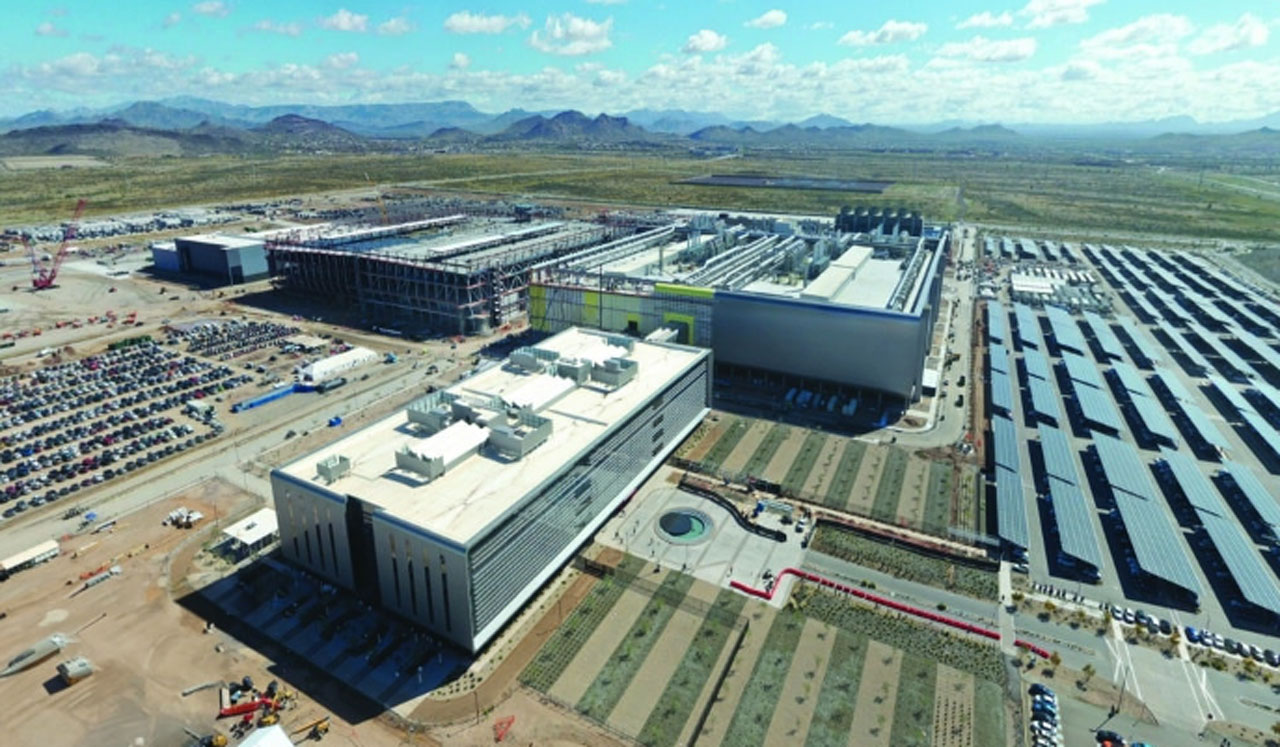
The remarks frame TSMC Arizona’s $165 billion Phoenix campus not as tactical geographic diversification but as foundational infrastructure for what Wei characterizes as a protracted technology cycle. The chipmaker now operates production facilities on American soil capable of manufacturing processors powering everything from data center servers to edge AI devices, with additional capacity under construction.
Workforce Development as Competitive Differentiator
TSMC Arizona’s ability to recruit, train, and retain specialized semiconductor technicians has emerged as a critical success factor distinguishing the Phoenix operation from earlier attempts by foreign manufacturers to establish U.S. production. The company committed $5 million toward apprenticeship programs spanning four technical specializations: facilities technician, equipment technician, process technician, and manufacturing technician specialist.
Partnerships with Arizona State University, Northern Arizona University, Grand Canyon University, and Maricopa Community Colleges created pathways for approximately 130 apprentices entering training in 2025. These programs combine 18-to-24-month classroom curricula with on-the-job experience at TSMC facilities, addressing what company officials identified as the most significant challenge in scaling American semiconductor production: availability of workers familiar with advanced fabrication processes.
Rose Castanares, president of TSMC Arizona, framed workforce cultivation as central to expansion decisions. “One of the top considerations in TSMC’s decision to expand here was the opportunity to tap a local and diverse talent pipeline and collaborate with a world-class U.S. education system,” Castanares stated during announcement ceremonies with Governor Katie Hobbs and Phoenix Mayor Kate Gallego.
The educational partnerships extend beyond technical training. ASU houses over 7,000 students studying microelectronics-related disciplines, with the university designated in January 2025 as home to the National Semiconductor Technology Center Prototyping and National Advanced Packaging Manufacturing Program facility. This is a research complex that ASU President Michael Crow described as representing “the greatest national laboratory investments since those that came out of the Manhattan Project.”
Production Metrics Validate Manufacturing Transfer
Manufacturing yield rates (the percentage of functional chips produced per silicon wafer) provided concrete validation that TSMC successfully transferred its proprietary processes from Taiwan to Arizona. The Phoenix facility achieved yields approximately four percentage points higher than comparable Taiwan operations during the initial production ramp, according to statements from TSMC U.S. President Rick Cassidy.
The metric carries economic significance beyond technical achievement. Semiconductor fabrication facilities require capital investments measured in tens of billions of dollars, with profitability dependent on maximizing the proportion of saleable chips produced. TSMC Arizona’s first fab achieved volume production in late 2024 using 4-nanometer N4 process technology, with a monthly capacity of 30,000 wafers fully allocated to customers, including Apple, AMD, and Nvidia.
Financial performance reflected operational maturity faster than industry observers anticipated. TSMC Arizona posted its first profit in the first half of 2025, contributing NT$4.52 billion in net income. The unit transitioned from investment phase to revenue generation within approximately four years of construction commencement, a compressed timeline compared to historical fab development cycles.
Manufacturing success enabled TSMC to accelerate subsequent facility deployments. The second fab completed construction ahead of schedule, positioning TSMC Arizona to begin 3-nanometer chip production by 2026-2027. Construction of a third fab utilizing 2-nanometer and A16 process technologies commenced in April 2025, with Wei indicating the company is evaluating production timeline acceleration based on customer demand signals.
Customer Commitments Anchor Capacity Planning
Technology company executives publicly affirmed intentions to source chips from TSMC Arizona facilities, providing demand visibility supporting continued expansion. AMD CEO Lisa Su characterized the partnership as enabling AMD to “focus on what we do best: designing high-performance chips that change the world.” Qualcomm CEO Cristiano Amon confirmed the company already manufactures products at the Phoenix site with plans to utilize additional capacity as it becomes available.
Nvidia’s October 2025 commencement of AI chip production at TSMC Arizona represented what CEO Jensen Huang described as a watershed moment: “For the very first time in American history, in recent American history, the single most important chip is being manufactured here in the United States by the most advanced fab at TSMC.” The Nvidia partnership underscores TSMC Arizona’s role in producing chips for applications where performance requirements necessitate leading-edge manufacturing processes.
Apple positioned itself as TSMC Arizona’s largest customer, with the facility producing processors for multiple product lines. The commitments from technology sector leaders provide TSMC confidence to proceed with three additional fabs, two advanced packaging facilities, and a research center. These infrastructure investments collectively represent the largest foreign direct investment in U.S. history.
Technology Roadmap Maintains Competitive Positioning
TSMC Arizona’s semiconductor manufacturing capabilities will span multiple process generations simultaneously once all planned facilities reach production. The first fab produces 4-nanometer chips, the second will manufacture 3-nanometer processors, while subsequent facilities deploy 2-nanometer technology and the A16 process node incorporating backside power delivery. This architectural innovation is particularly relevant for high-performance computing applications.
The technology deployment sequence reflects TSMC’s assessment that American customers require domestic access to chips at the industry’s leading edge rather than mature process nodes. Wei confirmed during investor discussions that TSMC Arizona will receive the company’s most advanced manufacturing technologies, dispelling earlier speculation that overseas facilities might operate one or two generations behind Taiwan operations.
Advanced packaging capabilities (where multiple chiplets are integrated into a single module) complement wafer fabrication. TSMC partnered with Amkor Technology, which received $407 million in federal funding to construct a $2 billion advanced packaging facility adjacent to the TSMC campus. The proximity enables integrated manufacturing flows from silicon wafer production through final package assembly, creating supply chain efficiencies and reducing logistics costs.
Scaling Challenges and Strategic Responses
Initial construction phases exposed operational challenges distinct from building fabs in Taiwan. Skilled labor availability, regulatory compliance requirements, and construction cost differentials required TSMC to adapt deployment strategies. The company brought over 1,000 experienced technicians from Taiwan during equipment installation phases while simultaneously developing local training programs to cultivate sustainable American workforce.
Cultural integration between Taiwanese managers and American engineers necessitated adjustments to work practices and communication styles. TSMC implemented management training programs and refined operational procedures to align with U.S. labor expectations while maintaining manufacturing discipline essential for achieving target yield rates.
Finance Chief Wendell Huang acknowledged that overseas facilities initially reduce gross margins by 2-3 percentage points compared to Taiwan operations during their first five years. Huang projected that scaling TSMC Arizona to represent meaningful production volume will improve cost structures and support the company’s long-term gross margin target exceeding 53%.
Cost considerations influenced government support structures. TSMC received $6.6 billion in CHIPS Act grants and up to $5 billion in government loans, with an additional 25% investment tax credit available for qualified capital expenditures. The federal support partially offsets higher U.S. construction and operating costs. TSMC founder Morris Chang previously estimated that American semiconductor manufacturing can cost 50% more than equivalent Taiwan facilities.
Geographic Expansion as Risk Mitigation
TSMC’s historical concentration of advanced manufacturing in Taiwan created supply chain vulnerabilities that customers and policymakers identified as strategic risks. The COVID-19 pandemic’s supply chain disruptions, combined with geopolitical tensions surrounding Taiwan, accelerated demands for manufacturing diversification.
Wei characterized the U.S. scale as “indispensable” rather than optional. This linguistic framing suggests TSMC views American capacity as fundamental to maintaining customer relationships rather than supplementary to Taiwan operations. The Phoenix campus, once completed, will house manufacturing capability representing approximately 30% of TSMC’s global capacity for sub-2-nanometer chips.
Geographic distribution across Taiwan, Arizona, Japan, and Germany creates redundancy, enabling TSMC to maintain supply continuity if any single location experiences disruption (whether from natural disaster, infrastructure failure, or geopolitical events). Customer executives privately acknowledged that sourcing agreements increasingly incorporate requirements for multi-site manufacturing to reduce concentration risk.
Regional Economic Multiplier Effects
TSMC Arizona catalyzed semiconductor ecosystem development in metropolitan Phoenix beyond direct employment. The Greater Phoenix Economic Council reported that 39 semiconductor-related companies established operations in the region following TSMC’s 2020 announcement, generating over $37 billion in capital investment and creating more than 7,700 jobs across suppliers, materials providers, and equipment manufacturers.
Workforce development infrastructure expanded to support industry growth. Arizona designated Phoenix as one of five federal Workforce Hubs under the Biden administration’s Investing in America initiative, enabling local officials to access resources for developing advanced manufacturing career pathways. Community colleges launched semiconductor manufacturing curricula, with over 900 students completing certification programs since 2022.
Real estate development accompanied industrial expansion. Mack Real Estate Group announced a $7 billion mixed-use development called Halo Vista adjacent to TSMC’s campus, encompassing 12 million square feet of industrial space, 3.5 million square feet of technology and research facilities, and residential accommodations for approximately 9,000 residents. This infrastructure is designed to support 62,000 jobs when fully developed.
The concentration of semiconductor industry activity prompted Semicon West (a major microelectronics industry conference held in San Francisco for five decades) to relocate to Phoenix beginning in 2025. The venue change reflects metropolitan Phoenix’s emergence as what industry participants characterize as America’s primary semiconductor manufacturing hub.
Strategic Implications for Industry Structure
TSMC Arizona’s operational success and continued expansion carry implications for the global semiconductor industry structure. The demonstration that advanced chip manufacturing can achieve competitive yields outside East Asia potentially enables additional geographic diversification by TSMC and competitors.
Samsung faces challenges securing customers for its $17 billion Texas facility, while Intel’s foundry services division posts quarterly losses exceeding $2 billion despite significant federal support. TSMC’s early profitability at its Arizona operation provides proof that non-integrated device manufacturers can successfully establish American production. This validation eluded other foreign chipmakers attempting similar expansions.
The Phoenix campus will eventually employ approximately 6,000 workers directly across production, engineering, and support functions. Combined with supplier ecosystem jobs, construction employment, and induced economic activity, economic impact analyses project TSMC Arizona will generate over $200 billion in economic output across the next decade.
Wei’s characterization of AI as entering its “early stage” suggests TSMC anticipates sustained demand growth measured in decades rather than years. This timeframe justifies massive fixed capital investments in American manufacturing infrastructure. The company’s willingness to commit $165 billion to U.S. operations reflects confidence in both technology demand trajectories and TSMC’s ability to maintain its leadership position across multiple geographic manufacturing locations.