Abstract
Nicotinamide N-methyltransferase (NNMT) catalyzes the methylation of nicotinamide (NAM) to 1-methylnicotinamide (1-MNA) using S-adenosyl-L-methionine (SAM) as the methyl donor, thereby intersecting two fundamental axes of cell biology: the NAD⁺ salvage pathway and one-carbon methyl-group metabolism. Dysregulated NNMT has been linked to obesity, insulin resistance, fatty-liver pathology, tumor-stroma remodeling, and age-related loss of skeletal-muscle function. 5-amino-1-methylquinolinium (5-amino-1-MQ) is a substrate-competitive, cell-permeable NNMT inhibitor that suppresses 1-MNA formation, preserves NAM for NAD⁺ salvage, and reduces SAM consumption, with downstream effects on redox signaling and epigenetic methylation potential. In diet-induced obese mice, NNMT inhibition reduces adiposity and plasma cholesterol without lowering food intake and is accompanied by increases in tissue NAD⁺ and restoration of methylation potential. In cancer models, stromal NNMT drives a “methylation sink” phenotype that is reversible with genetic or pharmacologic suppression. This review summarizes NNMT enzyme biology, the pharmacology of 5-amino-1-MQ, preclinical evidence across metabolic, hepatic, muscular, and oncologic settings, recommended biomarkers and endpoints, limitations, and study-design considerations. It also provides research-use sourcing information for laboratories.
Introduction
NNMT is a cytosolic methyltransferase that converts NAM to 1-MNA while converting SAM to S-adenosyl-L-homocysteine (SAH). Because NAM is the NAMPT substrate in the primary NAD⁺ salvage route, NNMT effectively competes with NAD⁺ regeneration; because SAM is the universal methyl donor, NNMT modulates the cellular methylation potential (often indexed by the SAM/SAH ratio). Elevated NNMT expression in white adipose tissue and liver during obesity and insulin resistance, and in stromal compartments of several cancers, has motivated development of small-molecule NNMT inhibitors to test causality and therapeutic hypotheses in preclinical systems.
Biochemistry of NNMT and its network context
By removing NAM from the salvage pool, NNMT can depress NAD⁺ availability and thus influence NAD⁺-dependent enzymes such as sirtuins and PARPs. In parallel, methyl-group consumption by NNMT lowers the SAM/SAH ratio and can diminish the thermodynamic drive for DNA and histone methylation. In adipocytes, lowering NNMT increases NAD⁺ and SAM, shifts polyamine flux, and is associated with higher energy expenditure and smaller adipocyte size. In cancer-associated fibroblasts (CAFs), excessive NNMT depletes SAM and globally reduces histone methylation, remodeling chromatin toward pro-tumor gene programs. Collectively, these findings position NNMT as a metabolic–epigenetic hub.
Pharmacology of 5-amino-1-MQ
5-amino-1-MQ is a quinolinium analog engineered to occupy the NAM-binding site of NNMT as a competitive inhibitor. Biochemical and cell-based data demonstrate low-micromolar potency against NNMT and high membrane permeability, with dose-dependent suppression of 1-MNA formation and downstream changes in adipocyte gene expression. Mechanistically, inhibiting NNMT with 5-amino-1-MQ increases NAM availability for NAD⁺ salvage and reduces SAM drain, thereby raising methylation potential. These coupled effects provide a coherent basis for the in vivo metabolic phenotypes observed in diet-induced obesity models.
Preclinical metabolic evidence
Genetic studies first established a causal role for NNMT in whole-body energy homeostasis. Reducing Nnmt in white adipose tissue and liver protects mice from diet-induced obesity, increases energy expenditure, improves glucose control, lowers circulating lipids, and ameliorates hepatic steatosis. Pharmacologic inhibition with membrane-permeable NNMT inhibitors including 5-amino-1-MQ recapitulates these benefits: diet-induced obese mice exhibit weight loss, reduced white-fat mass and adipocyte size, and lower plasma total cholesterol without reductions in food intake. These phenotypes occur alongside increases in adipose NAD⁺ and restoration of methylation potential, consistent with NNMT’s dual positioning in NAD⁺ salvage and one-carbon metabolism.
Beyond weight and lipids, combining NNMT inhibition with a lean-diet switch accelerates fat loss relative to diet change alone, improves liver lipid measures, and shifts cecal microbiome features toward lean-like profiles. While microbiome findings remain an active area of investigation, they extend NNMT biology beyond cell-intrinsic metabolism to host–microbe interactions during weight reduction.
Hepatic biology and MASLD
Hepatic triglyceride handling depends on both NAD⁺ state and methyl-group balance. In diet-induced models, lowering NNMT improves hepatic triglyceride accumulation and lipid-export pathways—effects plausibly linked to restoration of SAM balance and methylation-sensitive regulatory nodes. Whether hepatocyte-intrinsic NNMT versus adipose-derived signals dominate these improvements remains to be fully parsed, but the preclinical data indicate that NNMT inhibition can normalize liver lipid homeostasis during caloric excess.
Skeletal muscle and aging phenotypes
Age-related declines in muscle function correlate with impaired NAD⁺ metabolism, altered satellite-cell dynamics, and inflammatory remodeling. In aged mouse models, NNMT inhibition increased forelimb grip strength and improved histologic features of myofiber repair, with additive effects when combined with structured exercise. Although translation to humans awaits formal testing, these data argue that perturbing NAM–NAD⁺ flux and methyl-group economy via NNMT inhibition is sufficient to modify functional outcomes in old muscle, warranting mechanistic work on mitochondrial quality control, bioenergetics, and stem-cell activation under NNMT suppression.
NNMT in cancer biology and the tumor microenvironment
Multiple tumor studies implicate stromal NNMT as a master regulator of pro-tumor microenvironments. In CAFs, NNMT acts as a “methylation sink,” consuming SAM and reducing global histone methylation marks such as H3K27me3 and H3K4me3. This epigenetic shift derepresses programs that stiffen extracellular matrix, enhance cytokine and chemokine secretion, and foster tumor invasion and growth. Suppressing NNMT—either by RNA interference or small-molecule inhibitors—reverts CAF phenotypes, normalizes epigenetic marks, and reduces tumor growth in vivo. These observations raise the hypothesis that NNMT inhibitors could serve as microenvironment-modifying agents that synergize with cytotoxic chemotherapy or immune checkpoint blockade by limiting myeloid suppressor recruitment and reinvigorating T-cell activity; these concepts remain preclinical and require careful dose-exposure optimization and toxicity assessment.
Biomarkers, assays, and endpoints for NNMT inhibition
Proximal biochemical biomarkers
1-MNA in plasma or tissue is a direct pharmacodynamic readout of NNMT activity. NAM and NAD⁺/NADH track salvage flux perturbed by NNMT inhibition. SAM, SAH, and the SAM/SAH ratio index methylation potential and one-carbon balance.
Epigenetic biomarkers
Global and locus-specific histone methyl marks (for example H3K27me3 and H3K4me3) can be quantified by immunoblotting, mass spectrometry, or ChIP-based assays to assess methylation consequences of NNMT inhibition.
Physiological and phenotypic endpoints
Metabolic studies typically include body weight and composition, indirect calorimetry, food intake, oral glucose and insulin tolerance, plasma lipids, adipocyte morphometrics, and liver histology and lipidomics. Muscle studies incorporate forelimb grip strength, treadmill endurance, myofiber cross-sectional area, satellite-cell activation markers, and intramyocellular lipid measures. Oncology studies pair tumor growth kinetics with stromal and extracellular-matrix marker panels, immune-cell phenotyping, and functional invasion/migration assays.
Preclinical dosing paradigms and PK/PD considerations
Published work and disclosures describe short-course 5-amino-1-MQ regimens in diet-induced obese mice, including subcutaneous administration near 20 mg/kg multiple times per day for roughly 11 days, producing weight loss and adipose reductions without suppressing food intake and accompanied by expected pharmacodynamic changes (lower 1-MNA, higher tissue NAD⁺). Exposure and target engagement depend on strain, sex, age, route, and formulation; dose-range finding and pharmacokinetic characterization within the intended model are recommended before hypothesis testing. Selectivity panels against related methyltransferases and NAD⁺-pathway enzymes de-risk off-target confounding, while orthogonal confirmation of compound identity and purity (for example LC-MS, NMR) is prudent when initiating work with any external supply.
Context dependence and safety unknowns
NNMT’s functions are tissue-specific and context-dependent. In adipose tissue, lowering NNMT improves energy expenditure and lipid handling; in liver, it can normalize triglyceride storage and export; in tumor stroma, NNMT upregulation remodels chromatin and the secretome toward a pro-tumor state. Because NNMT sits upstream of ubiquitous pathways, chronic systemic inhibition could, in principle, alter homocysteine dynamics, DNA and histone methylation landscapes, or NAD⁺-dependent signaling in unanticipated ways. Short-course mouse studies have not reported prominent anorexigenic or overt toxic phenotypes at efficacious exposures, but comprehensive long-term toxicology, reproductive studies, and human dose–exposure–response data remain unavailable. These gaps motivate conservative nonclinical designs with serial monitoring of methyl-cycle intermediates, global and locus-specific methylation, and organ-system safety readouts, as well as exploration of tissue-targeted delivery to improve therapeutic index if translational work is contemplated.
Experimental design guidance for investigators
Model selection and randomization
For metabolic disease questions, use diet-induced obesity models with pre-randomization by body weight and fat mass, balanced sex and age, and standardized housing/feeding. For muscle aging, select cohorts by age with predefined functional and histologic endpoints. In oncology, prioritize tumor types with CAF-driven biology when testing stromal-modulation hypotheses.
Pharmacokinetics and pharmacodynamics
Establish plasma and tissue exposure for the intended route and schedule, and pair with pharmacodynamic time courses of 1-MNA, NAD⁺, NAM, SAM, SAH, and histone methyl marks. When feasible, perform concentration–effect modeling to relate exposure to biochemical and phenotypic endpoints.
Controls and selectivity
Include vehicle and mechanistic controls. In vitro selectivity panels against methyltransferases and salvage-pathway enzymes help exclude off-target explanations. Confirm compound identity and re-establish NNMT IC50 in your assay format before scale-up.
Microbiome and liver endpoints
When the research question includes microbiome interactions or hepatic lipid handling, add 16S or metagenomic profiling and quantitative liver lipidomics and histology. These modules provide sensitivity to detect changes beyond body weight and fat mass, including hepatocellular lipid partitioning and host–microbe cross-talk during weight loss.
Data integrity and reporting
Pre-register primary endpoints where possible, include sex as a biological variable, and report randomization methods, blinding, power calculations, attrition, and prespecified analyses. Because NNMT spans metabolism and epigenetics, multi-omic integration across metabolomics, epigenomics, and transcriptomics can yield mechanistically rich datasets aligned with the enzyme’s dual roles.
Sourcing 5-amino-1-MQ for research use
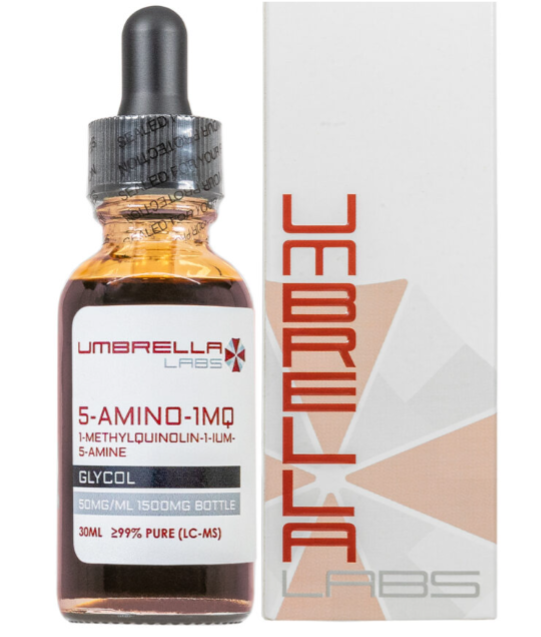
Umbrella Labs supplies 5-amino-1-methylquinolinium (5-amino-1-MQ) strictly for laboratory research use, with research-use-only terms and accompanying quality documentation. Investigators who need material for nonclinical experiments can purchase directly from Umbrella Labs at the following URL: https://umbrellalabs.is/shop/nootropics/nootropic-liquid/5-amino-1mq-liquid/ . Materials are not for human consumption or for medical, veterinary, or household use, and researchers are responsible for institutional approvals and compliance with applicable regulations.
Future directions
Metabolic disease and MASLD
Larger and longer preclinical studies should establish durability of weight, lipid, and glycemic effects; characterize liver histology in detail; and test combination strategies with diet, exercise, and incretin-based agents. Partitioning the contributions of adipose versus hepatic NNMT to systemic outcomes will clarify tissue prioritization for targeted approaches.
Aging and rehabilitation
Mechanistic work should dissect how NNMT inhibition influences mitochondrial function, muscle stem-cell activation, and inflammatory remodeling in aged muscle, and whether benefits depend primarily on enhanced NAD⁺ salvage, restored methylation potential, or both.
Oncology and microenvironment modulation
Single-cell multi-omic analyses of tumors under NNMT blockade can map stromal and immune rewiring in detail and test synergy with chemotherapy and immunotherapy. Given NNMT’s epigenetic footprint, biomarker-driven dose scheduling and context-specific patient selection would be critical in any future translational scenarios.
Chemistry and delivery
Next-generation NNMT inhibitors with improved oral bioavailability, distribution, and selectivity are a logical progression. Translational biomarkers such as circulating 1-MNA and composite methylation-potential indices could support dose selection and real-time target-engagement assessments.
Conclusions
5-amino-1-MQ is a well-characterized, cell-permeable, NAM-competitive inhibitor of NNMT that perturbs two fundamental axes of cell biology: NAD⁺ salvage and methyl-group economy. In rodents, NNMT suppression reduces adiposity and plasma cholesterol without reducing food intake, improves hepatic lipid handling, enhances strength and regenerative indices in aged muscle, and remodels tumor-supportive stromal states. These phenotypes are anchored to reproducible biochemical signatures, including lower 1-MNA, higher NAD⁺ availability, and restored SAM/SAH ratios with associated changes in histone methylation. Human dose–exposure–response relationships and safety margins remain to be defined, underscoring that current applications are confined to nonclinical research. For laboratories pursuing this line of inquiry, a research-use supply of 5-amino-1-MQ is available from Umbrella Labs, enabling standardized procurement and documentation for mechanistic and hypothesis-testing studies.
Research-use notice
All materials described are for laboratory research use only. They are not for human consumption or for medical, veterinary, or household use. Investigators are responsible for institutional approvals, safety assessments, and compliance with all applicable regulations.
References
- Neelakantan H, Wang HY, Vance J, et al. Selective and membrane-permeable small-molecule inhibitors of nicotinamide N-methyltransferase reverse diet-induced obesity in mice. Scientific Reports. 2017;7:43447.
- Kraus D, Yang Q, Kahn BB, et al. Nicotinamide N-methyltransferase knockdown protects against diet-induced obesity. Nature Medicine. 2014;20(12):1323-1330.
- Eckert MA, Coscia F, Chryplewicz A, et al. Proteomics reveals NNMT as a master metabolic regulator of cancer-associated fibroblasts. Nature. 2019;569:723-728.
- Dimet-Wiley AL, Sampson CM, et al. Reduced-calorie diet combined with NNMT inhibition accelerates fat loss and shifts the microbiome in diet-induced obese mice. Scientific Reports. 2022;12:21980.
- Dimet-Wiley AL, Sampson CM, et al. Nicotinamide N-methyltransferase inhibition mimics and augments exercise-mediated improvements in muscle function in aged mice. Scientific Reports. 2024;14:14230.
- Gao Y, Smith AS, et al. Nicotinamide N-methyl transferase (NNMT): an emerging therapeutic target. Drug Discovery Today. 2021;26(12):2694-2706.
- Wang W, et al. Complex roles of nicotinamide N-methyltransferase in cancer: regulation, function, and therapeutic potential. Cell Death & Disease. 2022;13:267.
- S. Patent Application US20200102274A1. Quinoline-derived small-molecule inhibitors of nicotinamide N-methyltransferase; preclinical dosing examples of 5-amino-1-MQ in DIO mice (20 mg/kg SC, three times daily for 11 days).
- Umbrella Labs. 5-AMINO-1MQ 30 mL Liquid (Research Use Only). Product page and RUO disclosures. Accessed October 30, 2025.
- Liu JR, et al. Roles of nicotinamide N-methyltransferase in obesity and type 2 diabetes. Metabolites. 2021;11(8):498.
- Umbrella Labs. 5-Amino-1MQ product tag pages listing liquid and powder formats with RUO statements. Accessed October 30, 2025.