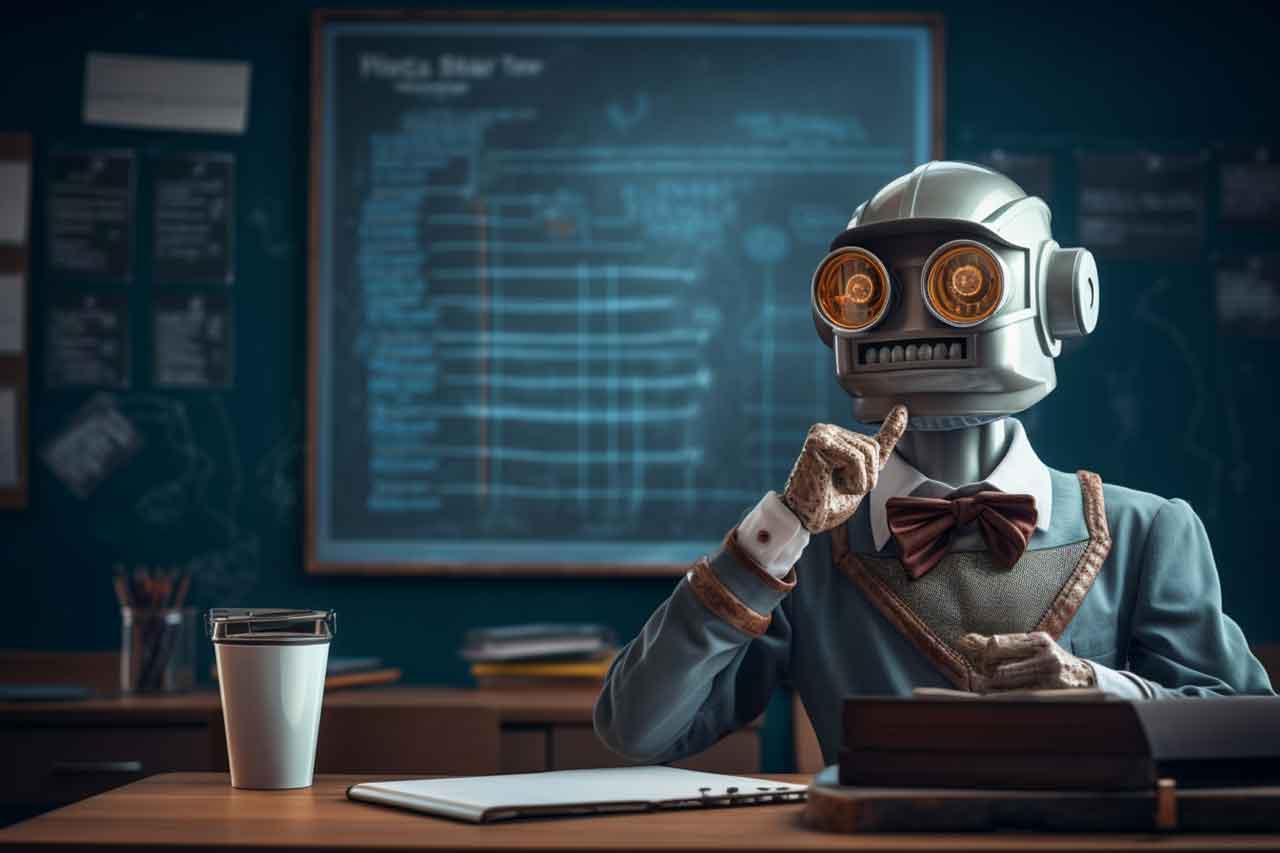
Math assessments are not just about grades. They shape how students think, guide teachers in planning lessons, and highlight the skills learners still need to develop. Traditional tests often measure what a student remembers, but not always how they reason. Teachers want assessments that reflect true understanding. That’s where Artificial Intelligence enters. AI brings tools that can transform dry worksheets into living, adaptable experiences that reveal what’s really going on inside a learner’s mind.
How AI Helps in Building Better Questions
A teacher who sits down to design a test faces a familiar problem: balance. Questions must not be too easy, but they also cannot be so hard that they discourage. AI can analyze past performance data and adjust the level of difficulty automatically. Imagine a system that notices a class struggles with fractions and generates targeted fraction questions in real time. The process shifts from “guesswork” to “data-driven design.”
According to a 2023 survey, nearly 62% of teachers reported that AI-powered assessment tools saved them more than four hours a week in preparation. Time that was once used to create questions by hand can now be spent giving feedback or working one-on-one with struggling students.
Adaptive Assessments: Shaping the Test Around the Student
Traditional exams are one-size-fits-all. AI creates something else: assessments that bend and shift. If a student solves a problem quickly, the next one might be more complex. If they struggle, the system adjusts downward, gently guiding without overwhelming. The result is a test that feels less like an obstacle and more like a personalized learning path.
Here, active and passive voices can mix: The test adapts to the learner; the learner is guided by the test. Both describe the same cycle, but with a subtle difference in tone. This duality shows how flexible AI-driven assessments can be.
Instant Feedback and Analytics
One of the toughest challenges in teaching is the delay between testing and feedback. By the time papers are graded, the class may have moved on. AI closes this gap. Students can get immediate responses—correct answers highlighted, mistakes explained, strategies suggested. For teachers, AI produces analytics dashboards. Patterns emerge: where the whole class is confused, which students need special support, and even what teaching methods might be failing.
It’s not about replacing the teacher. It’s about arming the teacher with sharper insights. Numbers tell stories—scores, error patterns, response times. Stories that teachers can act on.
The Role of a Math Solver Extension
AI math solver extensions are not just for students trying to finish homework faster. Inside assessments, they can become a diagnostic tool. Any student can install Math Solver for Chrome – AI Math Problem Solver and use the extension to check the solution results and fill in the gaps in their knowledge. Often, math solvers for Chrome help to look at the problem from a different angle and find alternative solutions.
Such tools can be integrated into assessment platforms to capture richer data. A student may arrive at a wrong answer, but the extension reveals they understood 80% of the process. That’s valuable information. It means the teacher can praise the effort while focusing on the exact point of misunderstanding.
Human Touch in a Digital Framework
Numbers and algorithms cannot capture everything. A student’s creativity in solving a puzzle, or their persistence in retrying, matters just as much as accuracy. AI provides patterns, but the teacher provides interpretation. The smartest math assessment is not one written entirely by a machine; it is one shaped by collaboration—AI builds, but the teacher adjusts, interprets, and humanizes.
In one middle school trial in California, teachers reported that AI-generated math assessments improved accuracy in diagnosing skill gaps by 47%. Yet they also said that teacher judgment remained the final filter. This highlights the true nature of AI in education: assistant, not master.
Challenges and Ethical Questions
No innovation arrives without questions. Data privacy is one. Who owns the student performance data collected by AI systems? Another issue is fairness. Algorithms can inherit biases, sometimes making tests harder for certain groups. Educators must remain vigilant. A test designed by AI must still reflect the diverse ways students think, not force everyone into a rigid mold.
The Road Ahead
The future of math assessments is not static. We are moving toward interactive, game-like assessments where solving feels like exploring. AI will make assessments more continuous, woven into everyday learning rather than confined to exam days. Teachers, armed with analytics, will move from graders to guides, from assessors to mentors.
AI won’t stop at designing smarter math assessments. It will likely expand into generating personalized practice sets, linking classroom work with real-world applications, and predicting long-term learning trends. Yet the center must remain the same: the student and their growth.
Conclusion
Math assessments are shifting from rigid paper tests to intelligent systems powered by AI. With adaptive design, instant analytics, and supportive tools like math solver extensions, assessments can finally reflect the complexity of human learning. Teachers save time, gain insight, and deliver more personalized feedback. Students, in turn, encounter tests that feel less like barriers and more like mirrors reflecting their true progress.
The question is no longer “Can AI help?” but “How do we shape AI so that it helps wisely?” In math, as in life, the smartest answers are not just correct—they are meaningful.