Home Rule Act lets a president direct D.C. police for federal purposes—briefly. Crime is down this year. Critics call it a distraction from Epstein fights; intent can’t be proven.
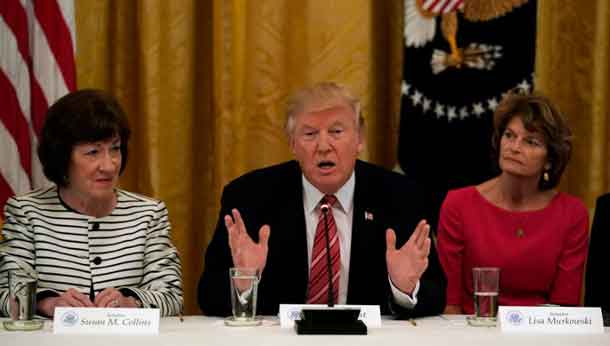
WASHINGTON — August 12, 2025 (NetNewsLedger) — President Donald Trump on Monday declared a “crime emergency,” ordered about 800 D.C. National Guard troops into Washington and directed the city’s Metropolitan Police Department (MPD) to operate for federal purposes under the U.S. Attorney General.
Critics say all this move by Trump is another effort to move the Jeffrey Epstein story off the front pages of media outlets.
Here’s what that actually means, what changes on the ground, and whether the data backs his claim.
Is this legal?
Yes—within tight limits. Section 740 of the D.C. Home Rule Act allows a president to direct the mayor to provide MPD services “for federal purposes” when “special conditions of an emergency nature” exist. It starts with 48 hours’ notice to Congress and automatically ends after 30 days unless Congress passes a joint resolution to extend it. The President’s order delegates operational control to the Attorney General.
What actually changes?
Day-to-day police direction for federal tasks (e.g., protecting federal buildings, maintaining order around federal sites) shifts to the U.S. Attorney General for the limited period. D.C.’s mayor and council still run the rest of city government. Separately, the President already controls the D.C. National Guard, which explains the Guard deployment. Source: The White House
Do the crime numbers support an “emergency”?
Not as framed. After a bad 2023, violent crime fell sharply in 2024 and is down again in 2025 year-to-date. As of August 12, 2025, MPD’s own dashboard shows violent crime –26% versus the same period last year; homicides –11%; robberies –28%. Total reported crime is –7%.
Those are real improvements, even if residents still feel unsafe.
Is This a Move Because Tucker Carlson Said So?
Tucker Carlson’s Moscow videos and commentary painted the Russian capital as cleaner, safer, and better-run than U.S. cities. He marveled at metro stations, grocery prices, and public order, claiming Moscow was “so much nicer” than anywhere back home.
Those claims drew wide coverage—and pushback—from mainstream outlets and critics who noted the curated nature of his tour and the political context of Russia’s tightly controlled public life. Still, the clips landed in the American discourse with force.
That narrative—“look how well Moscow runs; why can’t D.C.?”—fits a long-standing attack line on Democratic-run U.S. cities. Against that backdrop, President Trump’s order placing D.C.’s police under federal direction and activating about 800 National Guard troops offers a made-for-TV contrast: decisive action versus alleged urban disorder. The legal hook is Section 740 of the Home Rule Act, which allows temporary federal direction of MPD for up to 30 days; meanwhile, D.C.’s own dashboard shows violent crime is down year-to-date, complicating the “emergency” framing.
Could Carlson’s Moscow narrative be part of why Trump made this move?
It’s plausible as politics: the imagery and talking points echo each other and energize the same audience, even if we can’t prove motive. By federalizing a slice of D.C. policing, the White House reinforces the storyline Carlson amplified—order abroad, chaos at home—while grabbing control of the news cycle. Watch for whether the administration sustains the “Moscow vs. D.C.” contrast in speeches and friendly media, even as fact-checks point out the statutory limits and the downward crime trend.
Pushback and politics
Mayor Muriel Bowser called the move “unsettling and unprecedented,” noting crime is falling and arguing the city retains core authority—fueling fresh calls for D.C. statehood. Expect legal scrutiny if the order drifts beyond the statute’s narrow federal-purposes scope.
Is it a distraction from the Epstein story?
Opponents say the timing diverts attention from ongoing fights over Epstein-related records, including a House subpoena push and a judge’s refusal this week to unseal certain grand jury materials. Those developments are real; motive isn’t provable.
NetNewsLedger verdict
-
Legality: Technically legitimate but time-limited. The Home Rule Act permits temporary federal direction of MPD for federal purposes; without a congressional extension, the clock runs out at 30 days.
-
Accuracy of rationale: Weakly supported. Current MPD data shows meaningful declines in key violent crimes this year. That undercuts claims of a spiralling crisis.
-
Politics: Hotly contested. Critics allege distraction amid Epstein headlines; we can verify the headlines, not presidential intent. Stay focused on documents and dates.
What’s next: The White House must notify Congress within 48 hours; unless lawmakers extend it, federal direction of MPD lapses in 30 days. Watch for court challenges and for any attempt to broaden federal purposes beyond the statute’s guardrails.