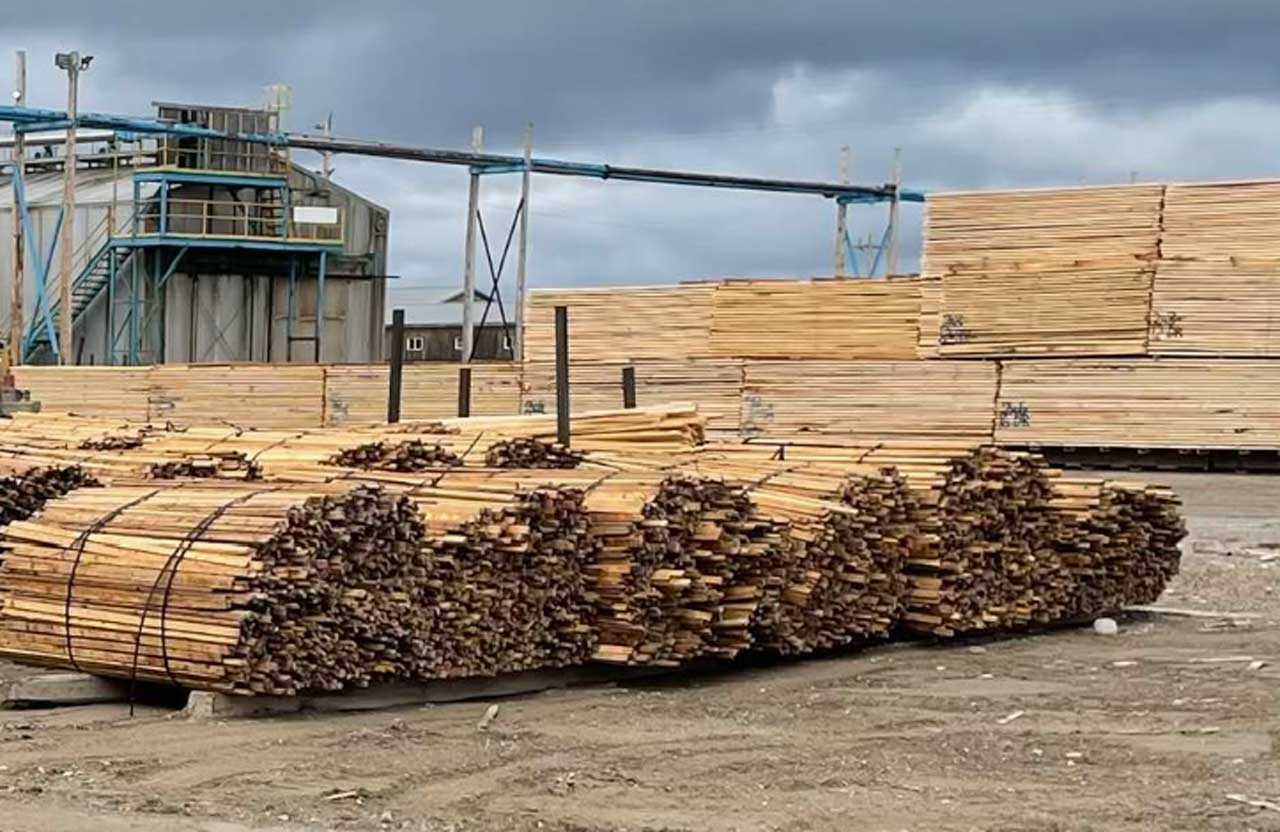
KELOWNA – POLITICS – Prime Minister Mark Carney has unveiled a sweeping $1.2 billion federal package to support Canada’s embattled softwood lumber industry, positioning it as a critical pillar in national housing and infrastructure efforts while defending against a renewed wave of U.S. tariffs.
Announced Tuesday at Gorman Bros. Lumber in West Kelowna, the plan includes:
-
$700 million in loan guarantees to ease immediate financial pressures
-
$500 million in long-term investments to support product development and export market diversification
-
Prioritization of Canadian softwood in federal procurement
-
$50 million for workforce training and re-skilling, particularly in the forestry sector
The new measures arrive just as the U.S. Commerce Department moves to raise anti-dumping duties on Canadian softwood to over 20%, a decision that—when combined with countervailing duties—brings total levies close to 35% on lumber entering the American market.
“We will be our own best customer by relying more on Canadian lumber for Canadian projects,” Carney declared. “At this hinge moment in history, Canada is shifting from reliance to resilience.”
Bolstering Canadian Supply Chains
Carney emphasized that domestic softwood lumber would be a central material in national infrastructure goals, including a federal ambition to double the pace of homebuilding to 500,000 homes annually over the next decade.
That target would double the use of Canadian lumber in new home construction and dramatically increase demand for structural panels, helping revitalize mills across forest-dependent regions like Northwestern Ontario and British Columbia.
Carney also announced the forthcoming Build Canada Homes program, which will see the federal government directly re-enter the construction of deeply affordable housing.
Industry and Provincial Reaction
Nick Arkle, CEO of the Gorman Group, welcomed the announcement.
“I have not seen the federal government show this kind of attention to the forest industry,” Arkle said. “Now it’s on us to respond, to diversify our markets and products.”
B.C. Forests Minister Ravi Parmar said Ottawa’s move sends a strong message of support and said the province would seek its fair share of the funding—expected to be between 40% and 50% of the federal commitment, given B.C.’s dominance in the industry.
“This support buys us some time to do this important work,” Parmar added, alluding to the need to resolve the long-standing softwood dispute with the U.S.
Both Kurt Niquidet, president of the B.C. Lumber Trade Council, and Kim Haakstad, president of the Council of Forest Industries, called the aid “timely” and “critical relief during an exceptionally challenging time.” They urged Ottawa to ensure the industry remains central in any broader trade talks with Washington.
Softwood vs. Autos?
The softwood lumber sector has long expressed concern that it has been overshadowed by higher-profile industries like auto manufacturing in federal trade strategy.
Premier David Eby and industry voices have repeatedly demanded the same level of advocacy from Ottawa for softwood that Ontario’s auto sector enjoys. Carney responded to these concerns directly:
“We are not sacrificing any industry. We are working for the best deals for all our industries.”
Still, Arkle voiced lingering caution.
“We will hold government accountable if they sacrifice us,” he said. “So far, they’ve given no indication they will—and I take them at face value.”
Political Optics and Regional Engagement
Carney made the announcement before an audience of around 100 workers in safety gear, signaling a campaign-style push for visibility in regions tied deeply to the forest economy. Joined by Federal Natural Resources Minister Tim Hodgson and Kelowna MP Stephen Fuhr, Carney ended the visit by signing hard hats and shaking hands with mill workers.