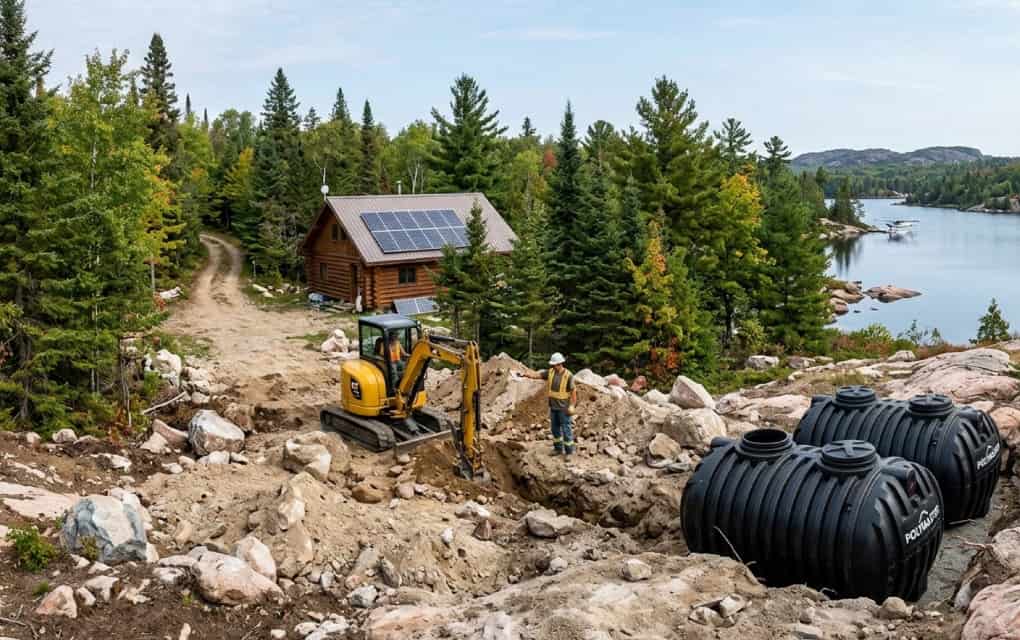
There are roughly 500 litres of wastewater generated every day by the average rural household in North America. While city dwellers rarely think twice about where the shower drain leads, remote homeowners in Ontario face a much steeper learning curve. Selecting a setup for a fly-in cabin or a seasonal road property requires more than just digging a hole in the dirt.
Calculating Your Load Requirements
The size of your system depends entirely on the home’s potential occupancy, not the current number of residents. Ontario building codes generally dictate sizing based on the total number of bedrooms and the fixture unit count. A three bedroom cottage requires more capacity than a one bedroom hunting camp to handle peak surges.
Soil quality is the next hurdle you have to clear before any machinery arrives at the site for the dig. You need a percolation test to determine how quickly water moves through your specific patch of earth. High clay content or shallow bedrock can significantly limit your options for traditional drainage layouts in the woods.
If you are sitting on the Canadian Shield with nothing but granite under your feet, a traditional leaching bed is often impossible. In these cases, you might need a raised mantle or a specialized tertiary treatment system. These setups clean the water before it even reaches the ground, protecting the local environment and preventing surface pooling.
Choosing the right location requires balancing proximity to the house with distance from the water table. You must maintain specific setbacks from property lines, wells, and open bodies of water to remain compliant with provincial law. Planning for these distances early prevents costly relocations during the middle of the installation phase, especially if you’re including this equipment as part of wider renovations to the property.
Selecting Wastewater Tanks For Remote Use
Material choice is a massive logistical decision when your property is hours away from the nearest hardware store or supply yard. Traditional concrete tanks are incredibly heavy and require a large crane for installation which is often impossible for remote sites.
Many off-grid builds now utilize wastewater tanks made from high density polyethylene because they are lightweight and durable. These plastic units can be transported on a standard trailer or even a small boat for water access properties. The flexibility of plastic saves homeowners thousands in specialized heavy equipment transport fees and reduces the overall footprint of the installation.
Remote sites require a different approach to long term care to avoid catastrophic failures during the off season. You must ensure the system is accessible for service vehicles, even if they only visit once every few years. Consider these maintenance steps for isolated systems:
- Schedule pump outs during the dry summer months to ensure truck access
- Install high level alarms to prevent backups when help is far away
- Use effluent filters to protect your leaching bed from solid waste
Installation Logistics And Site Access
Getting an excavator to a remote lot is often the most expensive part of the entire project budget. You have to account for float charges, which cover the cost of moving heavy equipment to your specific site. For fly-in properties, some owners opt for specialized kits that can be broken down into smaller components and flown in via float plane.
Don’t forget the legal side of the build, as a septic permit from the local health unit is mandatory across the province. Even if you are miles from your nearest neighbor, an improperly installed system can contaminate local groundwater and pristine lakes.
The cost of a Class 4 septic system in Ontario can range between $15,000 and $35,000, depending on the soil and accessibility. This figure represents a significant investment for any seasonal property owner or full time remote resident. Proper planning ensures you aren’t dealing with a messy failure in the middle of a January deep freeze when repairs are impossible.
Weather patterns in Northern Ontario can be unpredictable, potentially delaying your installation by several weeks. It is best to schedule your dig for late summer when the ground is at its driest and the water table is low. Attempting to install a tank during the spring thaw often leads to collapsing trenches and stuck machinery.
Protecting Your Off Grid Investment
Once the soil is covered and the grass grows back, the real work begins with your daily household habits. Remote systems are delicate bacterial ecosystems that break down your waste over time. Avoid pouring harsh chemicals or bleach down the drain, as these kill the beneficial bacteria needed for treatment.
Monitoring your water usage is the best way to extend the life of your leaching bed and prevent saturation. Space out your laundry loads and fix leaky faucets immediately to prevent hydraulic overloading of the tank. Excessive water flow can push solids into the drainage field, causing permanent damage and costly clogs.
Education is the final piece of the puzzle for any remote property owner. You should keep a detailed map of your system’s buried components to avoid driving heavy vehicles over the sensitive leaching bed. Also, check out more of our coverage of Ontario-related news and issues on our site for an up to date look at what locals need to know.