Canadian restaurants face significant financial burdens due to food waste. Estimates indicate that they discard roughly 3.2 million tonnes of food each year, costing approximately $4.4 billion. The question facing restaurant owners across the continent: how to reduce waste when labor shortages already strain existing operations.
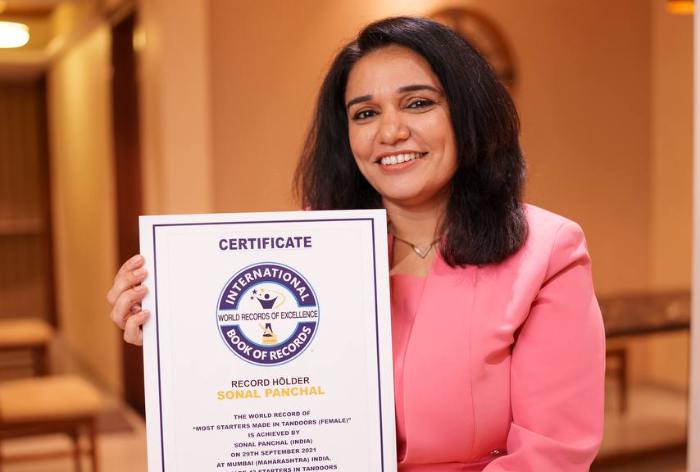
Chef Sonal Panchal, a culinary consultant, showed a practical model at Bistro 75 in Gatineau, Quebec. She was hired to increase kitchen capacity and remove operational friction that made the staff less effective. The facility was preparing to switch from Ramada to Hilton branding in early 2026. This required higher standards without a matching budget for more staff. Her mandate was to make the kitchen work better with what they already had.
Within one year, kitchen waste dropped by about 30%, and revenue rose by 50%. No new chef positions were added. The change came from menu rationalization, recipe standardization, and workflow redesign. She cut undersold items that added prep complexity and standardized recipes to reduce skill gaps between team members. She redesigned workflows to prevent bottlenecks during busy service periods.
“The problem wasn’t a lack of talent. It was that talented people were drowning in inefficient systems. When you have five people doing the work of seven because two positions are vacant, you can’t just tell them to work harder. You have to redesign what work means,” Chef Sonal explains.
Her approach aligns with what ReFED identifies as the most scalable food waste solutions: those embedded into core operations rather than dependent on sustained behavior change. Food prices are rising, and consumers are adjusting. In a November 2025 NielsenIQ survey, 45% said they’re using leftovers more to reduce waste. Restaurants are under parallel pressure to demonstrate operational discipline around waste.
This approach marks a clear break from the traditional culinary career path. In the past, experienced chefs moved up by becoming head or executive chefs at larger establishments. That model assumed stable staffing and a straightforward, step-by-step progression. But when restaurants struggle to fill entry-level roles, the advancement ladder breaks.
Instead, Chef Sonal has developed deep expertise in operational systems. Rather than cooking every dish herself, she standardizes how food is cooked. Instead of managing one kitchen, she designs protocols that let multiple kitchens run smoothly with less supervision. Her value lies in making operational knowledge transferable and repeatable.
This logic extends beyond restaurants. At Trishula India, an edible cutlery manufacturer serving domestic and international markets, Chef Sonal cut material and production waste by about 20% by standardizing preparation methods and improving shelf-life stability. Additionally, she recommended partnerships with Domino’s and Nestlé India, helping drive a 30% increase in sales. Trishula employs more than 300 people, and its growth has come from streamlined operations rather than adding staff at the same pace. The company secured $500K on Shark Tank USA in 2021 and earned multiple honors, including the People’s Choice 1st Prize (June 2019, Los Angeles), winner at SKS North America (May 2019, Seattle), and recognition at the Winter Fancy Food Show (February 2020, San Francisco).
Chef Sonal’s work with Desi Road and Daal Roti restaurant brands in Canada includes 18 combined franchise locations and involves creating operational blueprints for a new Quick Service Restaurant concept named “Call me @7,” launching in April 2025 in the GTA (Greater Toronto Area). Her work includes menu development, kitchen setup, operations management, and staff training. She is building an operational blueprint so the franchise can expand without her being on-site at every location.
“We’re not optimizing an existing system. We’re designing one where waste can’t accumulate. Equipment placement determines workflow efficiency. Menu structure determines ingredient utilization. Recipe standardization determines consistency. Get those right initially, and waste becomes difficult to generate even accidentally,” Chef Sonal notes.
This model challenges common beliefs about labor shortages. The consultant approach offers a different view. When resources are scarce, many hidden operational inefficiencies become visible and impossible to sustain. When kitchens had enough staff, they could absorb many inefficiencies. Complex menus with low-volume items created extra prep work, but extra hands could handle it. Inconsistent recipes led to uneven quality, but experienced staff could compensate. Workflow bottlenecks slowed service, but extra stations could be added.
For now, the franchise boom is giving rare visibility to once-invisible skills. As Chef Sonal prepares to launch her U.S.-based QSR concept and expand through franchising, she joins a growing cohort redefining culinary expertise. In an industry where chronic understaffing has made traditional career paths unsustainable, the ability to design operations that function with fewer people, while maintaining quality, may be more valuable than individual cooking skills.
Whether this represents the future of all restaurant operations or simply one adaptation to temporary labor market conditions remains to be seen. But for franchises caught between rising costs and staffing shortages, Chef Sonal’s approach offers a testable alternative: systems that make excellence reproducible and waste difficult to generate, even when ideal staffing levels remain out of reach.