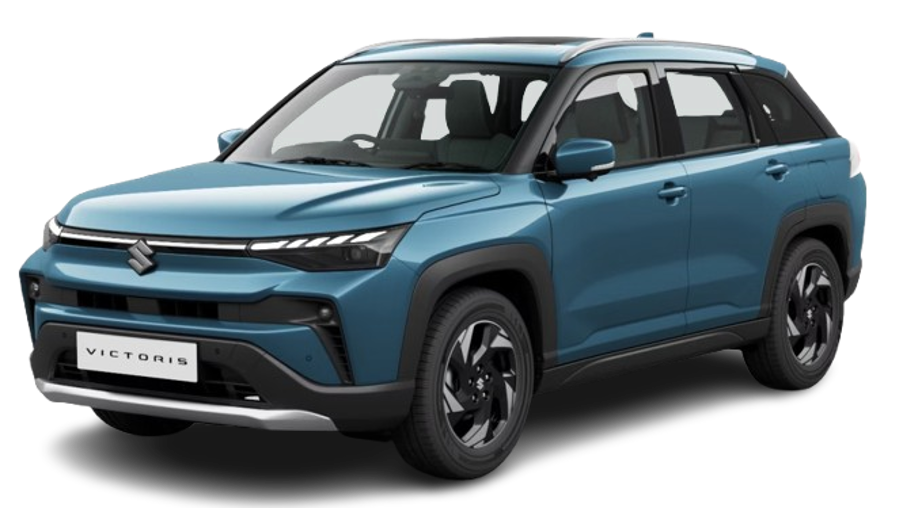
The structure of the Indian family car market has shifted noticeably over the past decade. Where compact sedans and hatchbacks once dominated as the default household vehicle, mid-size SUVs are increasingly emerging as the preferred choice for family mobility. The Maruti Suzuki Victoris offers a useful lens through which to examine this transition, reflecting how family expectations around space, safety, versatility, and technology have evolved.
The question is not merely whether SUVs are more popular, but whether they are becoming the new standard for modern family transportation.
Expanding Space Expectations
Family vehicles are expected to accommodate a range of needs: daily commuting, school runs, grocery trips, and occasional long-distance travel. The Maruti Suzuki Victoris measures 4,360 mm in length and has a 2,600 mm wheelbase, placing it squarely in the mid-size SUV segment.
This extended wheelbase provides improved legroom and a more balanced cabin compared to smaller body styles. Modern families increasingly prioritise passenger comfort over maximising boot capacity.
The elevated seating position further enhances visibility, fostering a sense of spatial openness and confidence.
Versatility Over Single-Purpose Use
Unlike compact hatchbacks, which often serve limited urban roles, mid-size SUVs are designed for greater adaptability. The Victoris integrates 60:40 split rear seats, enabling flexible configuration between passenger seating and cargo storage.
Its 45-litre fuel tank supports longer driving ranges, making it equally suitable for city commuting and highway travel.
Families increasingly prefer vehicles that can handle multiple scenarios without compromise. The mid-size SUV format meets that requirement by blending daily practicality with travel-readiness.
Safety as a Non-Negotiable
Another factor influencing this shift is safety expectations. Families place significant emphasis on structural integrity and driver assistance systems.
The Victoris includes six airbags as standard and integrates Level 2 ADAS features, including Lane Keep Assist, Automatic Emergency Braking, and Adaptive Cruise Control.
Predictive safety systems enhance driver awareness and reduce fatigue during longer journeys. As safety awareness increases across Indian buyers, mid-size SUVs offering comprehensive protection frameworks gain favour over smaller vehicles with fewer assistance systems.
Technology and Family Integration
Digital integration is now central to family vehicle evaluation. The Victoris features the SmartPlay Pro X 25.65 cm touchscreen infotainment system and a 26.03 cm digital cluster.
Connected car functionality via Suzuki Connect enables remote monitoring and navigation integration. Such systems align with the digitally connected lifestyles of modern households.
For families balancing work, school, and leisure, seamless infotainment and connectivity support convenience across daily routines.
Powertrain Diversity for Changing Needs
Mid-size SUVs also offer broader drivetrain flexibility. The Victoris is available with:
- 5L K15C Smart Hybrid petrol engine
- 5L Strong Hybrid e-CVT
- Factory-fitted S-CNG
- ALLGRIP Select AWD option
This diversity allows families to align powertrain choice with usage patterns — whether prioritising fuel efficiency, environmental considerations, or light off-road capability.
The ability to select from multiple configurations supports the argument that mid-size SUVs are becoming the adaptable family standard.
Premiumisation Without Excess
While premium features have grown common, families often seek a balance between aspiration and practicality. The Victoris integrates a panoramic sunroof, ventilated seats, and ambient lighting without shifting into luxury SUV territory.
This middle-ground positioning appeals to households seeking comfort and refinement without excessive cost escalation.
The Role of Research in Shaping Trends
Modern families increasingly approach vehicle purchases analytically. On platforms such as ACKO Drive, where buyers can compare dimensions, safety features, hybrid options, and infotainment systems before buying a car online, mid-size SUVs are often evaluated against smaller body styles.
Structured digital comparison has amplified awareness of what mid-size SUVs offer relative to traditional compact cars.
Conclusion
The Maruti Suzuki Victoris illustrates how mid-size SUVs are positioning themselves as the new family standard. Through expanded cabin space, safety sophistication, drivetrain diversity, and integrated technology, they address contemporary household expectations more comprehensively than smaller vehicles.
While hatchbacks and sedans remain relevant for urban efficiency, mid-size SUVs increasingly align with multi-role family demands. The Victoris reflects this broader shift — one where adaptability, comfort, and safety collectively redefine what a family vehicle should be.