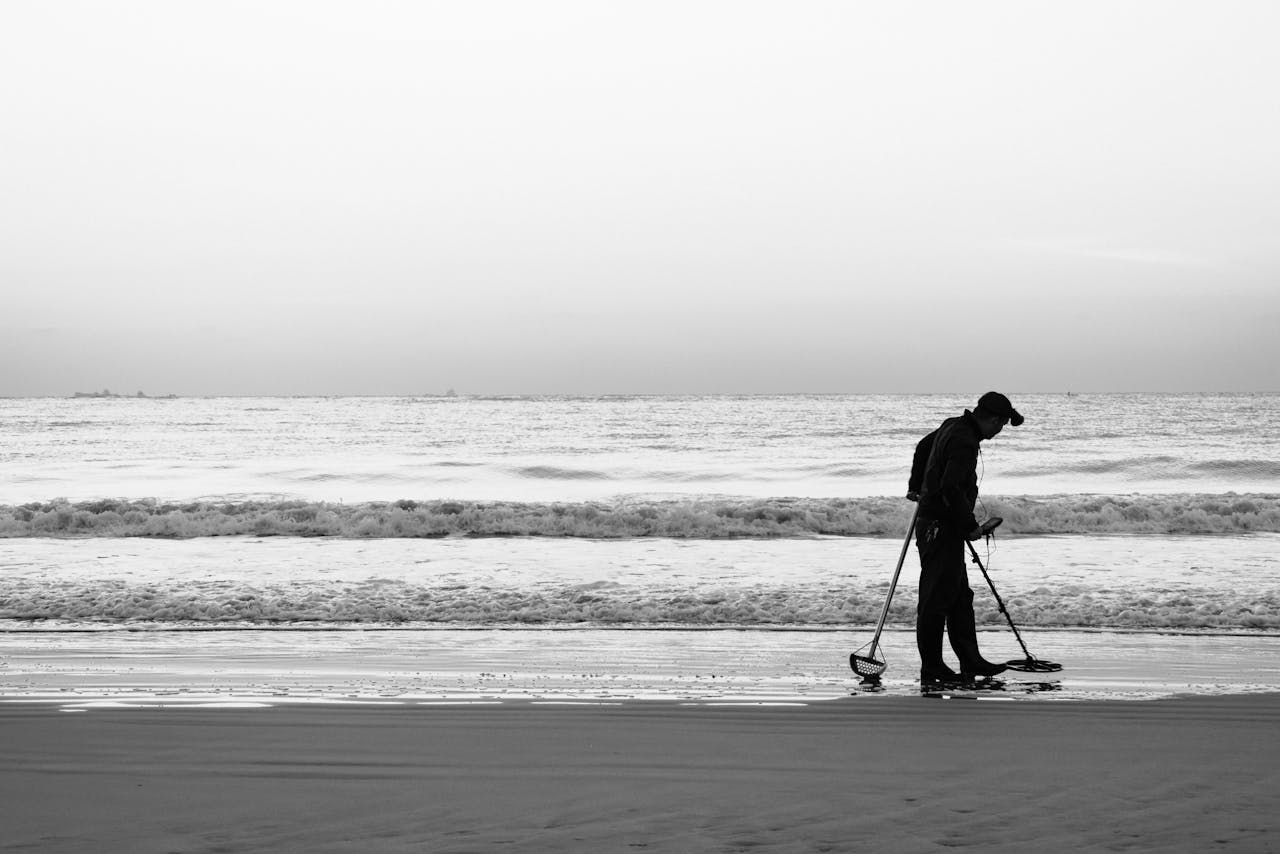
Who else misses simple downtime that doesn’t involve a screen? No feeds, no notifications, no same old nonsense reels. Just a shoreline, a slow walk, and the small thrill of spotting something curious or pretty in the sand.
Well, as it turns out, quite a lot of people miss those days. Across the Great Lakes, beachcombing and shoreline treasure hunting have picked up real momentum. Some people come for unusual rocks. Others hunt for old coins, lost jewelry, or odd artifacts that wave action pushes onto shore.
And the Great Lakes are a surprisingly good place to look. They have a lot to offer if you know where — and when — to look.
Why the Great Lakes Turn Up So Many Interesting Finds
The shorelines of the Great Lakes sit on ancient glacial terrain. When glaciers retreated thousands of years ago, they left behind a mix of minerals, rocks, and fossils across the region.
Waves keep moving those materials around. Sand moves, storms cut new edges into the shoreline, and suddenly, rocks that sat buried for decades show up in plain view.
That’s why Great Lakes beaches produce such a strange mix of finds. One short walk might turn up:
- Lake Superior agates with distinct banding
- Petoskey stones, a fossilized coral unique to Michigan
- Fossils from ancient marine life
- Smoothed beach glass from decades-old bottles
- Industrial slag glass like the collectible “Leland Blue”
Timing Often Matters More Than Location
People love asking about “secret beaches.” Most experienced collectors shrug at that idea.
Why? Because conditions matter far more than the exact location. Storms move sand around and expose heavier material that usually stays buried. After a strong blow across the lake, the shoreline can look completely different the next morning.
So, if you want to find some really interesting or unusual things, show up early. Low water periods help, too. Spring and fall tend to expose more shoreline, which means more ground to cover and more material working loose from the lakebed.
Can You Actually Find Something Valuable?
Yes. But casual strolling only gets you so far. Many of the most valuable finds never appear on the surface at all. Coins, rings, and watches are heavier than sand, which means wave action slowly pulls them deeper into wet sand or shallow water where they become impossible to spot with the naked eye.
That is why experienced shoreline hunters eventually rely on beach metal detectors designed for wet sand and mineralized shoreline conditions. These detectors allow hobbyists to scan beneath the surface, covering the surf zone where lost jewelry, coins, and other valuables naturally settle after storms or busy summer days at the beach.
Instead of hoping something catches your eye, detectorists can quickly sweep larger areas and identify buried targets that would otherwise remain hidden for decades.
And the lakes do produce real finds. Old coins, class rings, lost wedding bands, even antique relics tied to shipping activity along the lakes. None of it guaranteed, of course. But enough discoveries happen every year to keep enthusiasts walking miles of shoreline.
Safety and Practical Considerations
Great Lakes beaches look calm. They aren’t always.
Water is cold most of the year, and even a short slip into the lake can turn dangerous if conditions are rough. So you keep an eye on wind shifts and wave height before stepping into shallow water.
Local rules matter, too. Many parks limit how much rock you can remove each year. Michigan, for example, generally allows small personal collections but restricts large-scale gathering.
And sometimes the object you find might carry historical value rather than personal value. Old artifacts tied to shipwrecks or early settlements should stay where they are until experts examine them.
The Appeal Isn’t Just the Treasure
Speaking of valuable and historical items… Most beachcombers will tell you the same thing after a while: The real payoff isn’t the rare agate or the occasional ring. It’s the search itself. The slow walk, the quiet focus, the moment when something catches your eye, and you realize it’s been sitting there for decades waiting to be noticed.
Also, the Great Lakes stretch for thousands of miles. And remember, every storm rearranges the shoreline again. So tomorrow’s walk will never look exactly like today’s.