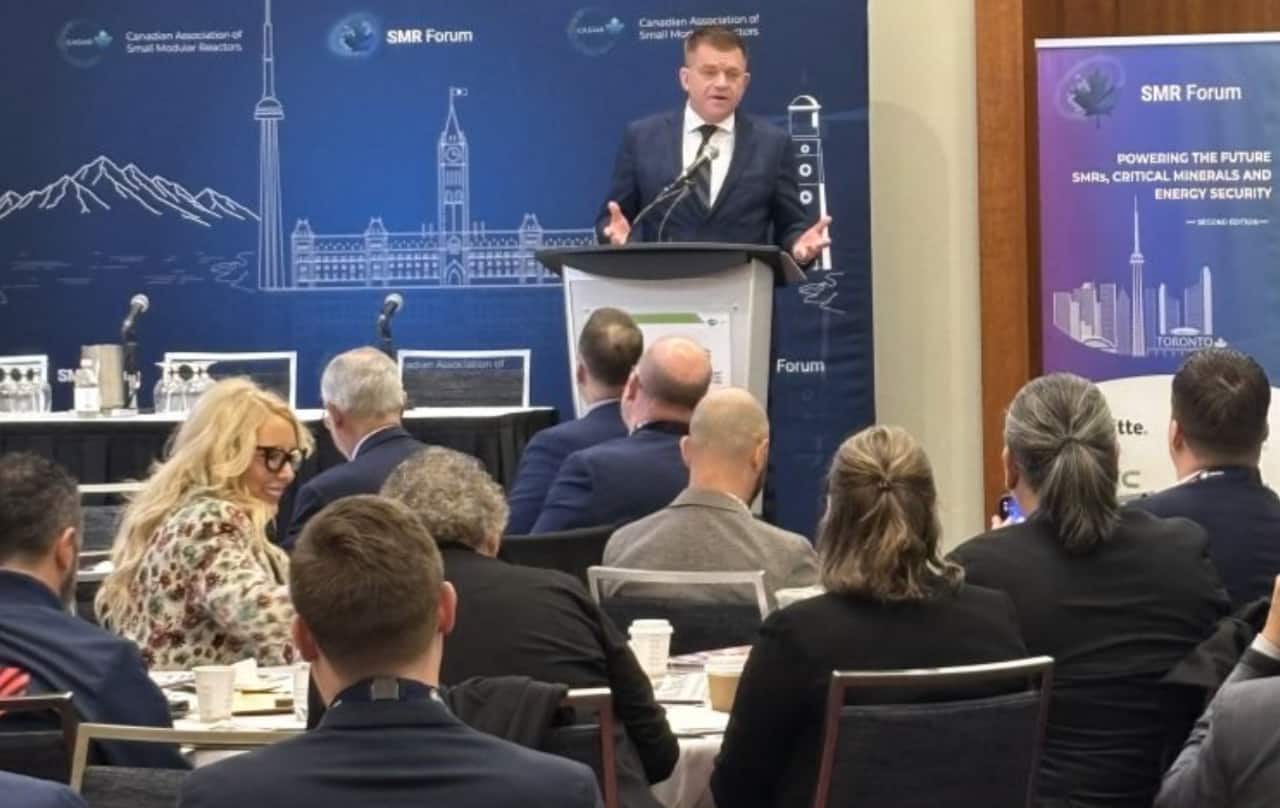
Plan teased at PDAC as province pitches lithium-from-brines and expanded processing capacity
TORONTO / EDMONTON — March 2, 2026 — Alberta’s government says it is developing a new incentive program aimed at drawing more investment into the province’s critical minerals sector, with a target launch in 2027 as global demand and supply-chain competition intensify.
Announced at PDAC 2026
Energy and Minerals Minister Brian Jean outlined the plan during the PDAC 2026 session “Powering the Future: SMRs, Critical Minerals, and Energy Security”, positioning the incentives as a pillar of Alberta’s Minerals Strategy and Action Plan to support jobs, attract capital, and expand value-added processing.
Lithium brines take centre stage
Alberta is emphasizing lithium as a near-term opportunity, noting that lithium can be extracted from brines associated with legacy oil and gas wells—often in the same formations as natural gas—creating a potential new resource pathway in an energy province.
Provincial figures cited in reporting say Alberta has about 82.5 million tonnes of lithium carbonate equivalent (LCE) “in place,” with more than two million hectares leased for exploration.
Incentives under consideration
The province says it is exploring a mix of tools to improve project economics and speed development, including:
-
Non-refundable mineral processing tax credit options
-
Improved access to appropriate Crown land
-
A potential flow-through share tax credit to help finance exploration by allowing corporations to claim portions of eligible expenses
Tied to Western Canadian critical minerals collaboration
Alberta’s move also aligns with a newly signed memorandum of understanding among Alberta, B.C., Saskatchewan, Manitoba, Yukon, Northwest Territories and Nunavut to develop the Western Canadian Critical Minerals Strategy—focused on regional hubs, infrastructure planning, and boosting responsible production and exports.
What it could mean for Northwestern Ontario and Thunder Bay
For Thunder Bay and Northwestern Ontario, Alberta’s incentive push signals a widening interprovincial race to secure critical minerals supply chains—one that could influence where processing plants, engineering work, and specialized services land.
Ontario is already advancing its Critical Minerals Strategy (2022–2027), and major battery-materials plans tied to Northwestern Ontario lithium are moving through provincial and federal frameworks, including a proposed lithium conversion facility in Thunder Bay linked to the PAK project supply chain.
With Thunder Bay’s port positioning itself as an inland logistics gateway with capacity for breakbulk and industrial cargo, the region may see opportunities to support equipment moves and construction supply chains—whether for Ontario’s projects or broader Canadian critical minerals buildout.
Why it matters now
Ottawa has been pressing to deepen allied supply chains and mobilize capital into Canadian projects, announcing new partnership rounds and investment figures tied to critical minerals value chains.
Quick Facts
-
Alberta’s Minerals Strategy includes expanded geoscience and data work led by the Alberta Geological Survey and Alberta Energy Regulator.
-
Alberta’s regulator notes the province does not yet have commercial lithium production, but forecasts growth tied to proposed projects later this decade.
-
The Western Canadian Critical Minerals Strategy framework prioritizes regional hubs and infrastructure investment to increase extraction, processing, and export capacity.