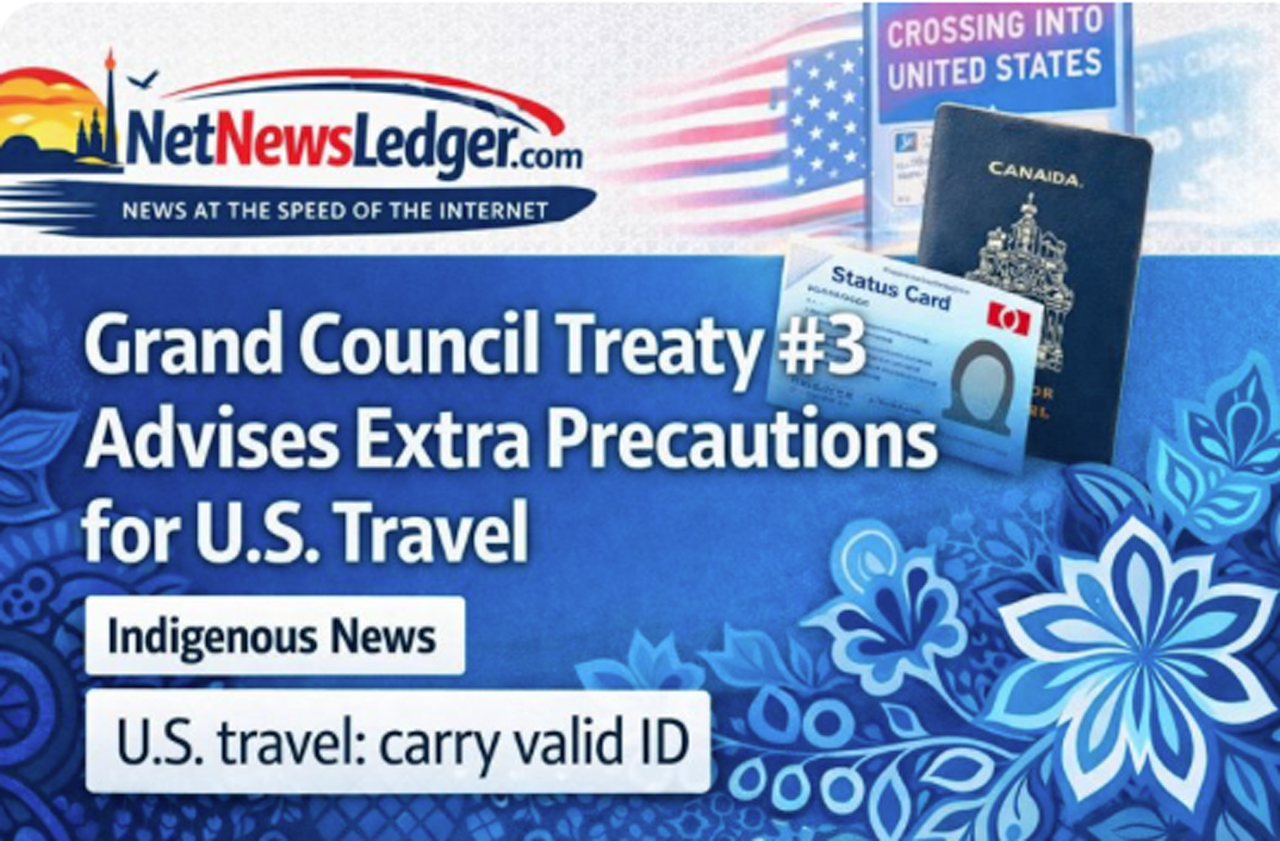
Reports of Increased Scrutiny at the Border and Within U.S. Jurisdiction
Treaty #3 Territory — Grand Council Treaty #3 is advising Treaty #3 citizens who live in, travel to, or transit through the United States to take added precautions while crossing and remaining within U.S. borders.
The advisory follows recent reports that some First Nation citizens have faced increased scrutiny, questioning, or enforcement actions by U.S. Immigration and Customs Enforcement (ICE). Grand Council Treaty #3 is reminding travellers that carrying valid identification—including a Status Card and/or a Canadian passport—may help reduce the risk of unnecessary delays or detention.
Treaty-Protected Mobility Rights Must Be Respected
Grand Council Treaty #3 emphasizes that the Treaty #3 Anishinaabe Nation holds inherent and treaty-protected rights supporting cross-border mobility. These rights are rooted in longstanding treaty relationships that pre-date the international border, and the Grand Council continues to affirm that they must be recognized and respected.
What Citizens Should Do Before Travel
Treaty #3 citizens planning to travel are encouraged to:
-
Confirm identification is valid and up to date before leaving.
-
If a new, renewed, or replacement Status Card is needed, contact your home First Nation membership office or regional tribal council well in advance for guidance and application support.
-
Where appropriate, these offices may also help liaise with Indigenous Services Canada (ISC) to support applications or urgent processing.
Regional Tribal Council Contacts in Treaty #3
Regional tribal councils within Treaty #3 include:
-
Bimose Tribal Council (Kenora)
-
Anishinaabeg of Kabapikotawangag Resource Council (Sioux Narrows)
-
Pwi-Di-Goo-Zing Ne-Yaa-Zhing Advisory Services (Fort Frances)
Indigenous Services Canada Support for Status Cards
Treaty #3 citizens needing support with Status Card applications, renewals, replacements, or urgent processing related to travel can contact Indigenous Services Canada’s Secure Certificate of Indian Status (SCIS) Program at 1-800-567-9604 or visit canada.ca/indigenous-services-canada.
ISC regional offices may also assist with prioritizing urgent cases tied to cross-border travel, employment, or safety concerns.
Consular Assistance in Extreme Circumstances
In extreme circumstances, Canadian citizens may contact the Canadian Consulate for assistance while in the United States. While consular officials cannot intervene in legal matters, they can provide guidance, connect individuals to resources, and support communication with family or Canadian authorities.
Ongoing Monitoring and Advocacy
Grand Council Treaty #3 says it remains committed to supporting the safety, dignity, and treaty rights of its citizens and will continue monitoring developments, engaging federal partners, and sharing relevant updates as they become available.