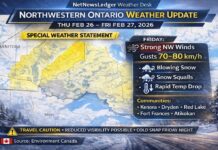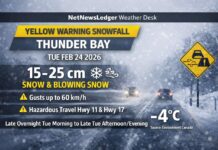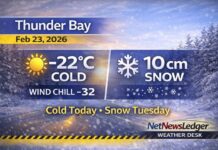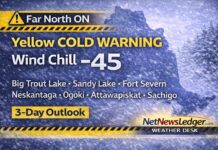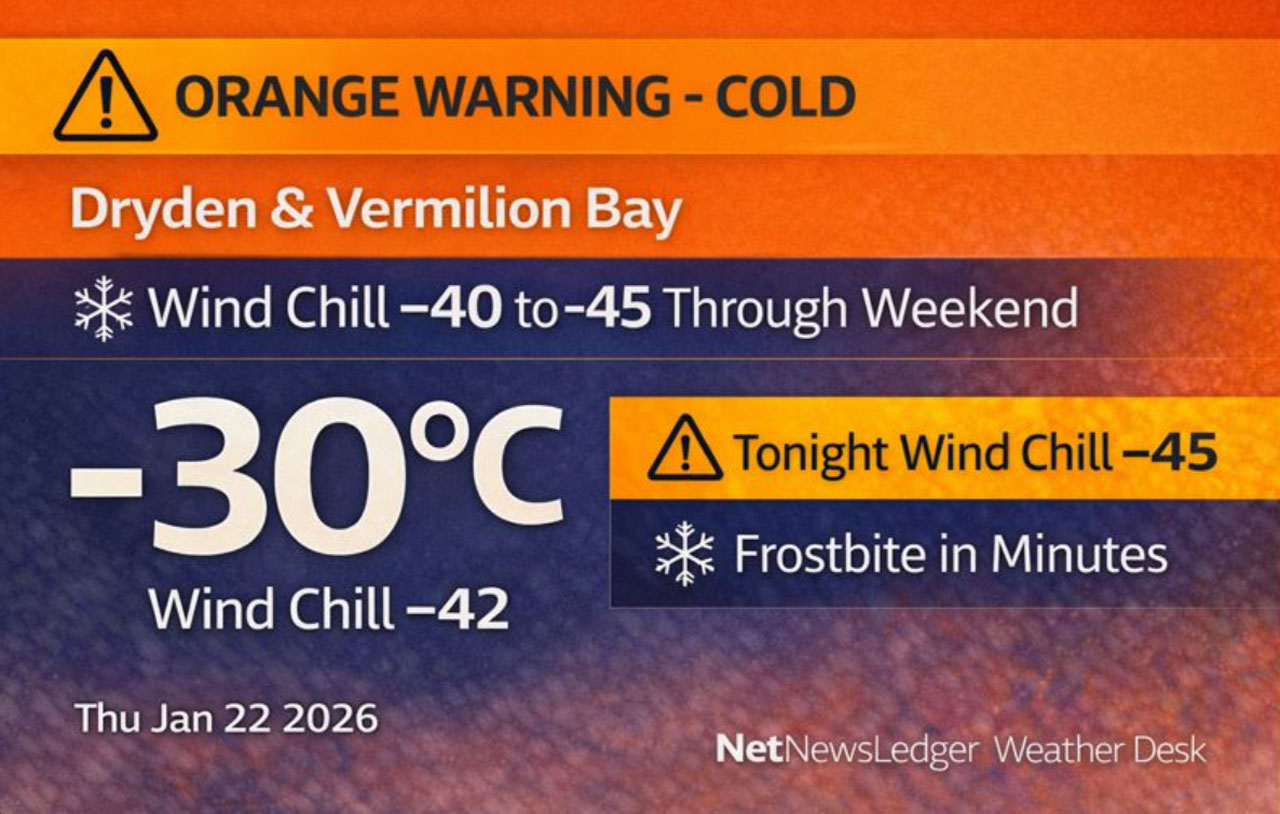
Dryden – WEATHER DESK – A bitter Arctic airmass has fully settled over the Dryden–Vermilion Bay region, and it’s not letting go quickly. Even with brighter skies at times, the real story is the dangerous wind chill—cold enough for frostbite in minutes—plus gusty northwest winds and pockets of haze that can cut visibility. Environment Canada’s Orange Warning – Cold flags this as a high-impact, high-confidence cold event that continues through the weekend.
Today’s Weather Overview
Current Conditions (Dryden Airport – 6:22 AM CST)
It’s an unforgiving start to the day:
-
Temperature: -29.5°C
-
Feels like (Wind Chill): -42
-
Condition: Haze
-
Wind: WNW 17 km/h (building stronger later today)
-
Pressure: 101.7 kPa
-
Humidity: 71%
-
Dew Point: -33.1°C
-
Visibility: 5 km
That haze and 5 km visibility are a reminder that extreme cold can come with more than just low temperatures—drivers should allow extra time and keep headlights on in reduced-visibility conditions.
Orange Cold Warning – What it Means for Dryden & Vermilion Bay
Environment Canada is calling this a multi-day episode of very cold wind chills:
-
Wind chills: -40 to -45
-
Timing: continuing through the weekend
-
Notable detail: -45 is possible tonight into Friday morning
-
Risk: “Frostbite in minutes” and limited daytime relief as the Arctic air remains anchored over the region
Bottom line: even short outdoor tasks (fueling up, walking the dog, scraping the windshield) can become risky if skin is exposed and you’re not dressed for it.
Extended Weather Forecast
Expected Conditions: The Next Three Days (Plus a Look Ahead)
Thursday, January 22 (Today)
-
Sky: Mix of sun and cloud, 40% chance of flurries
-
Wind: Northwest 20 km/h gusting to 40
-
High: -27°C
-
Wind chill: near -42
-
Hazard: frostbite in minutes
Tonight
-
Sky: A few clouds
-
Wind: NW 20 gusting 40, becoming light after midnight
-
Low: -33°C
-
Wind chill: near -45
-
Hazard: frostbite in minutes
Friday, January 23
-
Sky: Mainly sunny
-
Wind: Becoming west 20 km/h in the morning
-
High: -25°C
-
Wind chill: -43 morning, -37 afternoon
-
UV index: 1 (low)
Saturday, January 24
-
Sky: Sunny
-
High: -24°C
-
Night: Clear, -33°C
Sunday, January 25
-
Sky: Sunny
-
High: -24°C
-
Night: Clear, -32°C
Early Outlook (Worth Planning For)
-
Monday: Mix of sun/cloud, 30% chance of flurries, high -19°C (a “warm-up,” but still severe winter cold)
-
Tuesday: Mix of sun/cloud, high -18°C
-
Wednesday: Mix of sun/cloud, 40% chance of snow, high -17°C
Wardrobe Recommendations
When wind chills hit -40 to -45, dressing “warm” isn’t enough—you need to dress strategically.
-
Start with a base layer that stays dry (avoid cotton if you’ll sweat).
-
Add insulation (fleece, wool, down/synthetic puffy layers).
-
Finish with a windproof outer shell—wind is the difference between cold and dangerous.
-
Hands: mitts beat gloves for serious cold; add thin liners underneath.
-
Face: scarf, neck gaiter, or balaclava—protect cheeks and nose.
-
Eyes: if you’ll be out in wind, consider goggles or glasses to reduce tearing and exposure.
-
Feet: warm socks + insulated boots; leave wiggle room (tight boots = colder feet).
-
Commute-ready extras: keep spare mitts/hat in your bag and a blanket in the vehicle (Environment Canada specifically recommends emergency supplies like blankets and jumper cables).
Animal Safety During the Orange Cold Warning
Extreme cold is hard on people—and it can be just as dangerous for animals, especially when wind chills are this severe.
Dogs: Cold-Warning Survival Basics
-
Keep outdoor time short and purposeful. Quick bathroom breaks only during peak cold.
-
Watch vulnerable dogs closely: puppies, seniors, small breeds, short-coated dogs, and dogs with health issues can chill faster and may need a coat.
-
Protect “thin” body parts: ears, tails, and toes are more prone to cold injury.
-
Dry matters: if your dog gets wet (snow melt, slush), towel-dry right away—wet fur loses heat faster.
-
Paw care: check paws for ice build-up after walks; consider booties if your dog tolerates them.
Cats: The Safest Choice is Indoors
-
Keep cats indoors during extreme cold and wind chills. Even hardy cats can suffer cold stress.
-
If you care for outdoor/feral cats, try to provide a draft-free, insulated shelter with dry bedding—never assume they’ll “find somewhere warm.”
Livestock: Windbreaks, Water, and Calories
For farm animals, the big three during extreme cold are shelter from wind, reliable water, and enough energy to maintain body heat.
-
Block the wind: natural windbreaks (tree lines) or constructed shelters help reduce cold stress. Make sure there’s enough space so animals can lie down safely.
-
Keep animals dry and bedded: deep, dry bedding reduces heat loss to frozen ground and helps animals conserve energy.
-
Prevent frozen water: livestock need steady access to quality water; in severe cold, check waterers more often to prevent ice and breakdowns.
-
Plan ahead for emergencies: have a cold-weather response plan, including vet contact info and backup options if power, water systems, or access roads become a problem.
-
Nutrition check: many operations increase feed availability in severe cold because animals burn more energy maintaining core temperature (talk to your vet or nutrition advisor for the right approach for your herd).
Weather Trivia
Ontario’s “record low” is often cited as -58.3°C at Iroquois Falls (January 23, 1935)—but meteorologists and historians have debated the accuracy of that specific figure and record-keeping from that era. It’s a reminder that weather records can be fascinating—and sometimes complicated.
Weather Focus
Dryden and Vermilion Bay face an Environment Canada Orange Cold Warning as wind chills plunge to -40 to -45 through the weekend. Get current conditions, a detailed multi-day forecast, wardrobe guidance, and cold-weather safety tips for pets and livestock.