Dryden OPP warn salt loses punch in deep cold, raising crash risk—especially around big rigs
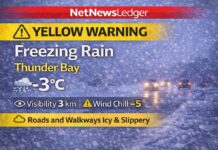
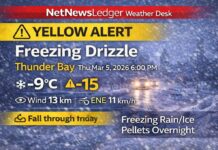
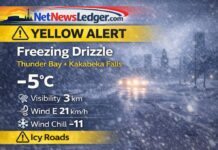
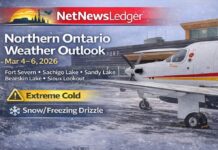
DRYDEN / NORTHWESTERN ONTARIO — With extreme cold locking in across Northwestern Ontario, police are warning drivers that roads can become dangerously slick even after maintenance crews have treated them. After responding to multiple motor vehicle collisions involving commercial motor vehicles,
Dryden OPP are reminding motorists that standard road salt becomes far less effective in very low temperatures, allowing hard-packed ice to form and traction to drop sharply.
Municipal road maintenance guidance notes that “regular” sodium chloride road salt becomes much less effective once pavement temperatures fall to around −12°C, which is when hard-packed ice becomes harder to break down and melt.
Why extreme cold makes roads more dangerous
Salt works by creating a brine that lowers water’s freezing point. But in intense cold, brine forms more slowly (or not at all), and the thin melted layer drivers rely on can disappear—leaving glazed surfaces, compact snow, and polished ice. The result is the kind of road that looks “driveable,” but behaves like a skating rink at intersections, hills, bridges, and wind-swept stretches of Highway 17 and Highway 11.
Maintenance crews may switch tactics in deep cold—using abrasives like sand/grit for immediate traction—but even then, drivers should not assume the road is “safe” because it’s been treated.
Give commercial vehicles extra space—stopping distances climb
Dryden OPP’s message is simple: leave more room—especially around transport trucks. In icy conditions, heavy commercial motor vehicles can require significantly longer distances to stop and may be limited in how quickly they can maneuver.
Smart spacing around big rigs:
-
Increase following distance well beyond normal—ice removes your margin for error.
-
Don’t cut in after passing; trucks need a larger cushion to brake.
-
Avoid blind spots (if you can’t see the driver’s mirrors, they may not see you).
-
Give room on turns—trailers can track differently than the cab.
-
Be patient on hills—sudden braking or lane changes can trigger chain-reaction collisions.
Ontario’s winter driving guidance emphasizes slowing down and giving extra space because stopping takes longer on slippery roads.
For transport truck drivers, drive to arrive safe. If you are unsure of how to drive in winter conditions, keep in mind that the maximum speed limit is not a mandatory speed limit.
Check Ontario 511 before you go
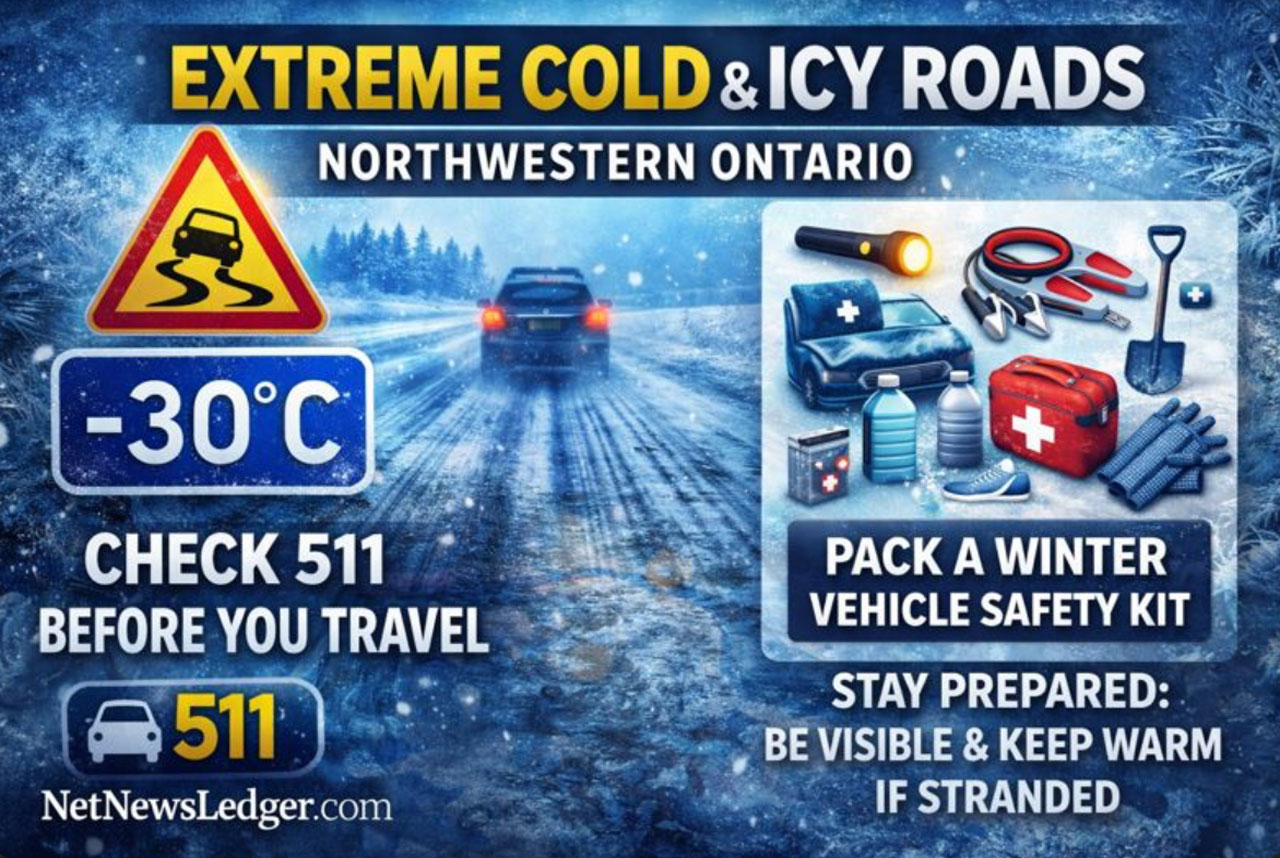
Before travelling—especially between communities—check Ontario 511 for road conditions, incidents, closures, cameras, and forecasted driving conditions. Ontario 511 reports that winter road conditions are provided by Ministry contractors multiple times daily during the season and are available via the interactive map and list pages.
What to pack in a winter vehicle safety kit
A winter kit should cover visibility, traction, warmth, first aid, and power—and be stored so critical items are reachable even if the trunk is jammed. Transport Canada and CAA recommend many of the essentials below.
Must-haves (core kit)
-
Snow brush + ice scraper
-
Flashlight (crank or with spare batteries)
-
Reflective triangles or flares
-
First-aid kit
-
Booster cables (or a charged jump pack)
-
Shovel (compact but sturdy)
-
Traction aids (traction mats; or abrasive like sand/kitty litter)
-
Windshield washer fluid rated for winter
-
Phone charger (12V) + power bank
-
Warm gloves/hat (even if you “won’t be out long”)
Strongly recommended (Northwest Ontario realities)
-
Thermal blanket or sleeping bag
-
Extra warm socks and a spare layer
-
High-visibility vest
-
Tow strap (if you know how to use it safely)
-
Spare medication you may need urgently (with a note on dosage)
If you get stranded: what to do, and what you’ll want with you
If you’re stuck and it’s unsafe to walk out, stay with your vehicle, make yourself visible, and conserve energy. Safety agencies advise that if you run the engine for heat, you must ensure the tailpipe is clear of snow and keep a window cracked to reduce the risk of carbon monoxide buildup.
If stranded, prioritize these supplies
-
Warmth: blankets/sleeping bag, hand warmers, extra mitts/hat
-
Hydration & calories: water, high-energy snacks (granola, nuts, bars)
-
Visibility: hazard lights, reflective triangle/flares, bright cloth/flag
-
Communication: charged phone, power bank, charging cable
-
Basic tools: shovel, traction aids, flashlight
Practical steps
-
Turn on hazard lights.
-
Call for help if possible and share your location.
-
Keep the exhaust area clear of snow/ice.
-
Run the engine only as needed for heat and ventilate slightly.
-
Stay calm; avoid overexertion (pushing can cause injury fast in extreme cold).
TAGS
Winter driving, Extreme cold, Icy roads, Dryden OPP, Northwestern Ontario, Highway 17, Highway 11, Road safety, Commercial vehicles, Transport trucks, Ontario 511, Winter emergency kit, Vehicle safety kit, Black ice, Winter tires, Stranded motorists, CAA, Transport Canada, Preparedness