Northern Ontario Mining Roundup: Gold Restarts, Nickel Fast-Tracking, and Fresh Capital Moves
THUNDER BAY – MINING – This week, The Strike Zone Mining Podcast briefing tracks the week’s biggest updates—from Red Lake to Timmins, Sudbury, and the Northwest
This episode is sponsored by Core Case—rugged core boxes built to protect, organize, and move your drill core with confidence.
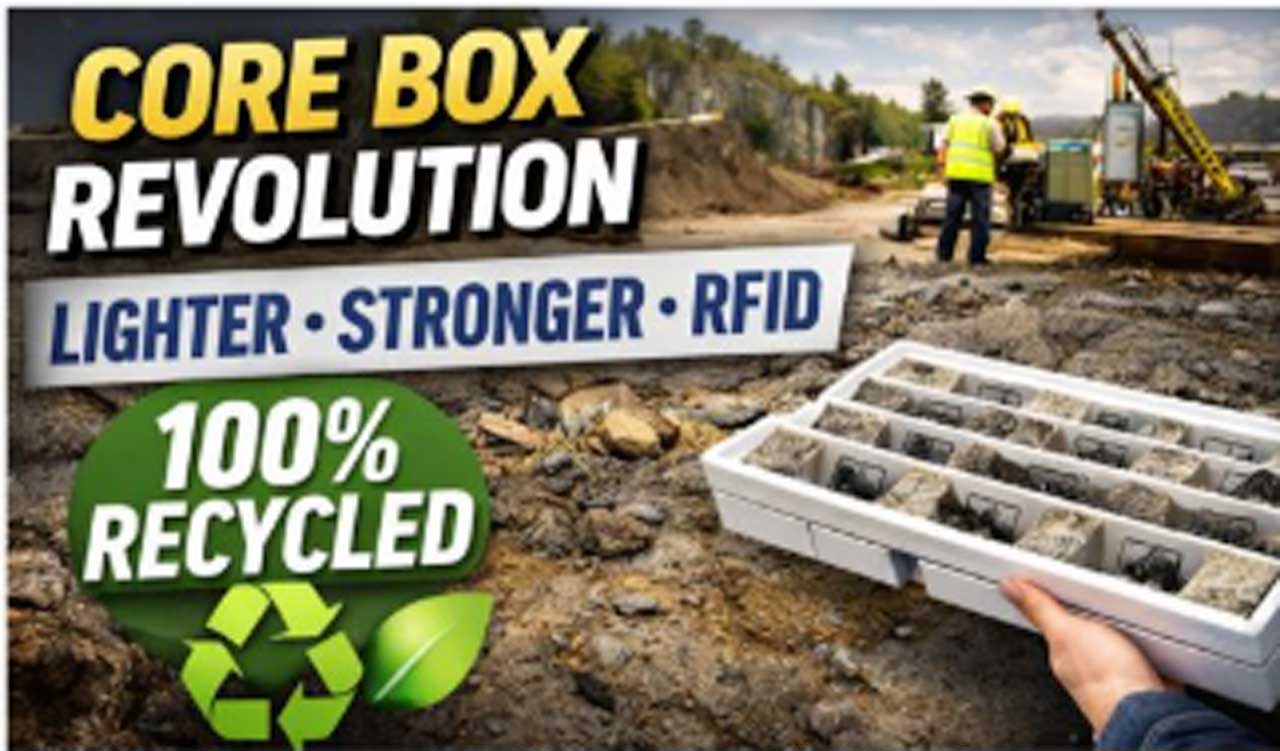
Core Case: pack it right, stack it tight. Find the future of core storage and care at www.corecase.com.
PDAC Countdown: Toronto Is Next Up
PDAC 2026 runs March 1–4 at the Metro Toronto Convention Centre.
With today’s date January 22nd, that’s only 38 days until PDAC opens—and the Northern Ontario story will be front and centre across investment meetings, supply-chain conversations, and policy talks.
Register today at PDAC.ca
For listeners and industry folks heading south, it’s a good time to line up:
Investor meetings
Government and permitting discussions
Supply-and-services connections
Northern Ontario’s mining story is moving on multiple fronts this week: a restarted gold mine in the Red Lake district is now officially in commercial production, a major nickel project near Timmins has been pulled into Ontario’s accelerated approvals framework, and Northwestern Ontario’s marquee copper–palladium build continues to signal financing momentum.
Here’s the latest briefing for Strike Zone Mining Podcast listeners—what’s been announced, why it matters, and what to watch next.
This Week’s Headlines at a Glance
Red Lake: West Red Lake Gold declares commercial production at Madsen.
Timmins: Ontario fast-tracks Canada Nickel’s Crawford Nickel Project under “One Project, One Process.”
NW Ontario: Generation Mining upsizes a bought-deal financing to $30M as it advances Marathon.
Far North: Orla reports record results and outlines Musselwhite guidance + an aggressive 2026 exploration plan.
Sudbury: Vale Base Metals and Glencore evaluate a potential Sudbury copper collaboration with 2026 work and a 2027 decision target.
Marathon (Hemlo): New owner Hemlo Mining reports a first gold pour following the Barrick transaction.
Project pipeline: Springpole releases updated socio-economic analysis; Great Bear enters a key impact-assessment participation phase.
Red Lake Watch: Madsen Back in Commercial Production
West Red Lake Gold says its Madsen Mine achieved commercial production as of Jan. 1, 2026, noting the mill averaged 689 tonnes/day in December (about 86% of permitted throughput) and reported 94.6% average recoveries for the month. The company also reported 3,215 ounces produced in December and provided Q4 operating metrics and sales figures.
Red Lake remains a bellwether camp for Northwestern Ontario. Commercial production shifts the story from “restart risk” to “execution and scale,” and it typically re-energizes the regional service-and-supply chain.
Timmins Nickel District: Crawford Gets the Fast-Track Treatment
The Government of Ontario has designated Canada Nickel’s Crawford Nickel Project (north of Timmins) for accelerated coordination under the province’s “One Project, One Process” framework. Reporting around the announcement frames Crawford as a large, long-life development tied to batteries and “green steel,” with multi-stage plans that include mining plus processing and downstream facilities.
For Northern Ontario, this is about more than one project—it’s a signal that critical-minerals timelines, permitting coordination, and infrastructure planning are becoming a central policy lane.
Northwestern Ontario: Marathon Financing Signals Keep Coming
Generation Mining announced it upsized its bought-deal financing to $30 million (priced at $0.72/unit, with warrant structure and an over-allotment option detailed by the company).
In parallel, industry coverage continues to point to the company working toward a broader financing package for the permitted Marathon copper–palladium project, with the capital requirement cited as roughly $992 million.
Marathon is one of the most watched “build-ready” critical minerals projects in the Northwest. Financing progress is the hinge between planning and shovels in the ground—and it drives long-range decisions for contractors, logistics, and workforce.
Musselwhite: Record Output and a Big 2026 Drill Plan
Orla Mining reported it exceeded revised 2025 consolidated guidance, producing 300,620 ounces of gold in 2025. The company’s release breaks out Musselwhite performance and lays out 2026 guidance, including continued investment and targeted exploration along extensions and near-mine zones.
Musselwhite is a cornerstone operation for the North. When operators commit to lateral development, exploration drifts, and reserve growth, it signals confidence in mine-life extension—one of the most important “real economy” indicators for remote-region employment stability.
Sudbury Basin: Vale and Glencore Explore Copper Synergies
Vale Base Metals and Glencore have an agreement to jointly evaluate a potential brownfield copper development using existing infrastructure at Glencore’s Nickel Rim South area. Industry reporting puts the concept at 880 kt of copper over 21 years with a rough capital range of US$1.6B–US$2.0B, with engineering/permitting/consultation work expected through 2026 and a decision targeted in 2027.
Sudbury projects aren’t just about ore—they’re about leveraging sunk infrastructure, lowering new-build costs, and accelerating supply of electrification metals when copper demand is under global pressure.
Marathon (Hemlo): New Owner Reports First Gold Pour
Following Barrick’s completed divestiture of the Hemlo mine, Hemlo Mining reported a first gold pour after the ownership transition—about 6,704 ounces—and signalled a focus on operational stability, safety culture, and brownfields potential.
Ownership transitions can be disruptive. A continuity milestone—paired with operational plans—can help settle local confidence and clarify the next chapter for an established Northern operation.
Development Pipeline: Springpole and Great Bear
Springpole (First Mining): The company released updated socio-economic analysis and positioned the project as a long-term regional economic driver, including job and GDP/tax estimates in its release.
Great Bear Gold Project: The Impact Assessment Agency of Canada posted notice that participant funding is available to support Indigenous and public participation in the project’s impact assessment, identifying the proposed mine’s location southeast of Red Lake.
In Northwestern Ontario, the “next wave” is increasingly defined by permitting readiness, Indigenous partnership capacity, and infrastructure realities—not just geology.