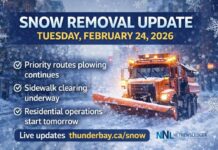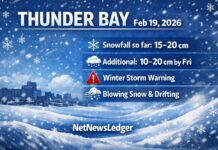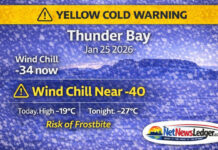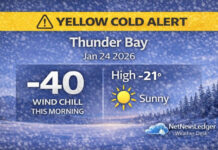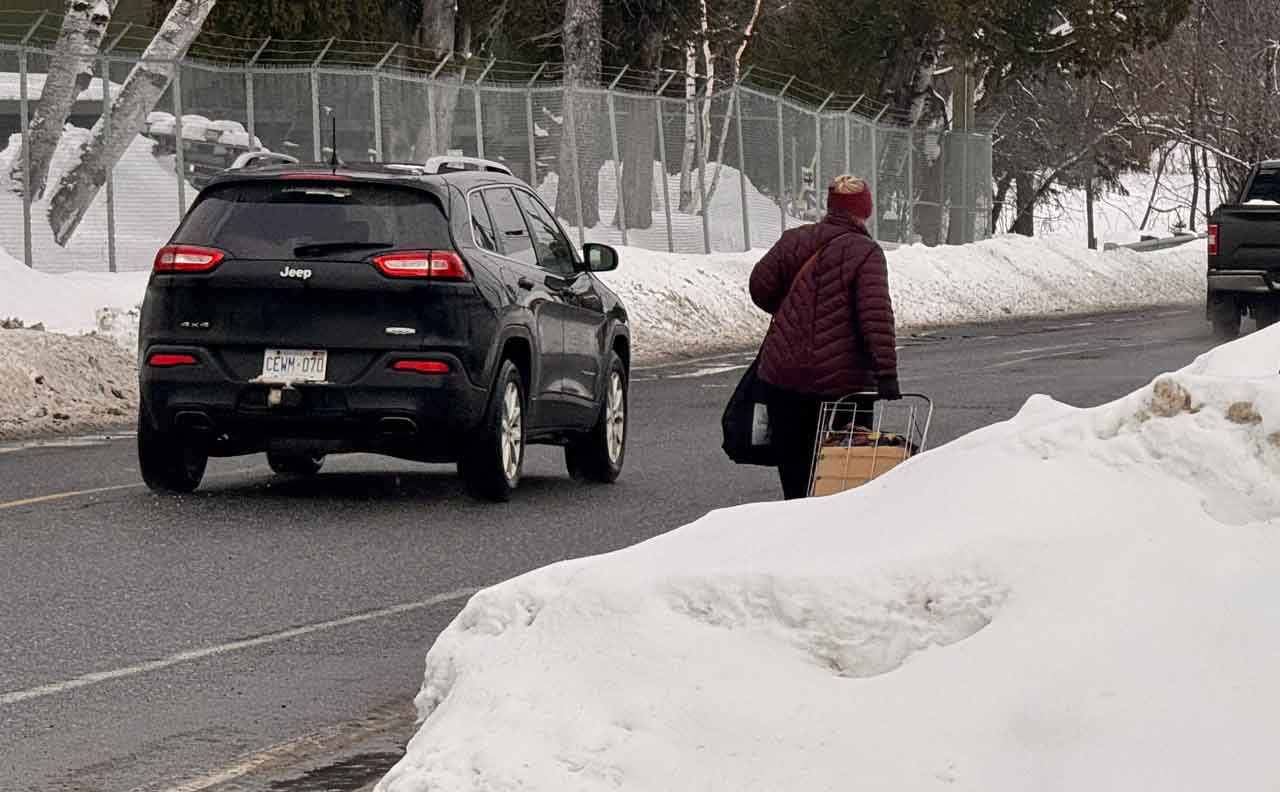
THUNDER BAY — After several rounds of snowfall and ongoing winter conditions, Thunder Bay’s snow clearing efforts are drawing pointed criticism from residents—particularly around sidewalk conditions, crosswalk access, and snowbanks that some say are creating hazards for pedestrians and drivers alike.
While the City of Thunder Bay acknowledges winter maintenance can be challenging—especially when weather swings cause slush and uneven snowpack—many residents argue sidewalks and crossings have become difficult or even impossible for some people to navigate.
Residents: “Not everyone drives”
On social media, a recurring theme is the experience of residents who rely on walking, mobility devices, or strollers—especially in neighbourhoods outside the downtown core.
One resident wrote:
“Here in Northwood too! On Donald Street where there is a HAGI building and an elderly building up the street is awful.”
Another described trying to get around with a stroller:
“I was walking down Edward with my stroller and the sidewalks are poorly ‘plowed’ and they leave hills so high at the cross walks… not everyone is capable. Not everyone drives. Please drive with caution and patience for people who have no choice but to walk/ride on the road. The city needs to do better!”
Others focused on accessibility barriers at the ends of sidewalks:
“We should have clear sidewalks and open ends to cross streets instead of climbing over mountains—people in wheelchairs wouldn’t be able to cross at all… I called to have it fixed and was told they would take care of it at the end of the week!”
A resident who uses a power chair said they’ve been forced onto the roadway:
“I use a power chair and the sidewalks are horrible… I had to use the road… some drivers are angry about that but there is no option… Don’t know how the city gets away saying it’s the most accessible city.”
That same comment also raised concerns about businesses and entrances not being cleared adequately for mobility devices, and about rough sidewalk conditions even outside winter months.
Drivers also raise concerns: “You can’t see at stop signs”
Complaints weren’t limited to sidewalks. Some residents pointed to high snowbanks reducing sightlines at intersections.
One comment summed up that concern:
“My beef is when you are stopped at a stop sign. You cannot see the oncoming traffic… you have to inch your vehicle into the main roadway, and risk somebody hitting your front end.”
Another frustration echoed widely:
“The frustrating part is that this is not something new to Thunder Bay… most winters we have a lot of snow. The city should be prepared for these kinds of things by now.”
City: Downtown cores cleared early for business access
In response to complaints, the City emphasized that the downtown cores are intentionally among the first sidewalk routes cleared after a snowfall.
The City states:
“The downtown cores are part of our priority clearing routes because the City understands the importance of access to these local businesses. For your awareness, the downtown Waterfront District is among the first areas cleared after a snowfall, as well as the south downtown core and other business districts, with crews in the north prioritizing downtown sidewalks and Red River Road before moving to other routes to allow residents to get to where they need to go. Rubber or steel blades are used in the north core based on conditions to be effective and limit damage to the renewed stone paver surface.”
The City also notes that once sidewalks across the rest of the city are plowed—typically one to two days later—crews return to downtown areas to push back snow, clear remaining areas, and maintain parking access.
Why sidewalks can still feel rough after plowing
A major point of confusion for many residents is why a “plowed” sidewalk can still be slushy, uneven, or difficult to walk on.
The City says sidewalks are generally cleared to snowpack condition, and that warm weather can soften snowpack, making sidewalks slushy and uneven. The City adds that residential sidewalks and trails need to be cleared first before crews return to priority areas to refine conditions.
Service levels and delays: 600 km of sidewalks and trails
The City says it maintains over 600 km of sidewalks and trails, with service levels set to have routes cleared within four days when a blade is used, beginning with priority routes. It also acknowledges that mechanical issues with sidewalk plows can delay work in some areas, though efforts are made to stay on schedule.
On snow removal, the City says pickup is typically done to restore roadway capacity and reduce snowbanks creating line-of-sight issues—starting with core areas, then major arterials and bus routes. The City also notes that snow clearing and removal around City Hall is maintained to a different service level and handled by a contractor at extra cost.
A key point from residents: “Not the workers—it’s the resources”
Among the criticism, one social media commenter urged residents to separate frustrations with results from blaming frontline crews:
“It’s important to be clear that this is not the fault of the workers on the ground. The reality is that there is no money to do the job properly… fewer workers… more pressure on contractors… conditions will continue to deteriorate unless the funding model changes.”
It’s a perspective that ties the debate directly to budget choices: what level of winter service the city can afford—and what residents are willing to pay for.
What happens next: Budget decisions and public feedback
The City says its roads budget reflects Council-approved service levels balancing access needs with costs, and that enhanced service requires Council approval and funding. The proposed 2026 budget is expected shortly, and residents are being encouraged to review it and provide feedback through the public survey when available.
For winter maintenance standards, updates, and FAQs, residents are directed to the City’s snow removal information page, and are encouraged to report problem locations—especially safety and accessibility hazards—so crews can triage urgent trouble spots.