NAPS Intelligence Unit Executes Warrant; Two Arrested Without Incident
NIBINAMIK FIRST NATION – REGIONAL CRIME NEWS – Nishnawbe Aski Police say suspected crack cocaine, cash, two firearms, and items consistent with drug trafficking were seized following a search warrant at a home in Nibinamik First Nation.
NAPS report its Intelligence Unit—assisted by the Criminal Investigations Unit and frontline officers from the Nibinamik detachment—executed the warrant at a residential address in the community on Thursday, January 8.
Police report that two suspects were located inside the home and arrested without incident.
Accused and Charges
A 21-year-old woman from Nibinamik First Nation is charged with:
-
Possession of Cocaine for the Purpose of Trafficking (Controlled Drugs and Substances Act, s. 5(2))
-
Possession of Property Obtained by Crime Over $5,000 (Criminal Code, ss. 354 and 355)
A 48-year-old man from Nibinamik First Nation is charged with:
-
Unauthorized Possession of a Firearm (two counts) (Criminal Code, s. 91(1))
Police say both accused were released with conditions and are scheduled to appear in court at a later date. Names have not been released by NAPS.
Penalties Upon Conviction (Maximums Under Canadian Law)
Possession of Cocaine for the Purpose of Trafficking (CDSA s. 5(2))
-
Because cocaine is listed under Schedule I, the offence is an indictable offence with a maximum penalty of life imprisonment.
Possession of Property Obtained by Crime Over $5,000 (Criminal Code ss. 354/355)
-
If the Crown proceeds by indictment: up to 10 years’ imprisonment.
-
If the Crown proceeds summarily: penalties fall under the general summary conviction provision—up to a $5,000 fine and/or up to two years less a day in jail (unless another law provides otherwise).
Unauthorized Possession of a Firearm (Criminal Code s. 91(1))
-
If the Crown proceeds by indictment: up to 5 years’ imprisonment.
-
If the Crown proceeds summarily: the general summary conviction maximum applies—up to a $5,000 fine and/or up to two years less a day in jail (unless another law provides otherwise).
Sentencing, if there is a conviction, depends on the facts of the case and other factors considered by the court. The accused are presumed innocent unless proven guilty in court
Support Recovery and Reduce Harm in the Community
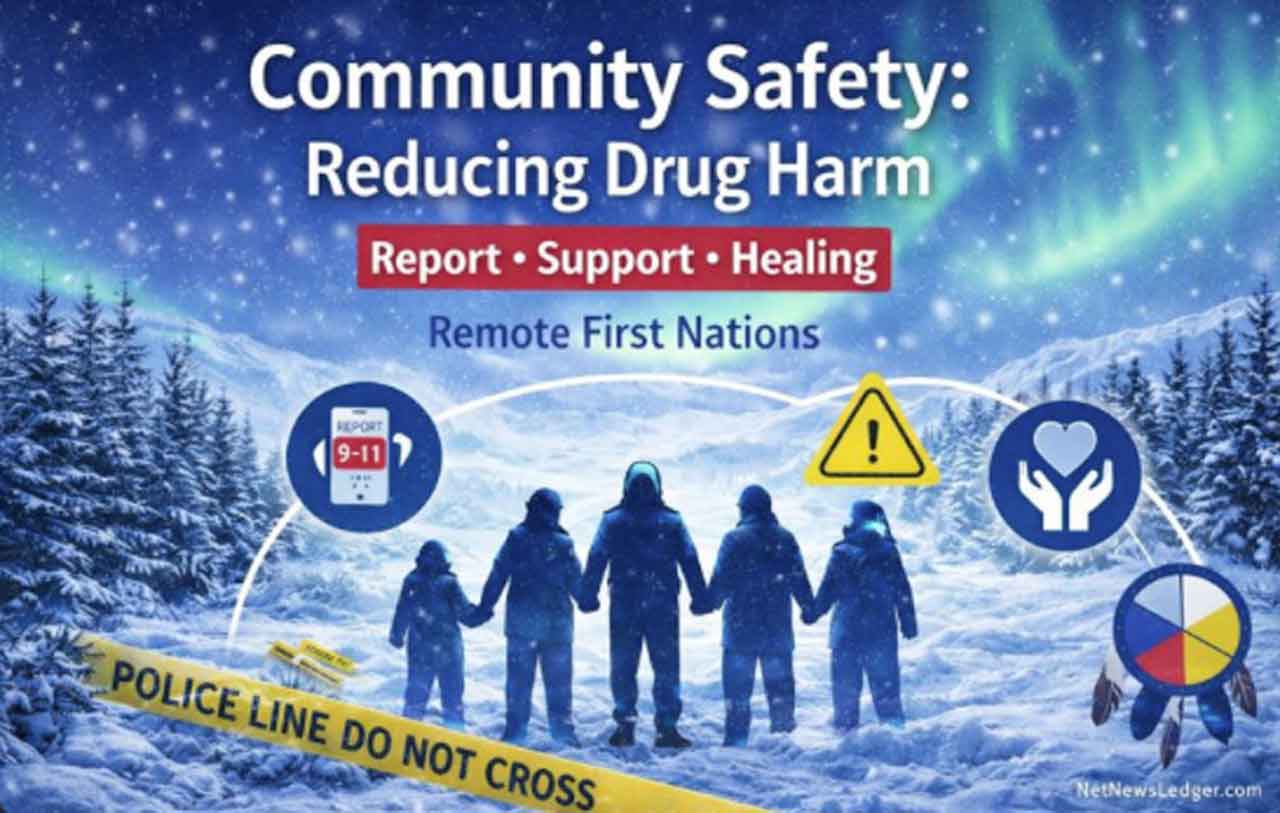
The safest way to drive out drugs is a community-wide approach that protects people first.
That starts with a clear message: don’t confront suspected dealers, don’t “investigate” on your own, and don’t put yourself or others in danger.
Instead, lean on trusted community leadership—Chief and Council, Elders, youth leaders, health staff, and schools—to set shared priorities like safe public spaces, stronger after-school programs, and community check-ins that reduce isolation and make it harder for harmful activity to take root.
Reporting is one of the most effective tools—and it can be done safely. If something feels urgent or dangerous, contact NAPS. For non-emergency concerns, use police and anonymous reporting options (including Crime Stoppers online) so information can be passed on without putting a target on anyone’s back.
Stick to facts: what you saw, when, where, and any safety concerns—without spreading rumours on social media.
Communities can also work with police services to improve response plans, share prevention messaging, and build trust so residents feel supported when they speak up.
Lasting change comes from cutting demand and helping people heal. Strengthen access to addictions and mental-health supports—through the nursing station, community health workers, visiting clinicians, land-based healing, and culturally safe counselling—so people aren’t left alone with substance use.
Promote safe disposal options where available (medication take-back through the nursing station/pharmacy, needle disposal containers, and community cleanup programs run by trained staff).
When treatment, support, and safety planning move together, communities can reduce harm, protect youth, and steadily reclaim spaces from drug activity.
Together, the damage caused to families, loved ones, and communities can be stopped, if everyone works together.