NAPS seizes $103K in suspected drugs in Fort Albany; two face trafficking and proceeds charges
FORT ALBANY FIRST NATION – NEWS – Two Fort Albany First Nation residents are facing multiple drug trafficking and proceeds-related charges after police executed a search warrant at a home in the community and seized an estimated $103,000 in suspected illegal drugs.
Members of the Nishnawbe Aski Police Service (NAPS) Intelligence Unit, with assistance from the NAPS Emergency Response Team, K9 Unit, and frontline officers from the Fort Albany detachment, carried out the search in the morning hours of Tuesday, December 9.
The search warrant was obtained as part of an ongoing investigation into alleged drug trafficking activity in Fort Albany First Nation.
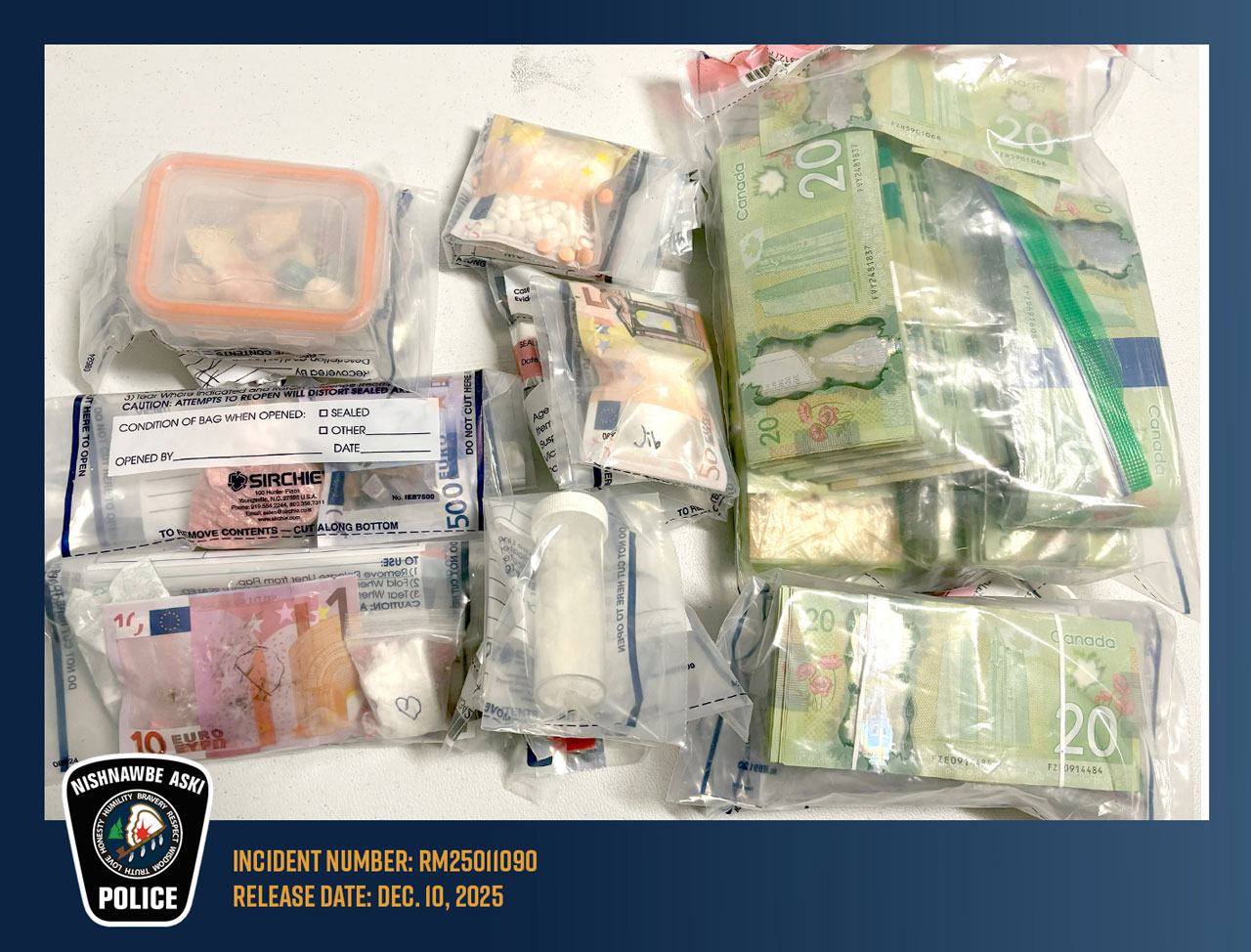
NAPS Reports Drugs and Cash Seized
During the search of the residence, officers located and arrested two suspects without incident.
Police report seizing:
-
Suspected Fentanyl
-
Suspected Crystal Methamphetamine
-
Oxycodone tablets
-
Hydromorphone tablets
-
Suspected Cocaine
-
More than $25,000 in cash
The total estimated street value of the suspected drugs seized is $103,000.
Overview of the Charges Laid
As a result of the investigation, 37-year-old Tashina Sarah Lottie KNAPAYSWEET, of Fort Albany First Nation, is charged with:
-
Possession of Cocaine for the Purpose of Trafficking
-
Possession of Methamphetamine for the Purpose of Trafficking
-
Possession of Oxycodone for the Purpose of Trafficking
-
Possession of Fentanyl for the Purpose of Trafficking
-
Possession of Hydromorphone for the Purpose of Trafficking
-
Possession of Property Obtained by Crime Over $5,000
46-year-old Gabriel SUTHERLAND, also of Fort Albany First Nation, is charged with:
-
Possession of Cocaine for the Purpose of Trafficking
-
Possession of Methamphetamine for the Purpose of Trafficking
-
Possession of Oxycodone for the Purpose of Trafficking
-
Possession of Fentanyl for the Purpose of Trafficking
-
Possession of Hydromorphone for the Purpose of Trafficking
-
Possession of Property Obtained by Crime Over $5,000
Both accused appeared for a bail hearing on Wednesday, December 10 and were remanded into custody pending future court appearances.
Potential Penalties If Convicted
The charges laid in this case involve serious offences under federal drug and criminal law.
Possession for the Purpose of Trafficking – Schedule I Substances
Cocaine, fentanyl, methamphetamine, oxycodone and hydromorphone are all controlled substances under Schedule I of Canada’s Controlled Drugs and Substances Act (CDSA).
The charges of possession of these drugs for the purpose of trafficking fall under section 5(2) of the CDSA. Under section 5(3)(a), where the subject matter of the offence is a Schedule I substance, a person convicted is guilty of an indictable offence and liable to imprisonment for life.
This means that, on conviction for each count of possession for the purpose of trafficking in a Schedule I substance, a judge:
-
May impose a sentence up to a maximum of life imprisonment, and
-
Will determine the actual sentence based on factors such as the type and quantity of drugs, role in the trafficking operation, prior criminal record, and the impact on the community.
Former mandatory minimum penalties for some drug trafficking offences have been repealed, leaving judges with broader discretion to tailor sentences to the circumstances of the offence and the offender.
Possession of Property Obtained by Crime Over $5,000
The charge of Possession of Property Obtained by Crime Over $5,000 is an offence under section 354 of the Criminal Code of Canada, with the punishment set out in section 355(a).
Where the value of the property is more than $5,000, the offence is hybrid, meaning the Crown can proceed by indictment or by summary conviction. On conviction:
-
If prosecuted by indictment, the maximum penalty is up to 10 years in prison.
-
If prosecuted summarily, the maximum penalty is lower, guided by general summary conviction limits (up to a $5,000 fine, up to two years less a day in jail, or both).
In all instances, the specific sentence is at the discretion of the trial judge, who will consider the circumstances of the offence, the amount and nature of the property, the offender’s background, and any aggravating or mitigating factors.
Presumption of Innocence
All charges in this case have not been proven in court.
Both accused are presumed innocent unless and until proven guilty beyond a reasonable doubt in a court of law.