THUNDER BAY – In a move expected to reshape Ontario’s mining landscape and fast-track development of major critical mineral projects — especially in the mineral-rich Ring of Fire — the provincial government has unveiled a bold new permitting model called “One Project, One Process” (1P1P).
Announced Thursday by Minister of Energy and Mines Stephen Lecce, the new framework is designed to cut mine approval timelines in half, providing the certainty mining companies and investors need to move projects forward faster — while upholding Indigenous rights and environmental standards.
“With President Trump taking direct aim at our economy, it has never been more important to protect Ontario jobs and build the mines that will power our future,” said Minister Lecce. “Our new ‘One Project, One Process’ framework ends the era of unacceptable delays.”
Background: A New Era for Mine Development in Ontario
For years, Ontario’s fragmented and slow permitting system has frustrated companies and Indigenous communities alike. Some mine developments have been delayed by over 15 years, stalling job creation, investment, and access to key minerals like lithium, nickel, and cobalt.
Ontario’s Ring of Fire, located in the James Bay Lowlands, has long been seen as one of the world’s most promising but underdeveloped mineral regions. Rich in chromite, nickel, copper, and rare earth elements, the region represents a key opportunity in the global energy transition.
However, development has been slowed by regulatory complexity, infrastructure gaps, and the need for meaningful Indigenous consultation and partnerships with First Nations communities whose territories overlap with potential mine sites.
The 1P1P Framework: How It Works
Under the new 1P1P model, mining proponents will work with a dedicated Mine Authorization and Permitting Delivery Team, housed in the Ministry of Energy and Mines. This team will act as a single point of contact, coordinating all provincial approvals and ensuring timelines are streamlined.
“This is about cutting delays, not corners,” said Minister of Red Tape Reduction Andrea Khanjin. “By removing red tape, we’re accelerating responsible development while maintaining strong environmental safeguards.”
The model supports the province’s Critical Minerals Strategy, helping get resources like lithium and nickel to market faster — essential for building EV batteries, medical devices, and renewable energy infrastructure.
Indigenous Engagement Remains Central
The province emphasized that the Crown’s Duty to Consult remains fully upheld. A major benefit of 1P1P, the government notes, is a more coordinated and transparent consultation process with Indigenous communities, one that supports employment, training, equity partnerships, and community benefits.
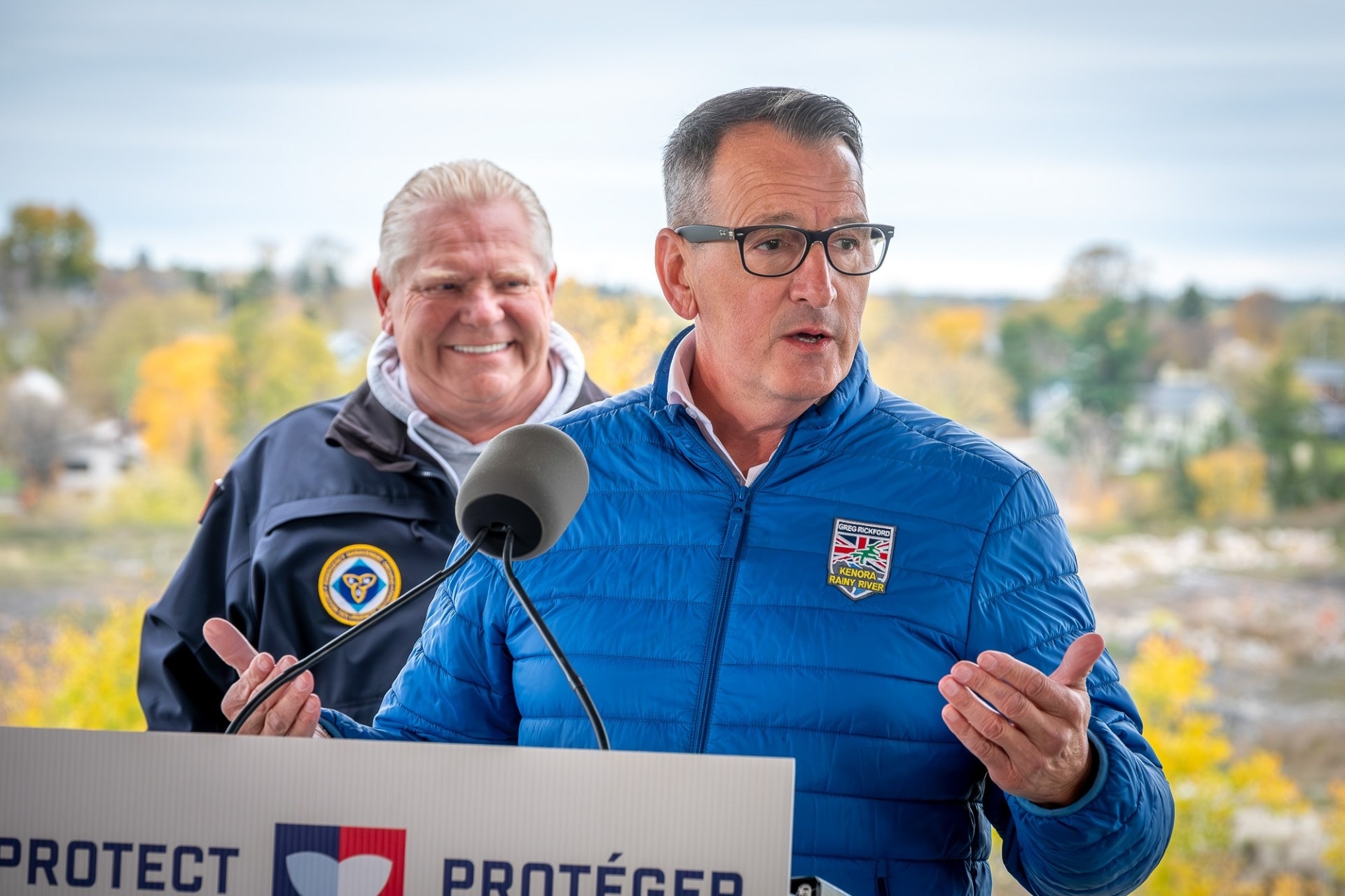
“First Nations business and political leaders have an increasing interest in the ‘One Project, One Process’ framework to advance their major projects,” said Greg Rickford, Minister of Indigenous Affairs and Minister Responsible for Ring of Fire Economic Partnerships. “Central to this framework is robust consultation with First Nations, which we remain committed to.”
Industry Response: Strong Support from Across the Mining Sector
Leaders from across Ontario’s mining industry praised the new framework as a critical breakthrough for permitting clarity, economic development, and environmental responsibility.
“This is a game-changing moment that cements Ontario’s position as the best place in the world to start a new mine,” said Mario Grossi, CEO of Technica Mining.
“The ‘One Project, One Process’ initiative marks a meaningful step toward enhanced coordination, predictability, and efficiency,” added Priya Tandon, President of the Ontario Mining Association.
Voices from Northern Ontario Projects
The announcement was welcomed by companies with direct ties to the region:
“For Avalon and our Lake Superior Lithium refinery in Thunder Bay, this streamlined approach provides the clarity and confidence needed to move efficiently from development to production,” said Scott Monteith, CEO of Avalon Advanced Materials.
Trevor Walker, President of Frontier Lithium, added: “This balanced approach fosters strong, respectful relationships with Indigenous rights holders while providing the certainty and predictability investors need.”
“When mines advance, so do the thousands of suppliers that design, build, and sustain them,” said Marla Tremblay, Executive Director of MineConnect. “Streamlining approvals will mean faster projects, stronger supply chains, and greater opportunity for Ontario companies.”
Ring of Fire: Still the North’s Greatest Opportunity
The Ring of Fire remains the focal point of Ontario’s critical minerals strategy, and the 1P1P framework could finally unlock the region’s long-stalled potential.
Key Indigenous-led proposals like Webequie and Marten Falls’ road projects, and First Nations interested in joint venture ownership of mineral developments, now have a clearer regulatory path to move forward.
The province is also investing $70 million over four years through the Indigenous Participation Fund, and $3.1 billion in financing tools to support Indigenous equity, training, and project ownership.
“A transparent process with clear oversight and a governing body empowered to fast-track decisions will not only accelerate the path from exploration to production, but also unlock significant economic opportunities — creating jobs and attracting investment across Northern Ontario,” said Maria Story, President of Story Environmental.
What’s Next?
With applications now open for projects to be designated under 1P1P, the first approvals are expected in the coming weeks. As the Ontario legislature returns Monday, this framework delivers on a key promise made during the spring sitting — to bring clarity and momentum to mine development.
As Ontario eyes global leadership in critical mineral production, Northern Ontario — and the Ring of Fire in particular — stands to benefit most, if industry, government, and Indigenous partners can align on shared outcomes.