As the Race Tightens — Abacus vs. Nanos and What Each Party Must Do Next
The Topline: Close — and Getting Closer
THUNDER BAY – POLITICS – It has not been in the national discussion much over the past months, but Mark Carney and the Liberals are a minority government. It is likely that with the fallout from the federal election basically knocking the New Democrats out of official party status and losing their leader, Jagmeet Singh, that the Liberals feel more comfortable governing. The Liberals likely believe that the New Democrats won’t support going to the polls in their current state.
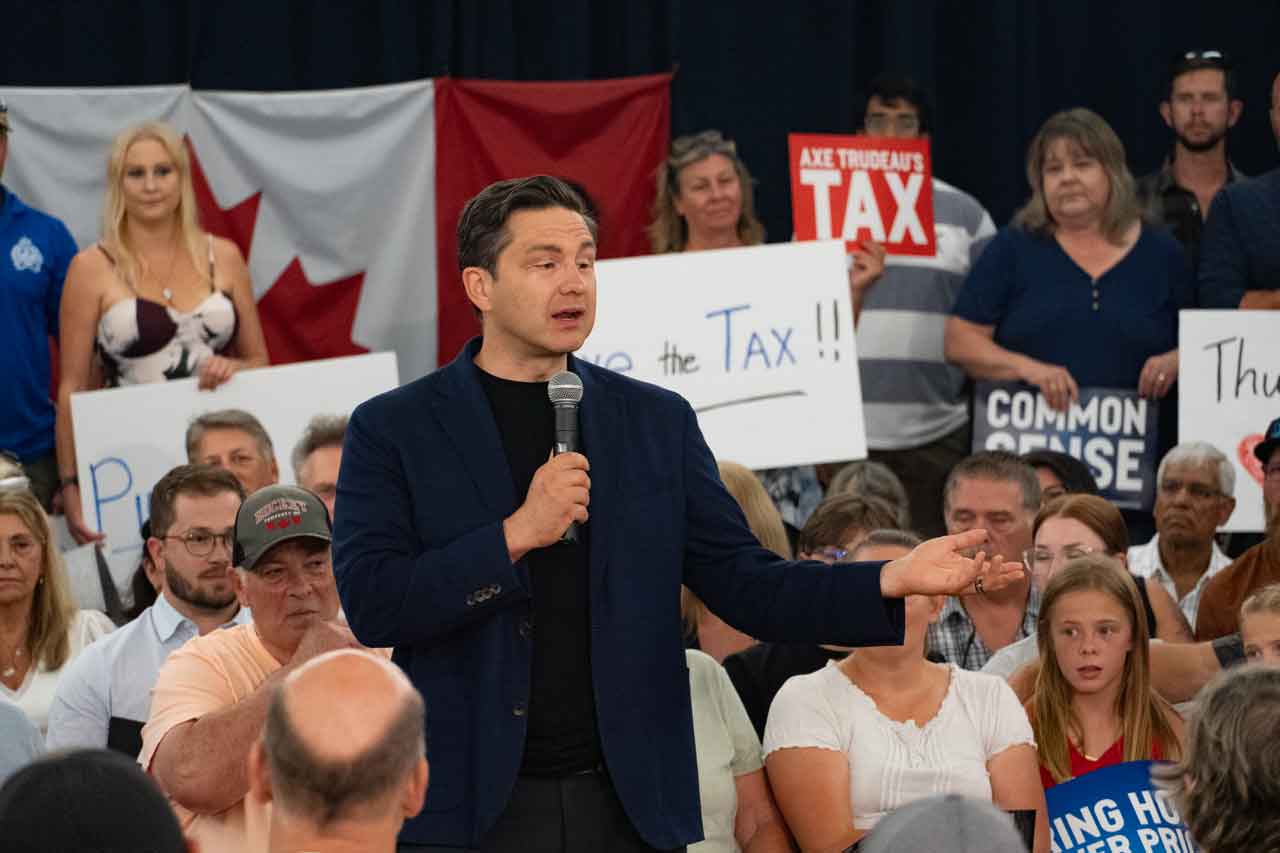
The Conservatives were quieter over the summer, their leader needed to win his seat in Parliament, following a loss of his own seat. However since winning his seat, Pierre Poilievre has re-lit his political jets. The Conservative Leader perhaps needed the humbling of losing his seat and having to retreat to Battle River-Crowfoot – the safest Conservative seat in Canada – to return to Parliament.
At issue for the Liberals is that Prime Minister Mark Carney has followed the same pathway that Justin Trudeau did, Carney says all the right things, but his follow-through is meaning Canadians are not seeing a lot of real difference.
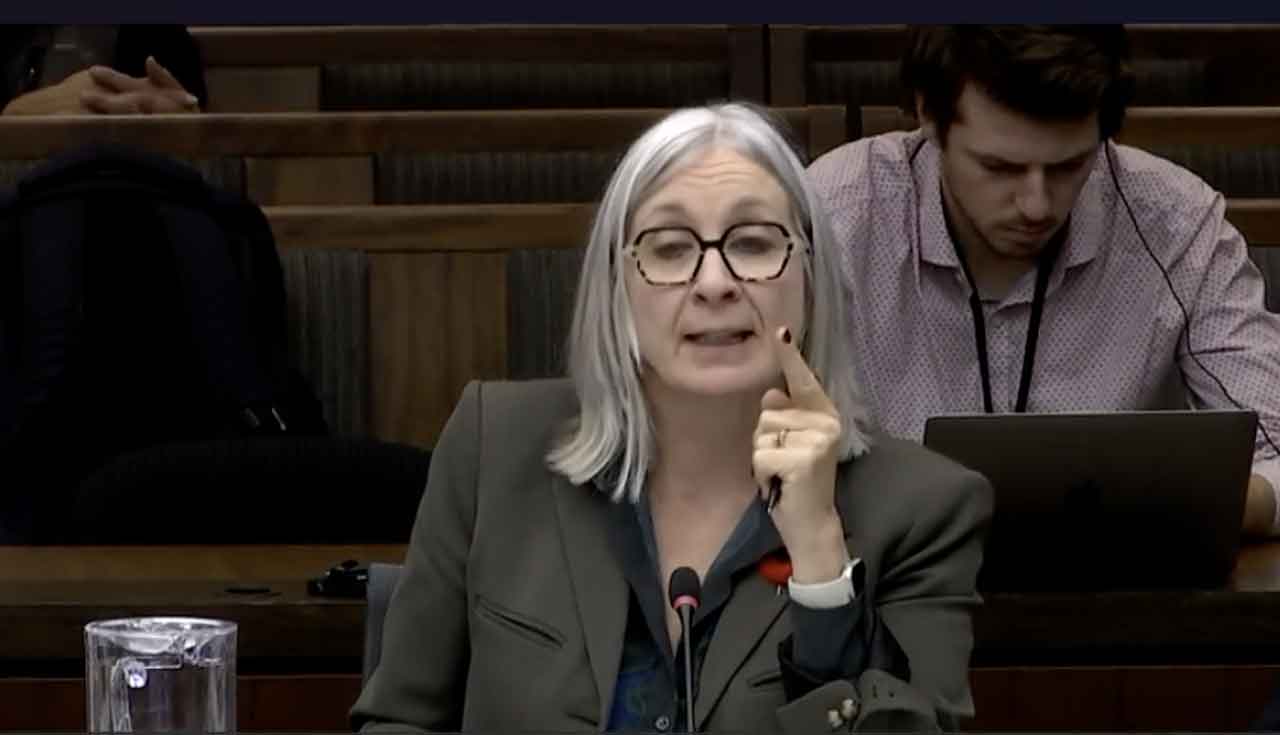
Part of that is Prime Minister Carney’s cabinet is heavily reliant on many of Justin Trudeau’s Ministers. Comparing his cabinet to Trudeau’s final ministry will show that roughly a dozen of Carney’s present cabinet members previously served as Trudeau ministers. The list includes, high-profile figures such as Dominic LeBlanc, Mélanie Joly, François-Philippe Champagne, Anita Anand, Patty Hajdu and others.
Christine Freeland who was at one time challenging for the Leadership has resigned from cabinet to take on the role of special envoy for Canada to the Ukraine.
-
Abacus Data (Sept 26–Oct 1): CPC 41%, LPC 40%, NDP 7%, BQ 7%, Greens 3%, PPC 2%. Mood is sour: 34% say Canada’s on the right track; cost of living tops issues (62%), with crime/public safety up to 21%. Government approval 46%; Carney favs 48%. Among certain voters, LPC 43%–CPC 41%. Regionally, Liberals lead Ontario/Quebec/Atlantic; West is CPC.
-
Nanos weekly tracking (posted Sept 30): LPC 41%, CPC 37%, NDP 12%—gap has narrowed as focus shifts from Trump/US to jobs/economy.
-
Context & cross-checks: Recent Ipsos showed high approval for the Carney government (58%) and a small LPC lead mid-September, while 338Canada’s projection continues to show a neck-and-neck national picture with a seat-efficient Ontario edge for the Liberals.
Reading it together: Abacus has a 1-point CPC edge in vote intention; Nanos still sees a modest LPC advantage. Both agree: it’s competitive, and small shifts in turnout and Ontario suburbs could decide it.
The Identity Fight: “Change” vs. “Continuity”
Abacus finds 55% say Carney’s government “feels similar to Trudeau’s,” 36% see it as different. That perception correlates almost perfectly with vote choice (those who see “similar and bad” break to CPC; those who see “different and good” break to LPC). This is the frame of the fall.
Thunder Bay & Northwestern Ontario Lens
-
Affordability leads (62% nationally): Locally, watch pledges on home heating relief, food prices, rental supply (Lakehead/Confederation College demand), and shipping costs through the Port of Thunder Bay.
-
Public safety rising (21%): Expect debates on treatment capacity, supportive housing, bail reform resources, and Indigenous-led safety initiatives. The Conservatives have been hammering on the “Liberal Bail Program” and how repeat offenders are simply going through a revolving door of bail and crime. This issue is impacting growing numbers in Thunder Bay and is going to be a factor both federally and in the next civic election.
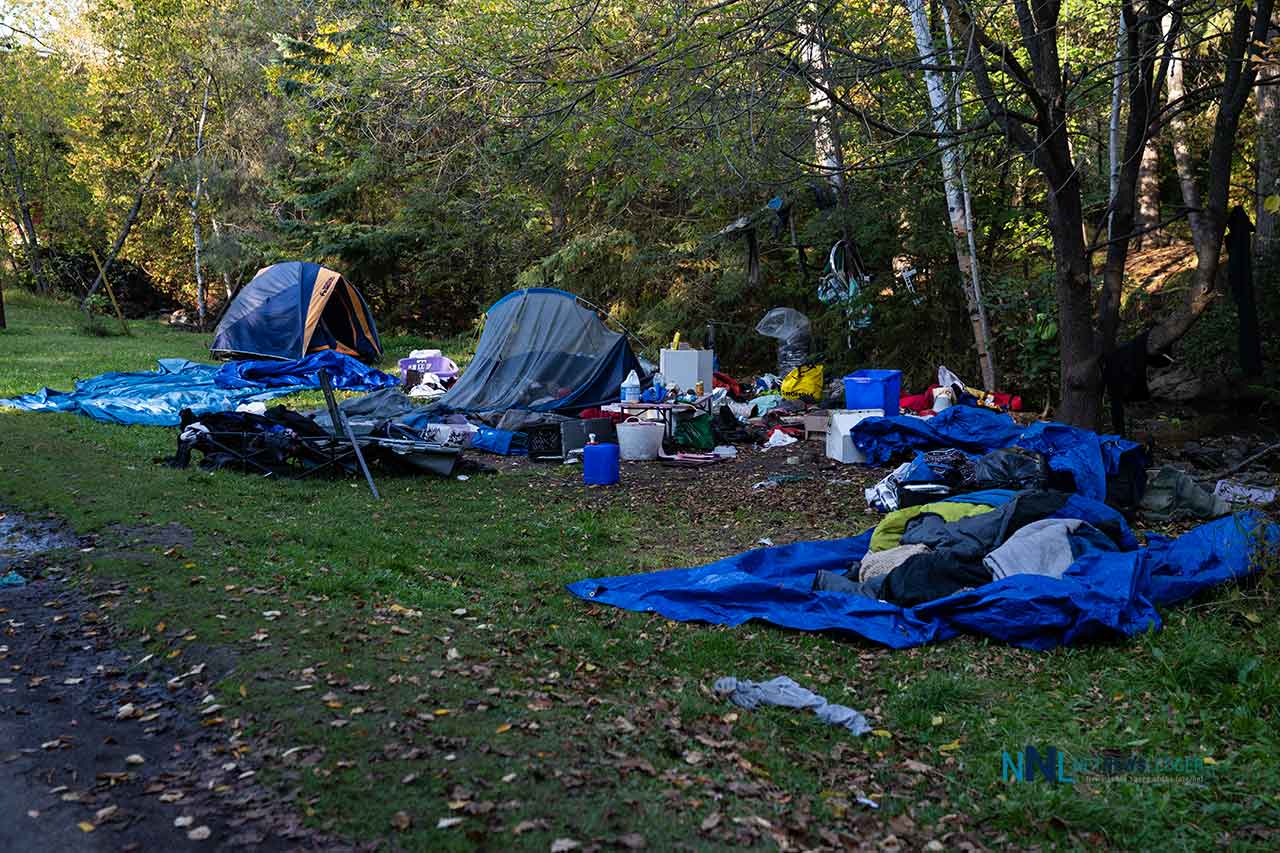
Abandoned tent encampment along McVicars Creek – October 4 2025 - Specific to Thunder Bay is the growing concern over homeless encampments. Over the past years, homeless encampments has sprawled across the city with what was a major concentration by Shelter House, now sees huge growth in tent cities by the Royalton Hotel on Court Street, the pathway along McVicars Creek from River Street to Lake Superior.
-
Issue ownership split: CPC advantaged on affordability, crime, immigration, economy; LPC on healthcare, climate—mapping locally to ER staffing/physician recruitment and Ring of Fire/critical minerals policy.
What Each Party Needs to Do to Shore Up & Build Support
Liberals (LPC)
-
Differentiate Carney from Trudeau in visible ways (style, priorities, personnel). Abacus shows “continuity” perceptions dragging vote. Deliver a few signature breaks (e.g., fiscal guardrails, procurement reforms).
-
Own health care delivery in Ontario: announce Northern physician/nurse incentives, training seats, and ER stabilization with measurable quarterly targets.
-
Affordability with receipts: concrete home-heating credits, targeted grocery code enforcement, and student housing starts in university/college towns like Thunder Bay.
-
Ring of Fire clarity: tie climate goals to permitting timelines, Indigenous benefit agreements, and infrastructure corridors to show growth + credibility.
Conservatives (CPC)
-
Stay on affordability & safety—the issues where voters rate CPC stronger—while offering clear fiscal math on tax relief and crime policies to broaden beyond the base.
-
Ontario persuasion: package a Northern affordability plan (energy bills, winter fuel, remote transport) and treatment-first safety plan to compete in mid-size cities.
-
Economic prudence + trade steadiness: propose a Canada–US tariff de-escalation path and supply-chain insurance to reassure export regions (grain, forestry, mining).
-
Temper tone: keep contrasts sharp with Carney without alienating suburban moderates who like competence and calm.
New Democrats (NDP)
-
Health & housing delivery focus: champion mental-health and addictions treatment, non-profit/Co-op builds, and rent-to-own pilots—areas where NDP credibility is durable.
-
Own “working-class cost relief”: dental/pharma expansion tied to lower out-of-pocket costs and grocery price competition.
-
Northern jobs plan: link critical minerals and value-added processing (Thunder Bay–adjacent) to apprenticeships and union training to regain vote in industrial households.
-
Ballot threshold math: with Abacus placing NDP at ~7%, growth requires region-specific campaigns in Ontario and BC.
Greens
-
Climate that cuts bills: pitch home retrofit grants and heat-pump financing as pocketbook policy, not just emissions policy.
-
Great Lakes stewardship: position as the freshwater/port emissions party—high salience along Lake Superior.
-
Local presence > national air war: concentrate on ground game in winnable ridings and university communities.
Bloc Québécois (for completeness nationally)
-
Autonomy + affordability: tie cost-of-living to Quebec-specific levers, while defending language/culture—holding gains in the 450s shapes national math even if Thunder Bay isn’t in play.
The Turnout Twist
Abacus shows Liberals ahead among certain-to-vote Canadians (43–41)—small but significant if it’s concentrated in Ontario. Nanos’ late-September posts show narrowing but still LPC-advantage environment as attention moves from Trump/US to jobs/economy. Together, that argues the pathway runs through Ontario mid-sized cities—Thunder Bay included.