Editorial | Canada’s New National Dream: A True Coast-to-Coast Trans-Canada Highway
By James Murray, NetNewsLedger — Editorial
We’ve covered the warning signs for years
Thunder Bay – At NetNewsLedger, we’ve chronicled Highway 11 and Highway 17 for more than a decade—white-knuckle winter closures, summer construction bottlenecks, and the heart-stopping moments when a crash or a storm turns Northwestern Ontario into a cul-de-sac. Time and again our readers have told us the same thing: when these roads close, communities are cut off, families are stranded, and the country’s main east-west lifeline snaps.
Those stories weren’t one-offs. They were symptoms of a national problem Canada has been slow to admit—our Trans-Canada highway, especially through the rugged heart of Northwestern Ontario, is too often a single thread. When it frays, Canada becomes two countries for hours, sometimes days. That is not resilient. It is not safe. And it is not worthy of a trading nation that spans an ocean and a continent.
A country cut in two
Picture a map of Canada. Now draw a line from the Manitoba border through Kenora, Dryden, Sioux Lookout, Thunder Bay, Nipigon, and east to Sault Ste. Marie. That line is more than asphalt; it’s food on store shelves, medicine in clinics, parts for factories, ore to smelters, fuel to heat homes, and tourists to small-town lodges. It is also school sports trips, medical appointments, and family reunions.
When Highway 11 or 17 closes, the impact cascades: truckers idle, local businesses absorb delays or spoilage, essential workers can’t get where they’re needed, and emergency routes stretch thin. A country built on the promise of connection should not accept this kind of fragility as the cost of living in the North.
The divided highway concept—safety by design
We’ve reported on solutions before: strategic twinning, passing lanes that actually pass muster, modern median-separated (2+1) designs that deliver near-divided-highway safety at a fraction of full twinning cost, and smart winter operations that treat data like a plow blade. The engineering isn’t experimental. Jurisdictions with similar weather and terrain have deployed it for decades. What Canada needs is the resolve to make it continuous, not piecemeal.
A divided—or safely separated—Trans-Canada through Northwestern Ontario is not about shaving five minutes off a drive. It’s about preventing head-on collisions, keeping freight moving, and ensuring that a single incident doesn’t sever the nation. Safety by design must be the baseline, not the bonus.
The new National Dream
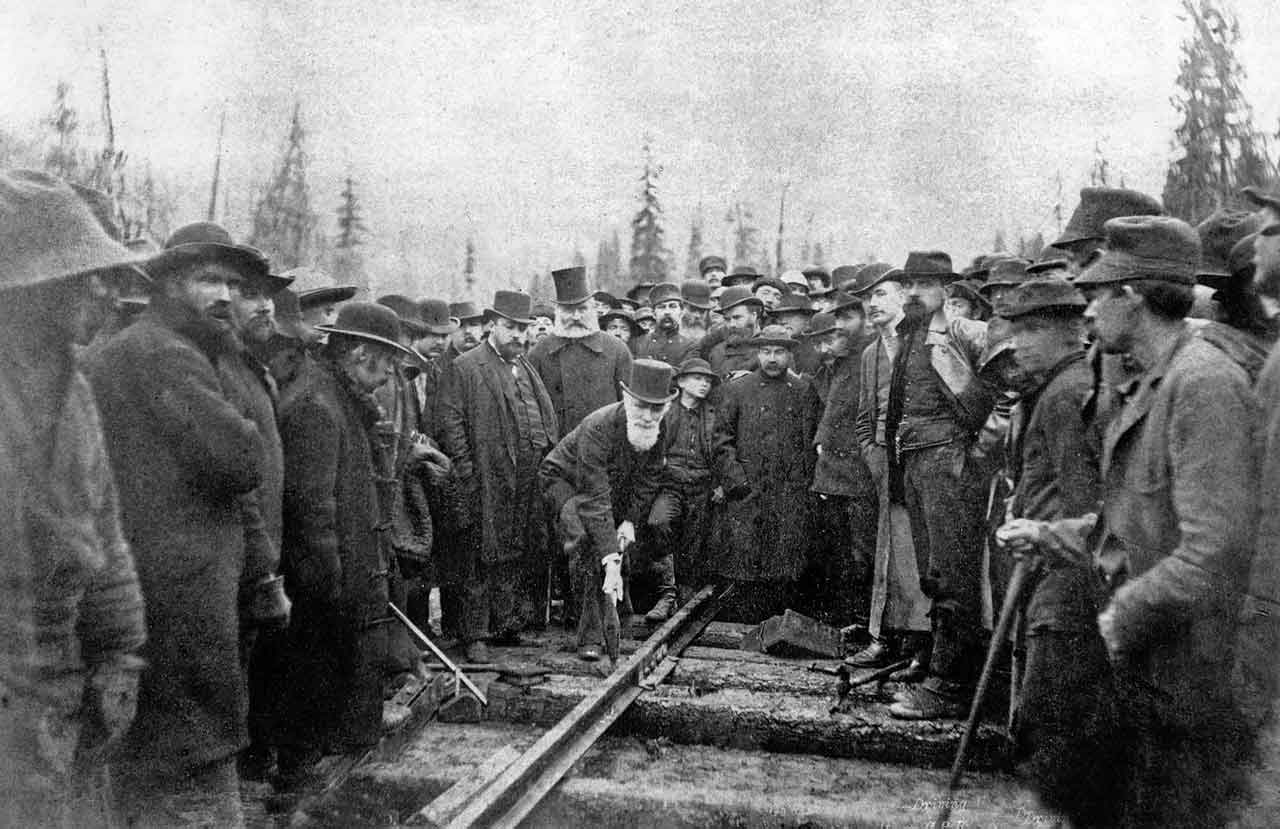
In the 1800s, Canada chose a railway as its nation-binding project. That iron ribbon didn’t just move goods; it forged a country. Today, the “New National Dream” is a truly coast-to-coast Trans-Canada highway that is safe, resilient, and reliable in all seasons—backed by redundancy so that one closure doesn’t become a national emergency.
Liberal Prime Minister Mark Carney should be copying Canada’s first Prime Minister Sir John A. MacDonald. The “National Dream” a term coined by the times of having Canada “bound by rails” meant sovereignty and security.
The announcement of Big Projects by Prime Minister Carney is one that without secure transportation is one of goods unable to make it to markets. Time for a big leap of action.
Think of what that means:
-
Sovereignty & security: A dependable ground corridor for defence, disaster response, and supply chains.
-
Economic resilience: Predictable logistics for exporters and small businesses alike.
-
Regional equity: Northern and rural communities connected with the same confidence as urban centres.
-
Reconciliation in practice: Partnership, equity, and procurement opportunities with Indigenous Nations along the corridor—designed in from day one.
One corridor, one standard
We don’t need a patchwork of pilot projects and press releases. We need a corridor plan with a single safety standard from the Manitoba border to Sault Ste. Marie and beyond: median separation (through twinning or 2+1), engineered passing frequency, real-time weather and road condition tech, targeted avalanche/rock-fall mitigation, reliable cellular coverage, and winter maintenance benchmarks that match the traffic and the stakes.
That plan should be funded the way we fund true nation-building—federal, provincial, municipal, and Indigenous partners at the same table, with long-term capital committed, not dribbled out. Every construction season should deliver a visible segment of safer, separated roadway. Every year should close a gap.
The cost of doing nothing is higher
We’ve all seen the invoices for inaction: collisions, detours, lost perishables, missed surgeries, cancelled tournaments, stranded families, supply chain penalties. Add them up and the “savings” from delay vanish. Building right the first time—at the scale of a National Dream—returns those costs to the economy as productivity, to families as time, and to communities as confidence.
A call from Northwestern Ontario to the whole country
From Kenora to Thunder Bay to Nipigon and the North Shore, people have done the hard part—speaking up, offering practical solutions, and enduring the uncertainty that comes with a single-thread highway. What we need now is for Canada to answer with the same ambition that stitched this country together 150 years ago.
Let’s name it plainly: a continuous, safely separated Trans-Canada through Northwestern Ontario is nation-building. It keeps Canada whole—every day, in every season. It is our New National Dream. Let’s build it.
— James Murray
Editor-in-Chief, NetNewsLedger